Electric Blanket Heating Zones Explained: Why Cold Spots Happen and What Retail Buyers Should Specify
Cold spots and uneven heating are not always caused by blanket size. This buyer guide explains heating coverage,…
November 11, 2026
Electric blanket controller problems can lead to returns, warranty claims and production risks. This OEM buyer guide explains error codes, controller testing, connectors, cable strain relief, QC records and bulk-production approval.
CONTACT US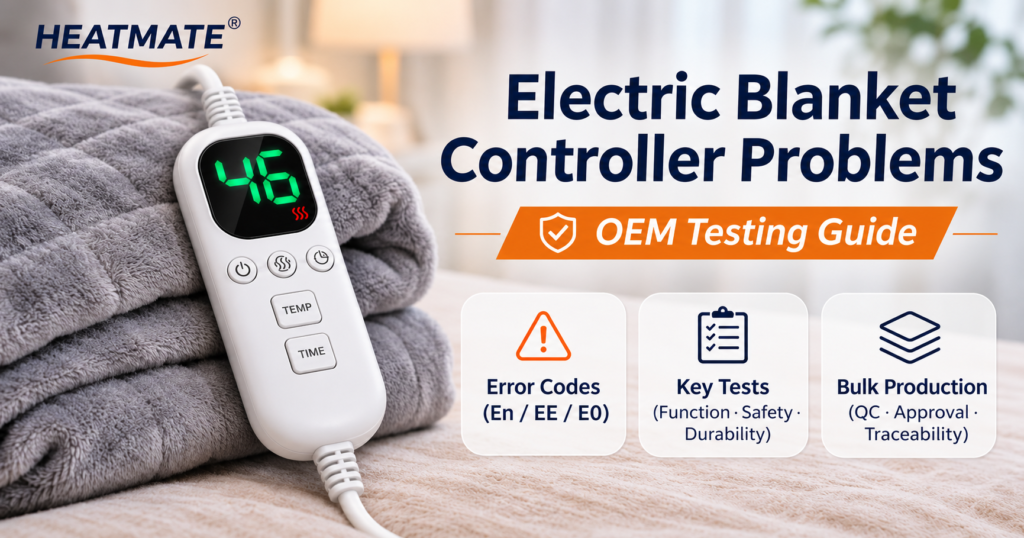
HEATMATE · OEM QUALITY CONTROL GUIDE
Controller failures are not just an after-sales problem. For importers and private-label brands, they can become a return-rate, warranty-cost and reputation problem. This guide explains the failure modes buyers should investigate, the controller tests worth defining before mass production, and the records that make field failures easier to trace.
Do not approve an electric blanket controller only because the sample powers on. Confirm the exact controller model and revision, heat levels, timer logic, connector fit, cable and strain relief, En / EE / E0 fault-code behaviour, temperature regulation, abnormal-condition response, and the way those requirements are recorded for mass production. The controller should be treated as a controlled component of the complete heating system.
An electric blanket can use the right fabric and heating wire and still generate complaints if the controller becomes intermittent, shows confusing error codes, loses connection, responds inconsistently to button inputs or behaves differently from the approved sample.
That is why controller quality should be checked together with the blanket’s heating circuit, sensors, connector and instructions. HEATMATE’s sample approval guide makes the same point from a production-control perspective: the controller model, functions, connector and protection features should match the approved configuration, and proposed substitutions should be reviewed before production.

There is no single cause of an electric blanket controller failure. A blank display, unexpected shutdown or intermittent heating can originate in the controller, the connection to the blanket, the sensor circuit or the heating system itself. For OEM buyers, the useful question is not simply “Does the controller work?” but “Can the supplier isolate the failure and reproduce the test?”
| Observed symptom | Possible areas to investigate | Buyer-side evidence to request |
|---|---|---|
| No display / no power | Power input, controller electronics, cord set, connector or internal circuit | Electrical rating, incoming inspection record, functional-test result and failed-unit analysis |
| Intermittent heating | Loose connector, cable conductor damage, strain relief, sensor signal or heating circuit | Connector inspection, cable-flex results, continuity checks and fault-reproduction notes |
| Unexpected shutdown | Protection logic, abnormal sensor input, controller temperature or system fault | Fault-condition test, controller log/error indication and reset behaviour |
| Wrong or unstable heat level | Sensor response, controller logic, calibration, component tolerance or heating circuit | Temperature test method, measured results and approved tolerance |
| Buttons or display fail | Switch wear, PCB or soldering issue, display connection or housing stress | Repeated-operation test and failure classification |
For OEM diagnosis, isolate the controller from the rest of the heating system before assigning root cause. Check the controller-to-blanket connection, inspect the connector and cable, reproduce the symptom under a defined condition, and determine whether the failure originates in the controller, sensor circuit, connector or heating circuit.
Error-code definitions are not universal. The same letters or numbers can represent different faults on different controller designs. Buyers should therefore use the technical documentation for the exact controller model and revision being supplied.
The table below reflects the controller example provided in the current HEATMATE article brief. It should be treated as a model-specific reference, not as a universal code table for every electric blanket controller.
| Error code | Possible indication in this controller example | Recommended inspection / action |
|---|---|---|
| En | The controller’s internal temperature is reported above 70°C. The controller prompts and then shuts down. | Allow the controller to cool and restart according to the approved instructions. During validation, confirm the actual trigger condition, protective response and reset behaviour. |
| EE | The provided controller reference associates EE with abnormally low heating resistance and possible damage or melting involving the inner / outer wires. | Stop use and send the unit for supplier analysis. Confirm the fault trigger, inspection method and disposition criteria for the exact production controller. |
| E0 | The reference associates E0 with a heating-circuit short-circuit condition and also notes that an improperly seated plug may be involved. | Disconnect power, inspect and reseat the connector, then retest according to the controller instructions. If the code returns, isolate the controller and blanket circuit for further analysis. |
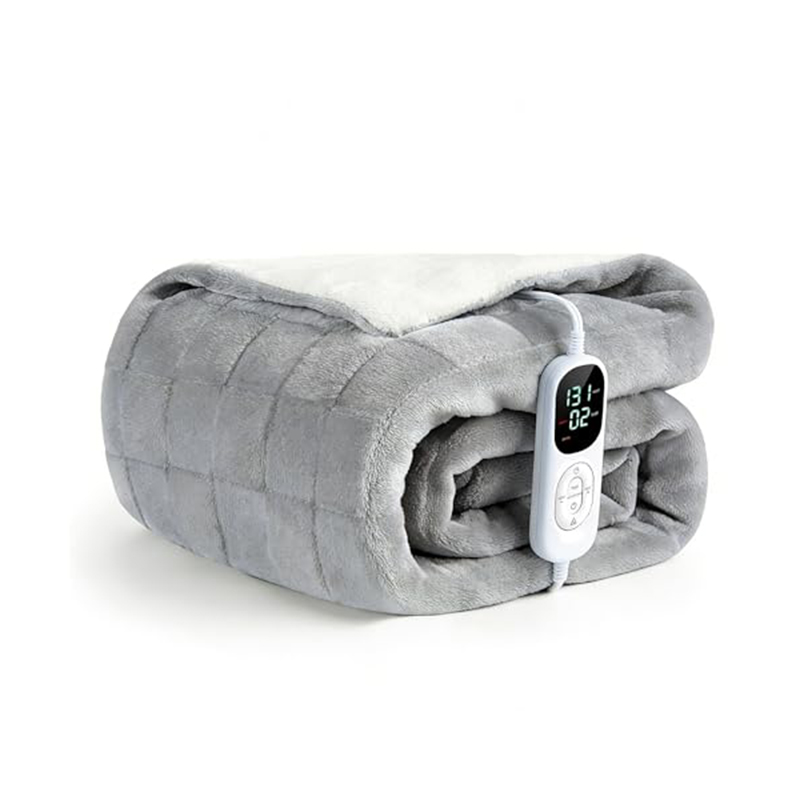
A single power-on check is not enough. The controller needs to be evaluated as part of the complete blanket and tested against documented operating conditions. The exact method and acceptance limits should be based on the finished-product design, target market and applicable standard.
The current IEC consolidated version for this product family is IEC 60335-2-17:2022+AMD1:2026. IEC states that the standard covers electric blankets and similar flexible heating appliances and also applies to control units supplied with the appliance. Buyers should still confirm the applicable national adoption, destination-market requirements and test program for the exact finished product.
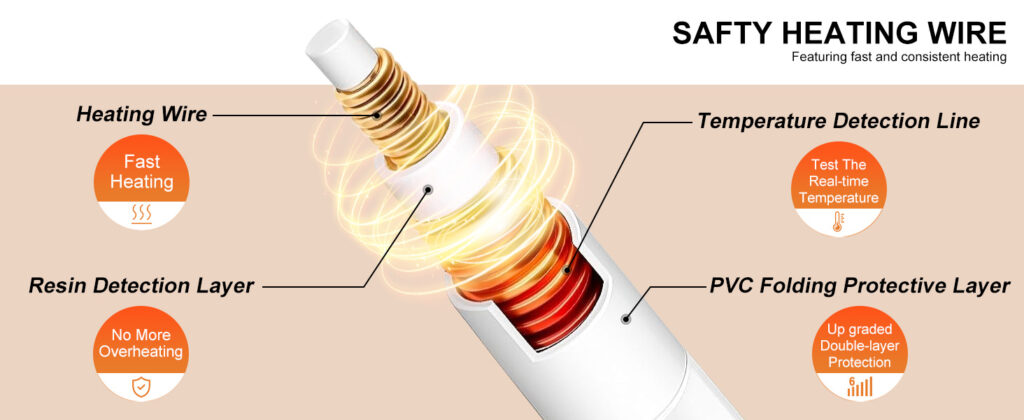
For a wider view of finished-product inspection, see HEATMATE’s electric blanket safety testing and quality inspection guide.
Connectors and cable exits deserve more attention than they usually receive during sample approval. These points are handled, bent and pulled repeatedly, and a marginal connection can create intermittent faults that are difficult to reproduce once the product reaches the customer.
Confirm mating geometry, insertion depth, retention and whether the approved controller can only connect to the intended blanket interface.
Check terminal alignment, stable contact and the absence of looseness or intermittent operation during handling.
Inspect reinforcement where the cable exits the controller housing and the blanket-side connector.
After flex or pull testing, inspect insulation, conductor continuity, housing condition and functional stability.
For private-label production, record the connector and cable as controlled components. A change in connector geometry, cable specification or strain-relief construction can affect both reliability and the applicability of previous testing.
The best way to prevent sample-to-bulk drift is to make the controller part of the approved product record. A controller that “looks the same” is not enough if its electronics, cable, connector or control logic have changed.
HEATMATE’s OEM electric blanket customization guide explains why controller functions, electrical configuration, heating design and compliance documentation should be reviewed as one system. If the controller is customized or substituted, the impact on testing and existing evidence should be assessed before the change is released.
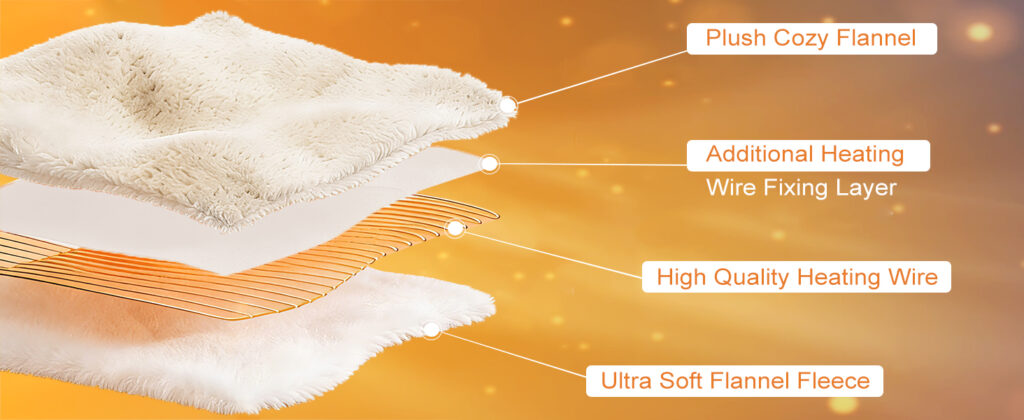
A useful inspection record should be detailed enough to answer a future warranty question: Which controller version was fitted to this batch, what was tested, and what result was accepted?
| Record field | What to capture |
|---|---|
| Product / controller ID | Blanket SKU, controller model/revision and approved specification revision |
| Batch information | Production date, batch/lot and relevant component traceability |
| Functional test | Power, every heat setting, timer, display, buttons and optional functions |
| Temperature test | Test setup, measurement points, ambient conditions, operating time and result |
| Mechanical test | Cable flex, connector handling and strain-relief checks according to the agreed plan |
| Fault/protection test | Defined abnormal condition, displayed code and system response |
| Disposition | Pass, rework, reject, root cause and corrective action where required |
Do not rely only on a generic “QC Passed” stamp. The record should make it possible to compare an after-sales failure with the configuration that left the factory.
The following is a practical buyer-facing template for discussion during sample approval or pre-production review. It is not presented as a completed factory test record; the actual values, test method, frequency and acceptance limits should be filled in for the specific blanket and controller configuration.
| QC item | What should be recorded | Example acceptance logic |
|---|---|---|
| Controller identification | Model, revision, supplier and approved artwork version | Must match approved specification and Golden Sample |
| Power / display | Power-on response, display segments and indicator status | No missing segments, delayed start or intermittent response |
| Heat settings | Each available level and controller response | All levels selectable and consistent with approved function map |
| Timer / auto shut-off | Timer options, countdown behaviour and shut-off response | Matches approved controller logic |
| Temperature regulation | Measurement points, ambient condition, operating time and measured result | Within the buyer-approved range for the test setup |
| Error / protection logic | Fault condition, displayed code and protective response | Matches model-specific error-code table and safety logic |
| Connector | Insertion, retention, terminal contact and housing condition | No looseness, intermittent power or visible damage |
| Cable / strain relief | Flex/pull method, cycle or force used, post-test inspection | No insulation damage, conductor failure or intermittent operation |
| Disposition | Pass, rework, reject, root cause and corrective action | Nonconforming units traceable to action and verification |
Warranty data becomes more useful when failures are recorded consistently. Without a model number, batch, error code, photo or operating condition, it is difficult to distinguish a controller defect from a blanket-side circuit problem, transport damage or user misuse.
Separate claims into useful categories such as controller electronics, sensor/fault logic, connector contact, cable/strain relief, display/button, heating circuit, customer operation and physical damage. A single “controller problem” category hides the information needed for corrective action.
Where the product design and manufacturer instructions permit it, comparing the two sides of a dual-control blanket can help determine whether a problem follows the controller or remains with the same blanket zone. This diagnostic logic is used in published heated-product troubleshooting guidance and can also make warranty triage more efficient.
When repeat failures appear, link the field data back to production records and investigate the relevant controller/component batches. Define corrective and preventive actions, then verify that the action actually reduces the failure mode in subsequent production.
A technically strong article can explain what to test, but a purchasing decision still depends on evidence. Before releasing a bulk order, buyers should ask the supplier to show records tied to the exact controller and blanket configuration rather than generic factory claims.
A retained approved sample identified by model and revision, including the controller, connector, labels and functions used as the production reference.
A completed functional and temperature record showing the actual test setup, date, result and acceptance criteria for the approved configuration.
Controller or critical-component identification that can be linked to the production batch if a field failure appears later.
A documented process requiring review before changing the controller, PCB, sensor, connector, cable or other critical electrical component.
If HEATMATE publishes factory testing photos, QC records or sample-approval evidence for this product family later, those materials should be linked from this article. That would provide stronger first-party evidence than adding more generic explanatory text.
For a private-label program, the controller requirements should be written before the order is released. This prevents later arguments about what “same as sample” means.
Also define what requires buyer approval. A controller replacement, PCB change, sensor change, connector change or cable-specification change should not be treated as a cosmetic substitution simply because the housing looks the same.
If the project also involves a customized blanket, review the controller together with the applicable certification and test documentation. Changes to critical electrical components may affect what existing evidence still covers.
A useful controller inquiry should give the supplier enough information to understand the target configuration. Copy the following fields into your sourcing brief:
Target market: US / EU / UK / Australia / other
Blanket type: throw / underblanket / mattress pad / wearable / other
Electrical configuration: voltage, frequency, plug or adapter requirement
Controller: single or dual control, heat levels, timer, display, memory/preheat if required
Connector: existing connector reference or new design requirement
Safety / compliance: required market standards, test reports and certification scope
Branding: logo, button artwork, rating label, manual language
Quantity: sample quantity, initial bulk order and forecast volume
Quality requirement: Golden Sample, inspection plan, change-control and warranty expectations
There is no universal definition. In the controller example provided for this article, EE is associated with abnormally low heating resistance and possible damage involving the heating wires. Buyers should confirm the meaning against the technical documentation for the exact controller revision.
In the example controller used here, E0 is associated with a heating-circuit abnormality and may also appear when the plug is not seated correctly. Disconnect power, inspect and reseat the connection, then follow the approved controller instructions.
For the controller example in this article, En is shown when the controller’s internal temperature exceeds the documented threshold and the controller shuts down. The trigger condition and reset behaviour should be verified during model-specific validation.
Possible causes include electronic-component failure, protection activation, damaged cables, poor connector contact, sensor faults or moisture exposure. A failed controller should be investigated as part of the complete blanket system rather than assumed to be the only defective component.
At minimum, define repeated button operation, continuous operation, temperature-regulation checks, cable-flex and strain-relief inspection, connector checks and the applicable electrical-safety verification for the finished product.
The controller model, agreed functions, connector and electrical configuration should match the approved sample and specification. Any proposed substitution should be reviewed before production and may require additional testing or compliance review.
IEC 60335-2-17 covers electric blankets and similar flexible heating appliances and also applies to control units supplied with the appliance. Buyers still need to confirm the applicable national adoption and destination-market requirements.
Send HEATMATE your target market, blanket type, electrical configuration, controller functions, connector requirement and estimated quantity. A clearer RFQ makes it easier to review the controller and heating system together before sampling, testing and bulk production.
Send Your Controller RFQYou can also review HEATMATE’s electric blanket product range and quality inspection process before preparing the RFQ.
HEATMATE is an OEM/ODM manufacturer specializing in electric heating products, including heated blankets, heated throws, heated underblankets, USB heated scarves, heated jackets and related products.
More manufacturing knowledge for global heating-product buyers.
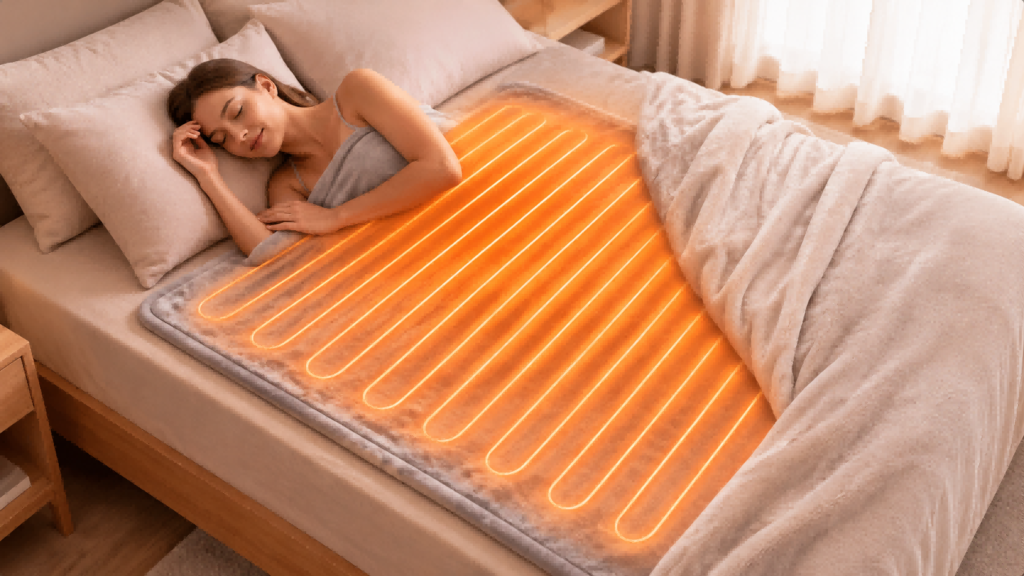
Cold spots and uneven heating are not always caused by blanket size. This buyer guide explains heating coverage,…

Why do some machine washable electric blankets stop heating after cleaning? This buyer guide explains wash-test requirements, heating-wire…

Looking for a heated pillow manufacturer? Explore heated lumbar support pillow designs, USB power configurations, heating and massage…
Partner with HEATMATE for professional heating solutions.
GET FREE QUOTEIf you have any questions, please do not hesitate to contact us.