Blanket Fabric Guide: 6 Common Fabrics for Heated Blankets
Fabric plays an important role in blanket comfort, warmth, appearance and durability. Different fabrics provide different hand feel,…
September 24, 2026
This guide explains how global buyers evaluate heating suppliers based on manufacturing capability, certifications and quality control.
CONTACT US
A request such as “Please quote an electric blanket” is usually not enough to start an accurate OEM project.
OEM electric blanket customization project involves much more than adding a logo or changing the fabric color. Buyers need to define the product structure, heating system, controller, electrical configuration, compliance requirements and packaging before an accurate quotation can be prepared.
professional OEM/ODM process helps turn an initial idea into a clearly defined product specification before sampling and mass production. At HEATMATE, our OEM and ODM customization process is designed to help customers move from an initial product concept to a production-ready electric blanket through structured specification review, product development, sample approval, testing and manufacturing.
The goal is simple: define the right product, develop the right solution, approve the sample and produce consistently at scale.
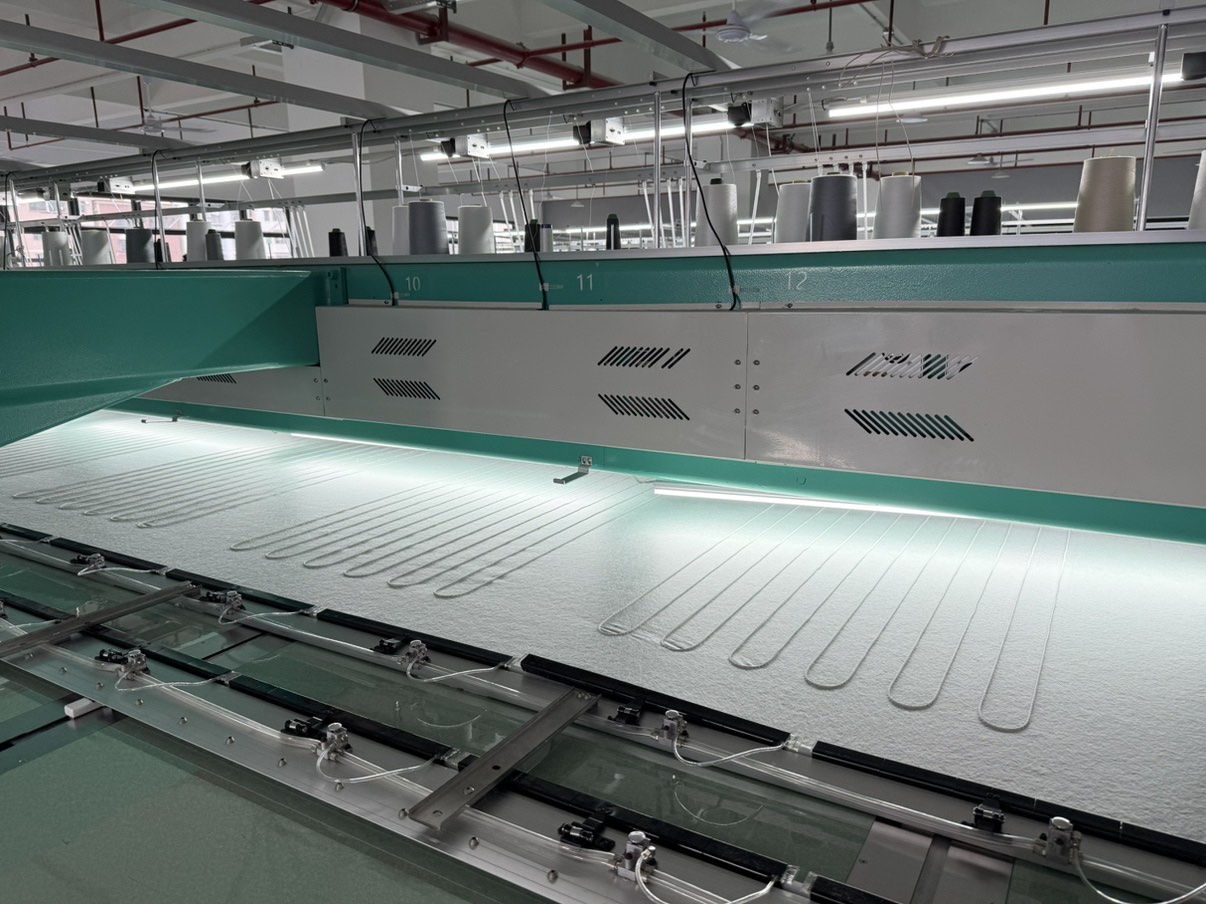
OEM and ODM electric blanket projects can cover different levels of customization. Some customers may only need private-label branding and packaging, while others require a completely customized product developed around their own specifications.
OEM/ODM project does not have to start from zero. Depending on the requirements, customers can choose an existing product platform and customize selected components, or work with the manufacturer to develop a more customized product.
A clear development process helps reduce unnecessary sampling, unexpected costs and production problems.
The first step is to define what you want to create. You do not need to have every technical detail finalized before contacting the factory. A professional manufacturer can help identify missing specifications and recommend suitable options.
| Requirement | Information to provide |
|---|---|
| Target market | Country or countries where the product will be sold |
| Product type | Heated throw, overblanket, underblanket, wearable blanket or another heated product |
| Intended use | Home, bedroom, sofa, travel, outdoor or another application |
| Size | Exact finished length and width |
| Fabric | Composition, construction, GSM, color and finish |
| Heating | Heating area, temperature levels and performance expectations |
| Controller | Basic controller, digital display, multiple levels, timer and other functions |
| Power | Voltage, frequency, plug and rated input |
| Branding | Logo, labels, controller artwork and other brand elements |
| Packaging | Retail box, bag, insert, barcode and carton requirements |
| Quantity | Estimated order quantity and product variants |
| Compliance | Target-market testing, certification or registration requirements |
If some specifications are not decided, the manufacturer can provide different configuration options with corresponding cost and MOQ differences. This is often more efficient than trying to finalize every technical detail before the first discussion.
Not every project requires the same level of customization.
OEM is suitable when you already have a clear product specification or an existing product concept and want the manufacturer to produce it according to your requirements.
Typical OEM customization may include custom size, fabric, color, heating configuration, controller, logo, labels and packaging.
ODM is suitable when you have a product idea but need the manufacturer to help develop the actual product solution. The manufacturer can work with you on product structure, material selection, heating system, controller configuration, functional design, prototype development, sample optimization and the production solution.
For buyers who do not have a complete technical specification, ODM development can provide a more efficient starting point.
The product category is one of the first decisions in an OEM project. Different heated products require different constructions.
Review HEATMATE's range of electric blankets and flexible heating products to identify the closest starting platform for your project.
The product should be developed according to its intended use, placement and operating conditions, rather than treating all heated products as the same product in different sizes. Intended use can also influence the heating layout, controller position, cord routing, fabric construction and safety considerations.
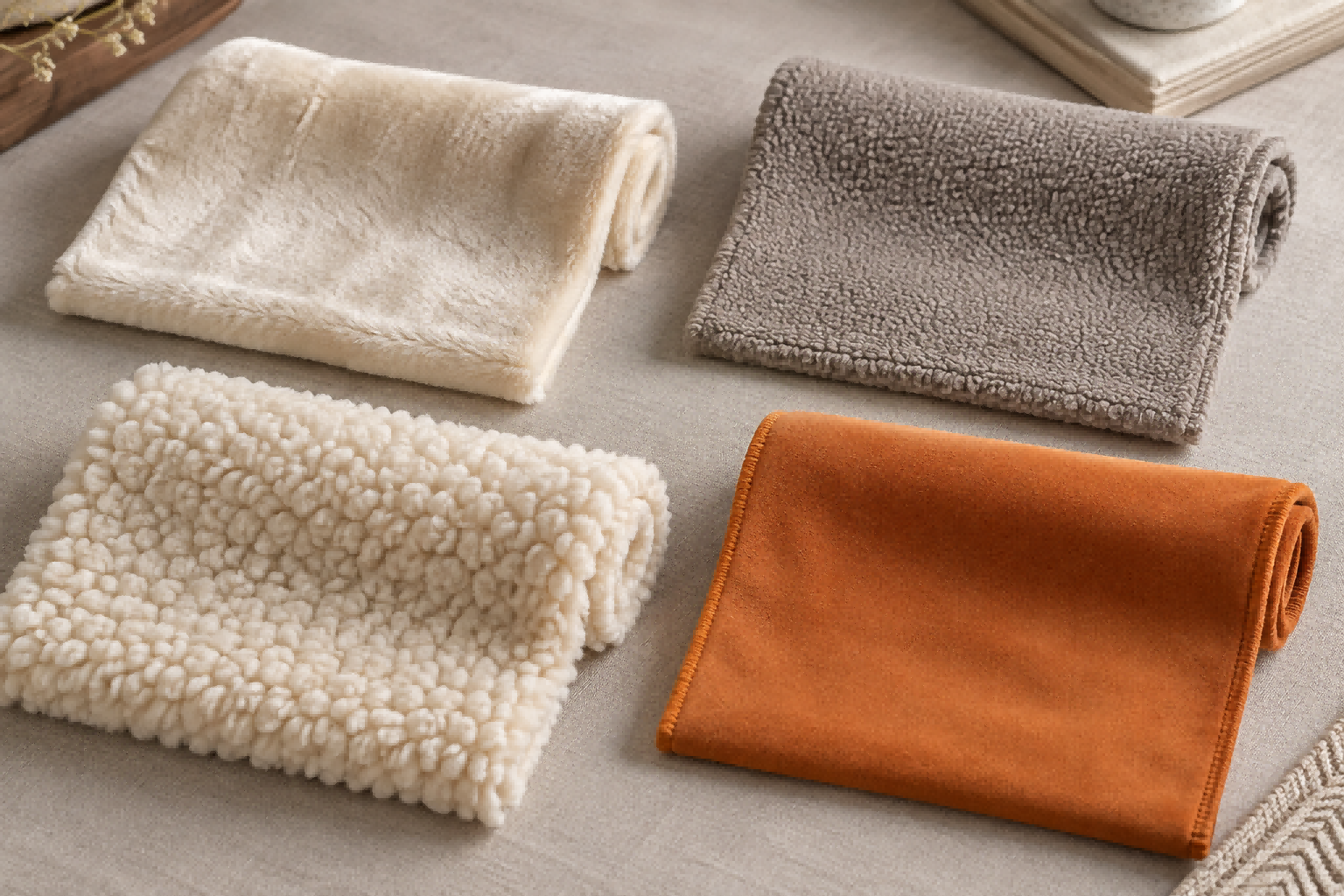
Material customization is one of the most visible parts of an OEM/ODM electric blanket project. Instead of simply specifying a marketing name such as “premium fleece,” the technical specification should define the actual material.
| Fabric area | Customization details |
|---|---|
| Fiber composition | Polyester, cotton blend or another confirmed composition |
| Construction and finish | Flannel, fleece, sherpa, brushed fabric, smooth fabric or another customized finish |
| Fabric weight | Target GSM and permitted GSM tolerance |
| Appearance | Custom color, print, pattern, surface finish and brand artwork |
| Performance | Pilling resistance, colorfastness, shrinkage, seam strength and wash durability |
A physical fabric swatch or approved reference sample should be confirmed before mass production. This creates a clear material baseline and helps prevent unapproved fabric substitutions during production.
The heating system is the core of an electric blanket and should be developed as part of the complete product system.
A customized heating solution may involve the heating element construction, heating area, wire routing, sensor arrangement, temperature control, connector design, insulation, controller compatibility and safety protection.
The heating element, sensor, controller, fabric layers and electrical components need to work together as one system. Changing the blanket size, fabric thickness, voltage or controller may affect the overall heating performance.
Rather than simply requesting “higher wattage,” an OEM project should define the required warm-up behavior, temperature distribution, temperature stability, heating consistency, control response and abnormal-condition response. The actual test method and acceptance limits should be established according to the applicable product standard and testing plan.
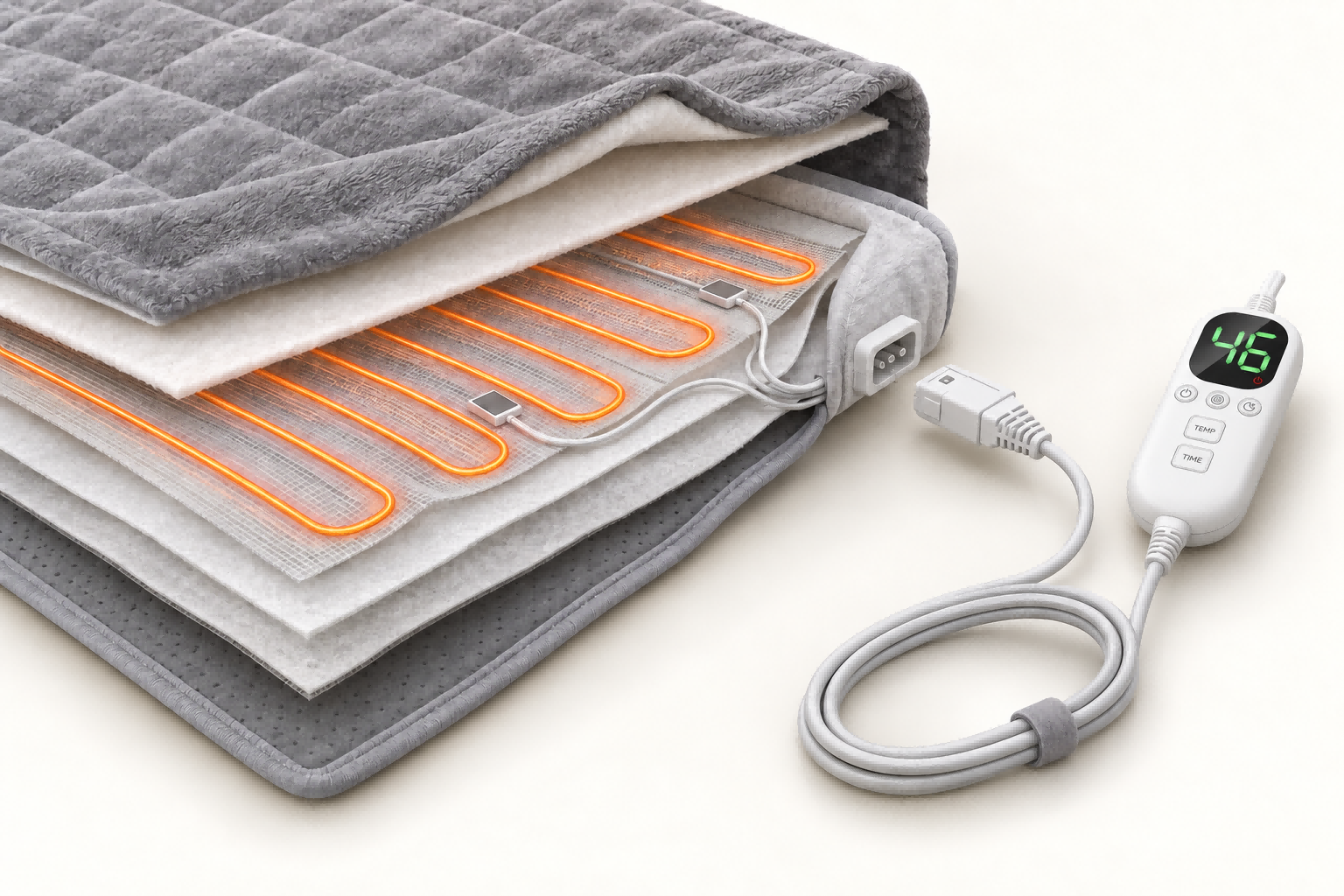
The controller is another important area of OEM/ODM customization because it directly affects the user experience.
Depending on the product, the controller can be customized in terms of the number of heat levels, digital display, button layout, single-zone or dual-zone control, temperature settings, timer functions, automatic shut-off, memory functions, controller housing, artwork and brand logo.
For private-label products, the controller can become an important part of the overall brand experience. The final controller configuration should be confirmed together with the electrical system and tested as part of the finished product.
OEM/ODM customization is not limited to the product itself. A complete private-label project can include customized branding throughout the product and packaging.
Customers can provide their own artwork files, brand guidelines and packaging requirements. The manufacturer can then incorporate these elements into the production specification for sampling and approval.
Before mass production, the customized product should be converted into a clear and approved reference sample. The sample approval process should verify more than appearance.
| Review area | Items to confirm |
|---|---|
| Product identity | Model number, sample version, controller version, rated voltage, rated power and date |
| Material | Fabric composition, GSM, color, surface finish, stitching and dimensions |
| Electrical system | Plug, cord, connector, controller, heating element and critical components |
| Performance | Heating behavior, temperature distribution, heat settings, timer functions and controller operation |
| Care | Washing method, drying instructions, controller removal and post-wash inspection |
| Packaging | Retail packaging, labels, instructions, barcode and carton markings |
The approved sample becomes the reference for mass production.
Electrical heating products require careful consideration of the destination market. There is no single approval that automatically applies to every country.
The applicable requirements may depend on the destination country, product category, rated voltage, controller, heating system, power supply, intended use and product construction.
IEC 60335-2-17:2022 covers the safety of blankets, pads, clothing and similar flexible heating appliances. However, importers should confirm the applicable national adoption, current edition, deviations and additional legal requirements for the specific product.
| Market | Key areas to review |
|---|---|
| European Union | CE-related requirements, electrical safety, EMC, RoHS, GPSR and applicable documentation |
| Great Britain | Applicable electrical equipment requirements, declaration and technical documentation |
| United States | Applicable product safety standard and certification route, including UL 964 where relevant |
| Canada | Applicable Canadian electrical safety requirements and certification |
| Australia | EESS scope, equipment risk level and registration requirements |
| New Zealand | Applicable electrical safety requirements and AS/NZS standards |
| Japan | Applicable PSE requirements and product classification |
An existing test report or certificate should not automatically be assumed to cover every customized version. Changes to the voltage, controller, heating system, critical components or product construction may require technical review, additional testing or updated approval documentation.
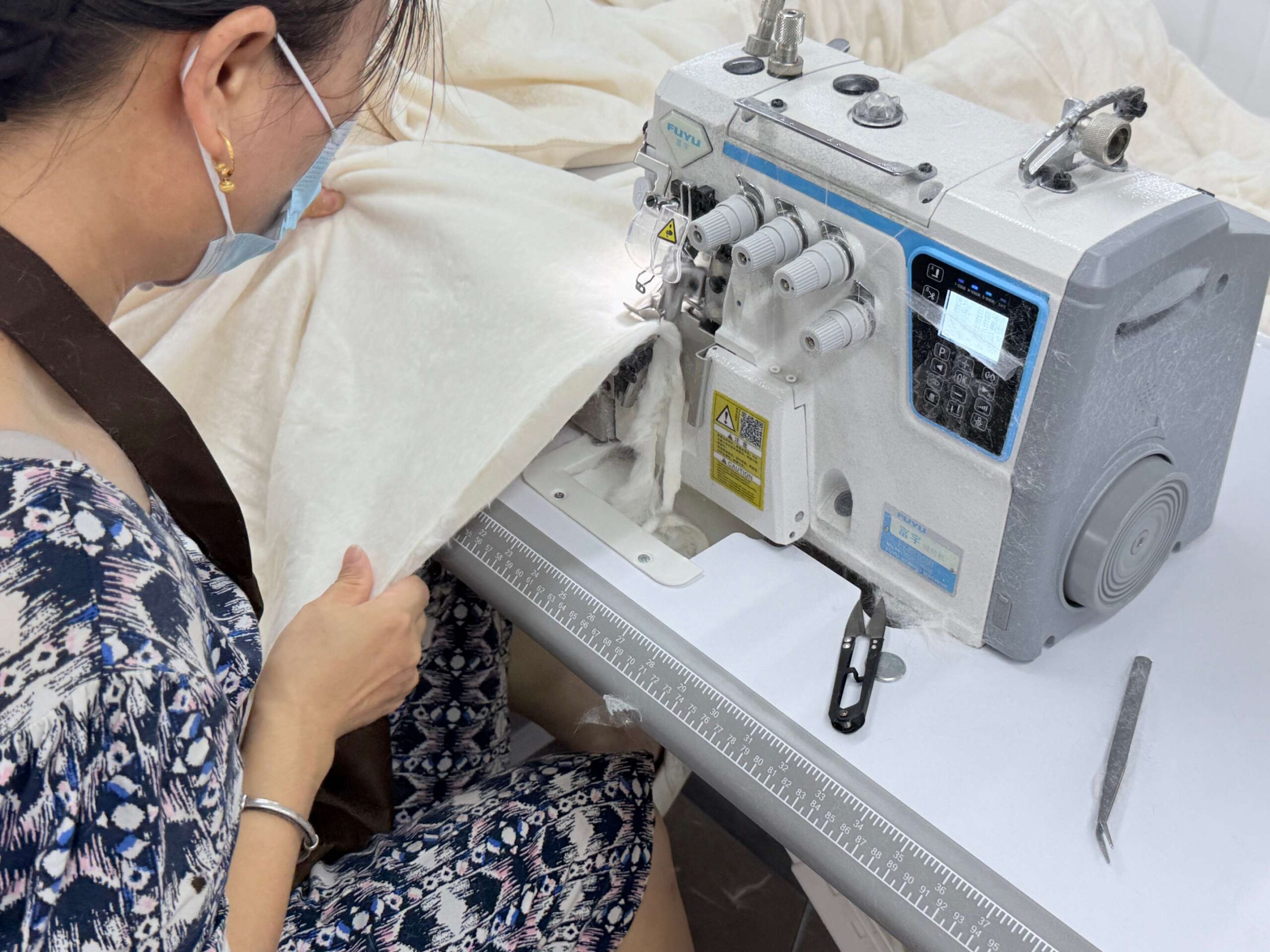
Once the specification and sample are approved, the project moves into production preparation. The factory should establish a production specification covering the approved fabric, heating system, controller, electrical components, dimensions, labels, branding, packaging and inspection requirements.
This creates a consistent production baseline. For OEM/ODM projects, change control is particularly important. If a material or component becomes unavailable, the replacement should not simply be substituted without evaluation. The change should be reviewed against the approved specification and, where necessary, tested again.
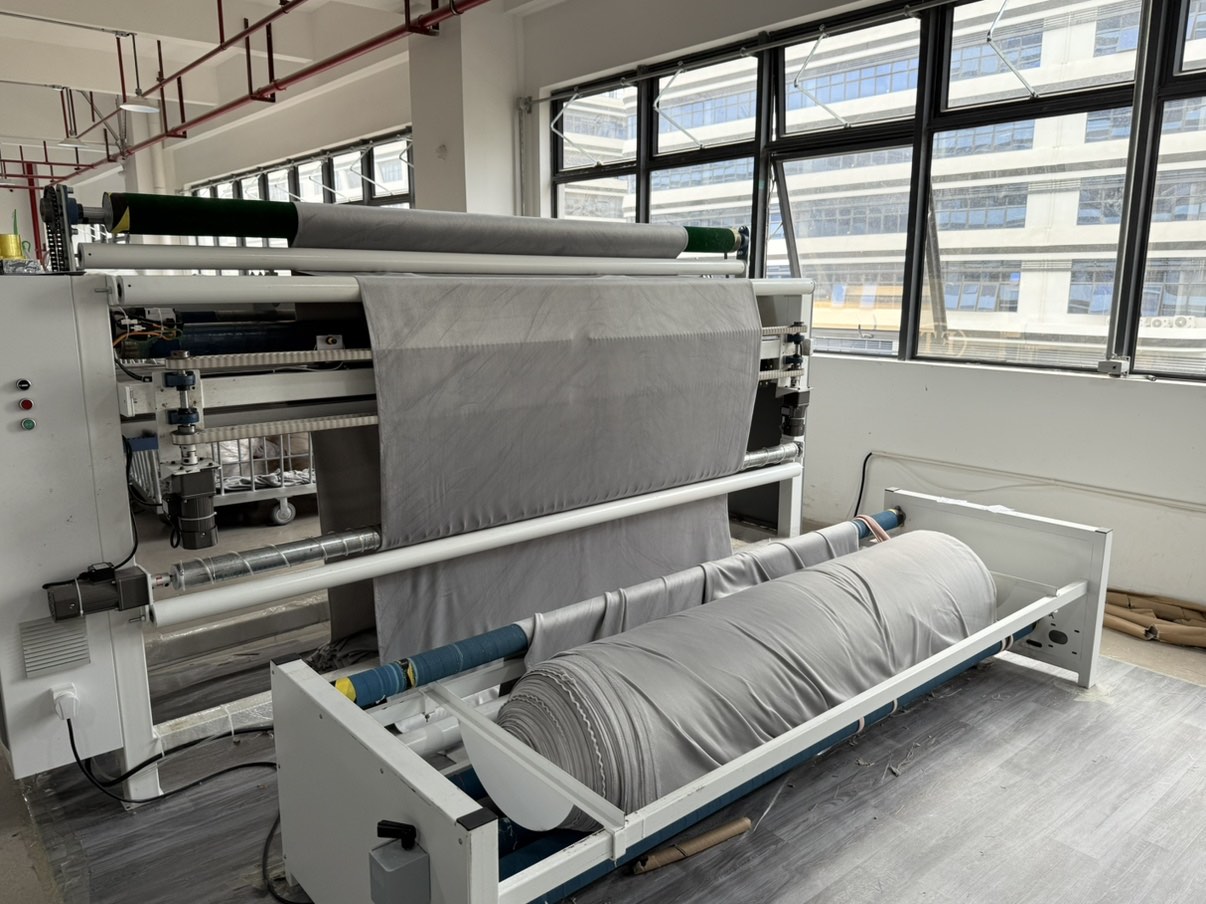
Quality control should begin before the finished blanket reaches final inspection. Buyers can review HEATMATE's factory and manufacturing capabilities when evaluating production and quality-control support.
| Production stage | Typical checks |
|---|---|
| Incoming materials | Fabric, heating element, controller, cord, plug, connector and packaging |
| Cutting and sewing | Dimensions, stitching, workmanship and construction |
| Heating assembly | Heating layout, routing and connection |
| Electrical production testing | Applicable electrical and safety tests |
| Functional inspection | Controller, heat levels, timer and functions |
| Final inspection | Appearance, dimensions, labels and accessories |
| Packaging inspection | Retail packaging, barcode and carton marks |
| Periodic verification | Wash durability, flex or folding durability and temperature mapping |
The inspection plan should define which checks are performed on every unit, which are performed by sampling and which are completed as type or periodic tests. The supplier and buyer should also agree on acceptance criteria and the corrective-action process if a result does not meet requirements.
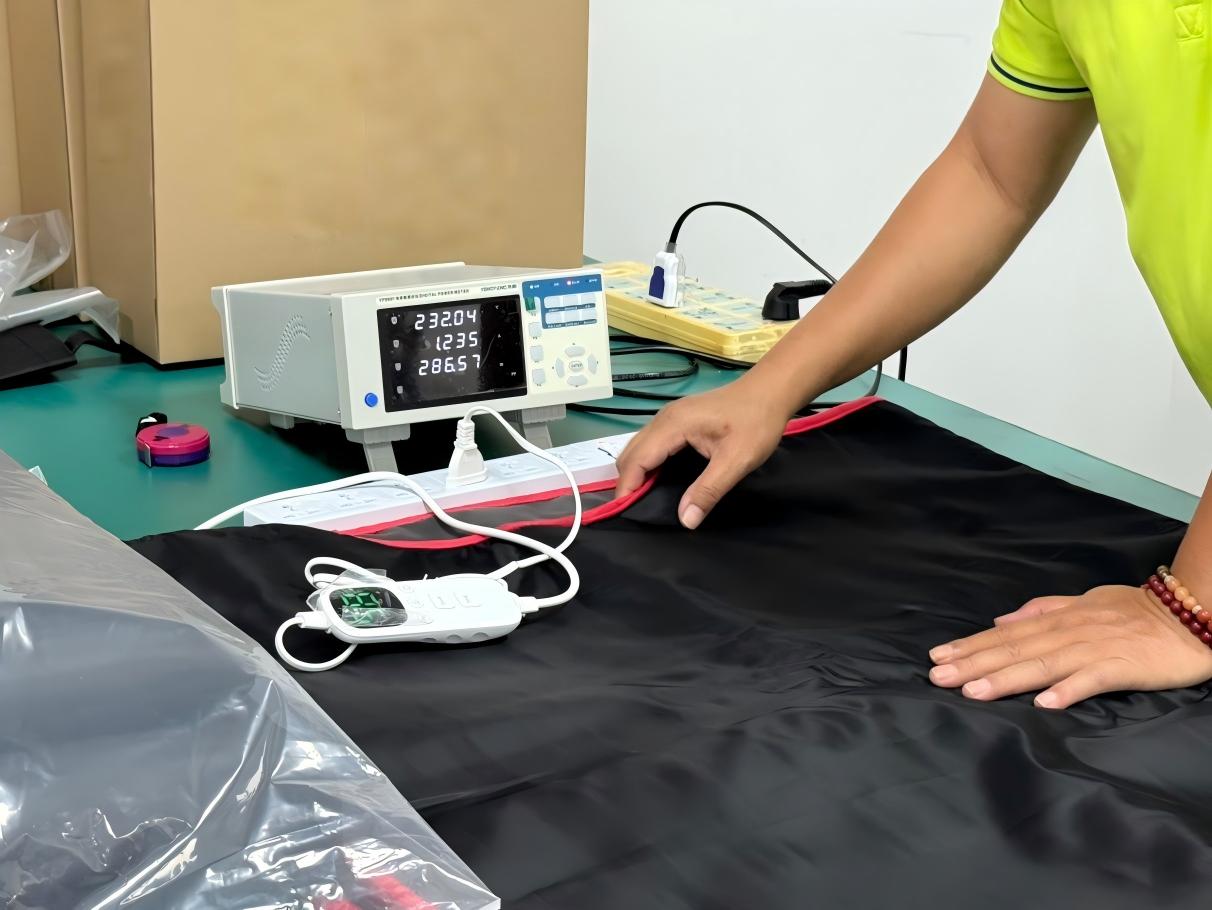
The final stage of an OEM project is preparing the approved product for shipment. Packaging can be customized according to the customer's sales channel.
Packaging requirements should be considered together with the sales market, retailer requirements, transportation conditions and product protection. Commercial terms such as MOQ, sample cost, lead time, Incoterm and payment terms should also be quoted according to the exact product configuration.
Before requesting quotation, buyers can prepare the following information:
The more clearly these requirements are defined, the more accurately manufacturers can evaluate the project and prepare a quotation.
Choosing OEM/ODM manufacturer is not simply about finding the lowest factory price. Capable manufacturer should be able to connect product development, material sourcing, electrical engineering, sampling, testing, production and quality control into one process.
When assessing potential partner, buyers should look beyond the initial quotation and evaluate the following capabilities.
Can the manufacturer turn your product concept into workable specification?
Can approved fabrics, heating systems and electrical components be controlled consistently?
Can the factory support both simple private-label projects and deeper product customization?
Can the manufacturer produce and modify samples based on structured feedback?
Can the factory maintain consistent quality when the project moves from samples to mass production?
Are inspection procedures and production test records clearly established?
Can the manufacturer provide relevant technical information and coordinate with testing laboratories when required?
Learn more about HEATMATE's manufacturing background when evaluating long-term private-label partner.
Two quotations may look similar but represent different fabrics, heating systems, controllers, packaging or compliance requirements. Always compare quotations based on the same technical baseline.
Reference image is useful, but it does not define the internal heating system, fabric composition, electrical rating or safety requirements. Use the image as starting point and convert it into measurable specifications.
Terms such as “premium fabric,” “fast heating” or “high quality” are not enough for production. Whenever possible, convert them into measurable requirements.
Changing the controller, heating system, voltage or other critical components may affect testing and certification.
The approved sample should represent the complete product configuration, not just its appearance.
MOQ and lead time can change according to fabric, color, controller, packaging, customization level and current production planning.
OEM is generally based on the customer's specifications or product concept, while ODM involves greater support from the manufacturer in developing the product solution. Buyer with an existing design may choose OEM production, while buyer with only product idea may prefer ODM development.
Depending on the project, customization can include size, fabric, color, heating system, controller, temperature settings, timer, plug, logo, labels, packaging and other product details.
Professional OEM/ODM manufacturer can help identify missing specifications and recommend suitable product configurations. However, the final quotation should clearly state the configuration and assumptions being priced.
Yes. reference product, sample, drawing or product image can help the manufacturer understand your requirements. The factory can then evaluate which components and construction details can be reproduced, modified or redesigned.
Controller functions can be customized depending on the project, including heat levels, display, timer, control zones, button layout and branding. The final controller must be evaluated together with the complete electrical and heating system.
MOQ depends on the product configuration. Existing materials and product platforms may allow a lower development requirement, while custom fabric colors, unique controllers, new tooling or specialized packaging may increase MOQ.
There is no universal development time. The timeline depends on material availability, product complexity, controller and heating-system changes, sample rounds, testing, packaging approval and production capacity. Dated development and production schedule should be confirmed after the specifications are reviewed.
Possibly, but the coverage must be checked against the exact product configuration. Changes to voltage, controller, heating system or other critical components may affect the validity or applicability of existing test evidence.
No. CE marking applies to products placed on the EU market and should not be treated as universal approval. Each destination market should be assessed separately for applicable regulations, standards, testing, certification, registration, labeling and importer responsibilities.
Successful OEM/ODM project is more than putting logo on an existing blanket. It is structured process that connects product concept, specification, material selection, heating system, controller, branding, sampling, testing, approval, mass production, quality control, packaging and delivery.
Xlear specification allows the buyer, manufacturer and testing laboratory to work from the same technical baseline. It also makes quotations easier to compare, samples easier to approve and mass production easier to control.
At HEATMATE, we support customers throughout the OEM/ODM development process, from initial product requirements and product configuration to customized sampling, production and quality control.
Whether you already have complete specification, existing product sample or simply product idea, the first step is to define the project requirements and identify the most suitable manufacturing solution.
Share your product idea, target market, preferred materials, functions and estimated quantity. HEATMATE can review the requirements and help identify a suitable path from product concept to production.
Discuss Your OEM RequirementsHEATMATE is an OEM/ODM supplier specializing in the development and production of innovative heating products, such as high-quality heating blankets USB Heated Scarf, Electric Heated Blanket, Electric Heated Under Blanket,USB Heated Jacket, USB Heated Shawl and other heated product. We have our own production factories in Shenzhen, Sichuan, and Henan. We have strong manufacturing capabilities and a commitment to large-scale production.
More manufacturing knowledge for global heating-product buyers.
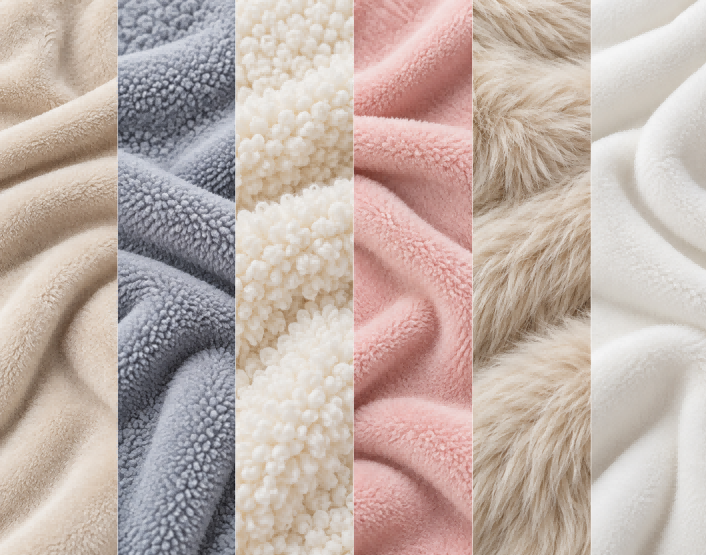
Fabric plays an important role in blanket comfort, warmth, appearance and durability. Different fabrics provide different hand feel,…
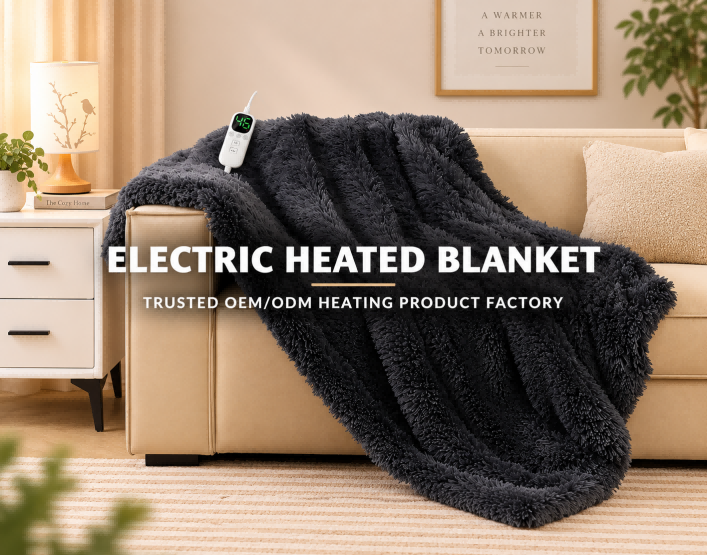
Winter demand can create strong sales opportunities for heated blankets, but seasonal products also carry a specific inventory…

A heated throw blanket combines soft textile materials with an integrated electrical heating system to provide controlled warmth.…
Partner with HEATMATE for professional heating solutions.
GET FREE QUOTEIf you have any questions, please do not hesitate to contact us.