The Hidden Costs of Importing Electric Blankets: Freight, Duties, Testing & Returns
Factory price is only the starting point. This guide shows importers how freight, customs duties, product testing, warehousing…
October 23, 2026
An electric blanket sample may look right, feel right and pass its initial checks—yet the bulk order can arrive with a different fabric texture, controller configuration, stitching quality or heating performance. For importers, retailers and private-label brands, these inconsistencies can lead to customer complaints, delayed launches and avoidable costs. The key is to establish clear product specifications, control changes after sample approval, and verify production quality before the full order is completed. This guide explains how buyers can prevent sample-to-bulk discrepancies and build a more reliable quality control process with their manufacturing partners.
CONTACT US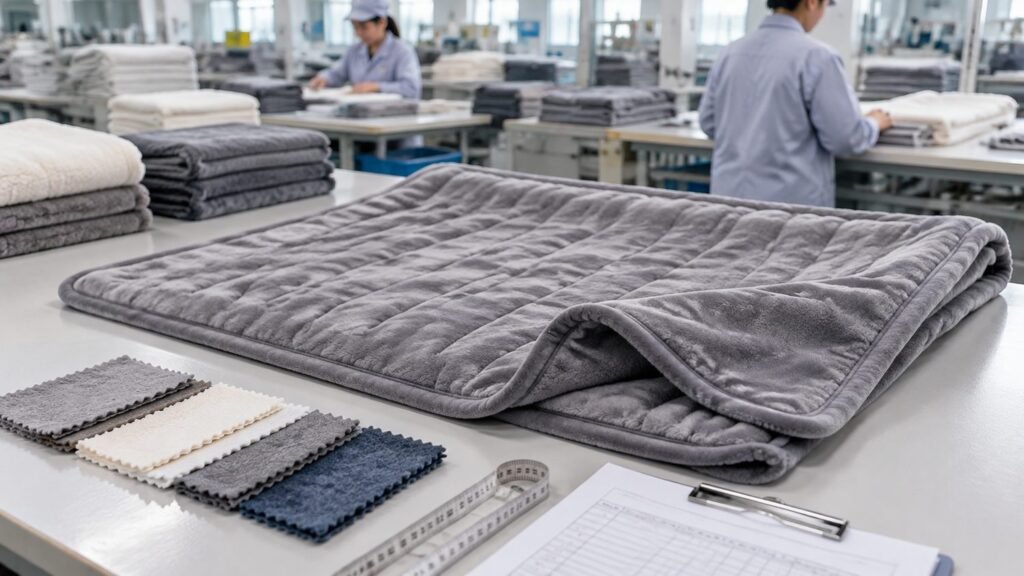
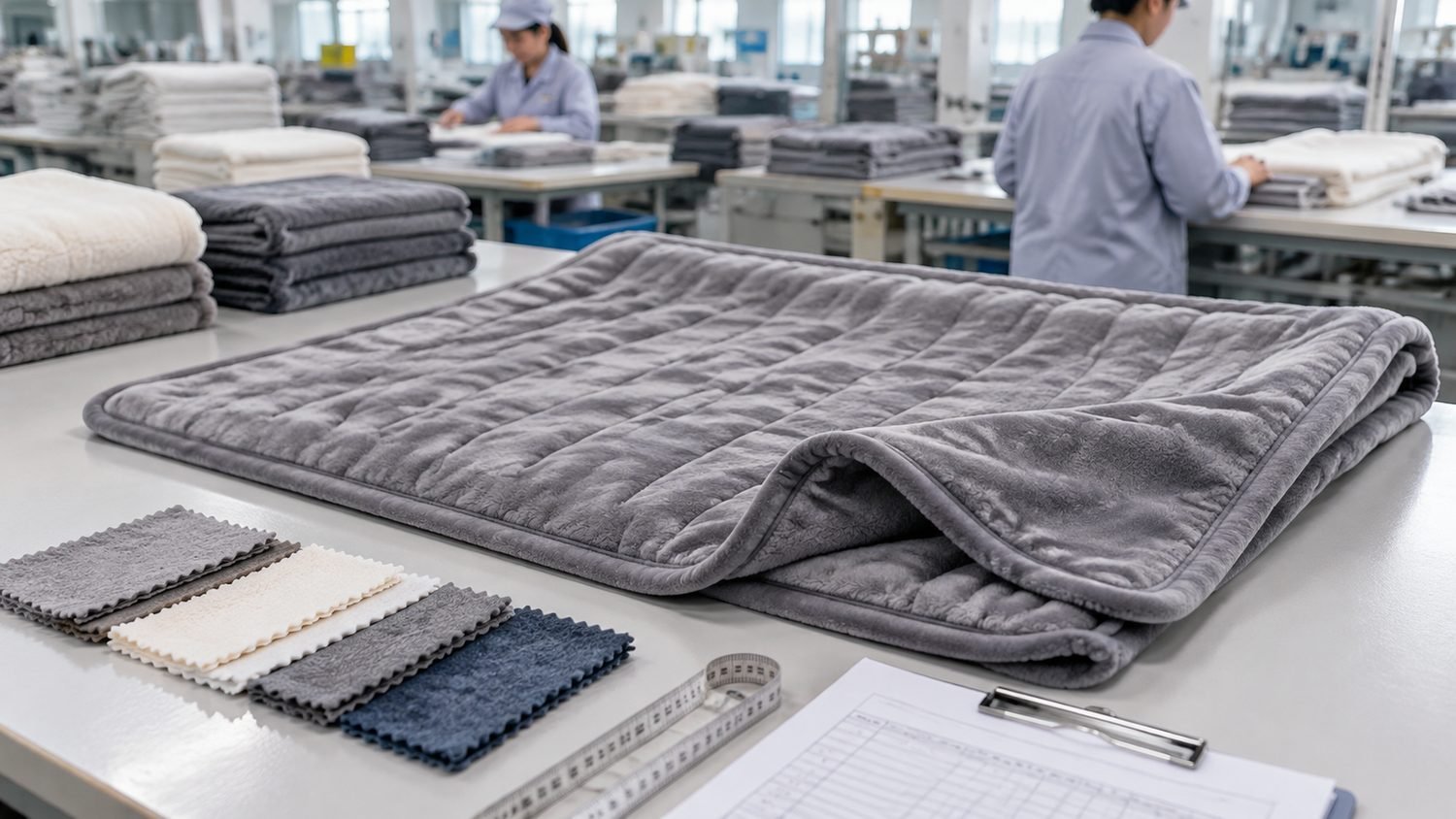
Before releasing a bulk order, confirm the final product specification, retain one identified and approved Golden Sample, require written approval for material or component substitutions, inspect the first production article and agree on inspection criteria and traceability records. Sample approval defines the target product; it does not replace production quality control.
Electric blanket samples may perform well during evaluation, yet bulk orders sometimes reveal unexpected differences in fabric texture, heating performance, controller specifications or manufacturing quality. For importers, retailers and private-label brands, the gap between an approved sample and mass production can lead to customer complaints, delayed deliveries, higher return rates and additional costs.
The problem is rarely solved by asking a supplier to “make the bulk order the same as the sample.” Consistency depends on how clearly the approved product is specified, how changes are controlled and how production is checked before the full order is completed.
This guide explains the common reasons electric blanket samples differ from bulk production and how buyers can reduce the risk through material specifications, Golden Sample management, first-article approval, batch traceability and written quality agreements.
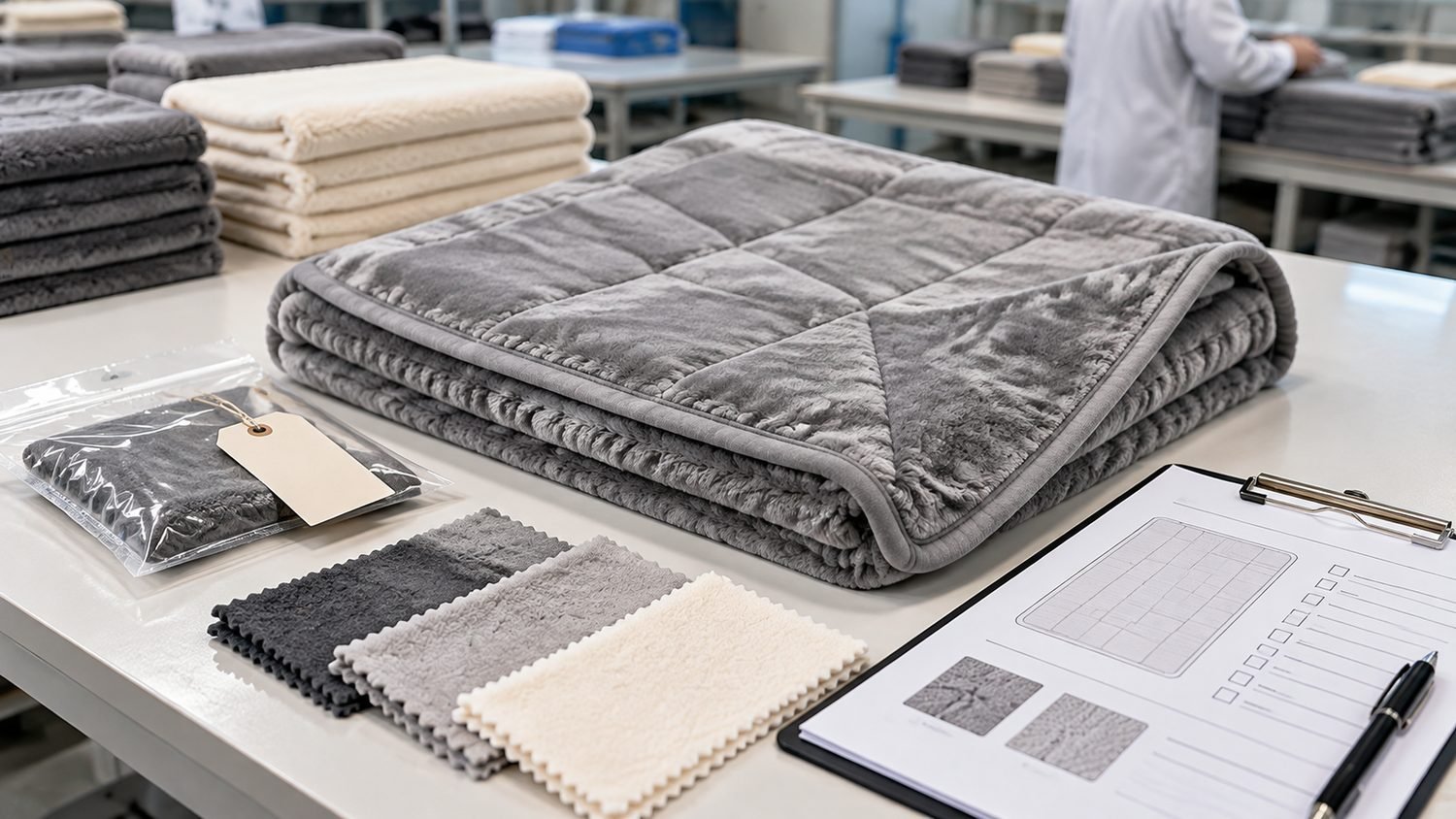
For checks completed before goods leave the factory, see our guide to electric blanket safety testing and quality inspection before shipment. Sample approval and pre-shipment inspection serve different purposes, and a reliable sourcing plan needs both.
A development sample may be prepared by a sample-room technician with extra attention to individual details. Mass production has a different task: reproduce the approved construction consistently across a larger quantity using the planned materials, components, equipment and process settings.
Differences can appear when the bulk team uses a new fabric lot, a different controller version, revised sewing settings or a substitute component that was never formally approved. If these details are not documented, the factory may believe it is following the same specification even though the finished product has changed.
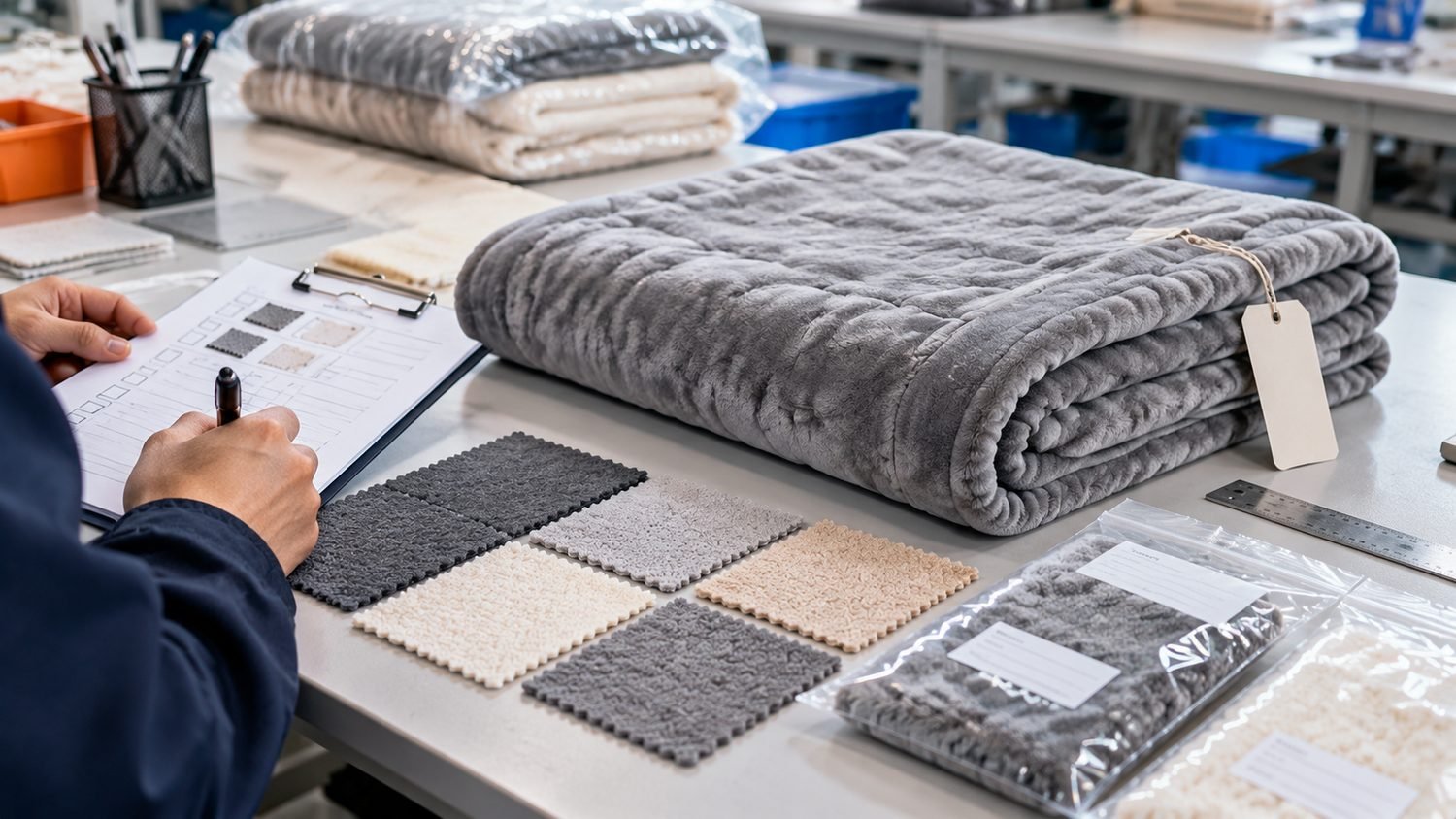
Materials sold under the same general name can still vary in weight, thickness, softness, color, surface texture or shrinkage. These differences affect appearance and hand-feel, but can also influence sewing behavior, drape and the perceived warmth of the finished blanket.
How buyers can prevent it:
Material descriptions such as “soft fleece” or “premium flannel” are not sufficient acceptance criteria on their own. The specification should describe the measurable attributes that matter to the product.
The controller is a functional component, not just an accessory. Differences in controller model, heat levels, timer functions, connector structure, cable length or protection features can change the product’s operation. A controller that looks similar in a photo should not automatically be treated as technically equivalent.
For private-label projects, a replacement controller can also affect the approved appearance, user instructions, markings and technical documentation. The controller should therefore be listed as a controlled component in the product specification.
| Detail to confirm | What buyers should record | Useful approval evidence |
|---|---|---|
| Model and appearance | Exact model or revision, housing, display, button layout and branding | Approved component photo or drawing |
| Electrical ratings | Rated voltage, power and other applicable electrical parameters | Approved product specification |
| Functions | Heat levels, temperature settings, timer steps and agreed shut-off functions | Functional test record and approved user manual |
| Connector and cable | Connector shape, mating interface, cable length, strain relief and routing | Dimensioned drawing or signed reference sample |
| Protection and compliance | Required protection features and the approved product configuration | Applicable test records and conformity documentation |
| Private-label details | Logo, labels, warnings, markings and artwork revision | Approved artwork and label files |
Any proposed substitution should be submitted for buyer review before implementation. Depending on the change, further engineering evaluation, testing or compliance review may be necessary. Our OEM electric blanket customization guide explains why controller functions, electrical configuration, materials and product construction should be defined together during development.
Do not approve a controller by appearance alone. Model identification, connector fit, electrical ratings and required functions should match the approved configuration. If a critical detail changes, update the specification and approval record before production continues.
Even when materials and components remain unchanged, manufacturing variation can create differences between the sample and the finished order. Operators may interpret drawings differently, sewing settings may drift or the heating layout may be positioned differently from the approved construction.
Before production, define acceptable tolerances for dimensions, stitching, heating-zone layout, component position and edge finishing. Approved drawings, construction diagrams and inspection criteria help sampling, production and QC teams work from the same reference.
For heated products, construction changes should be reviewed as part of the complete electrical and thermal system. A change in blanket size, fabric thickness or internal layers may affect heat distribution; it should not be treated as a cosmetic adjustment only.
A Golden Sample is the final physical product approved as the official reference for mass production. It should represent the exact configuration authorized by the buyer—not an earlier prototype or a sample that differs from the current specification.
Without controlled sample management, the buyer, sample room and production team may compare bulk products against different versions. That makes quality decisions subjective and can delay the resolution of disputes.
For OEM and ODM projects, approval should cover the complete product configuration. A fabric swatch or appearance-only sample cannot confirm controller functions, internal construction, packaging or electrical requirements.
Golden Sample approval and first-article approval serve different purposes. The Golden Sample defines what the finished product should be. First-article approval checks whether the actual production setup can reproduce it using the intended materials, components, equipment and procedures.
Before releasing full production, buyers should request confirmation of actual production units. The review should include:
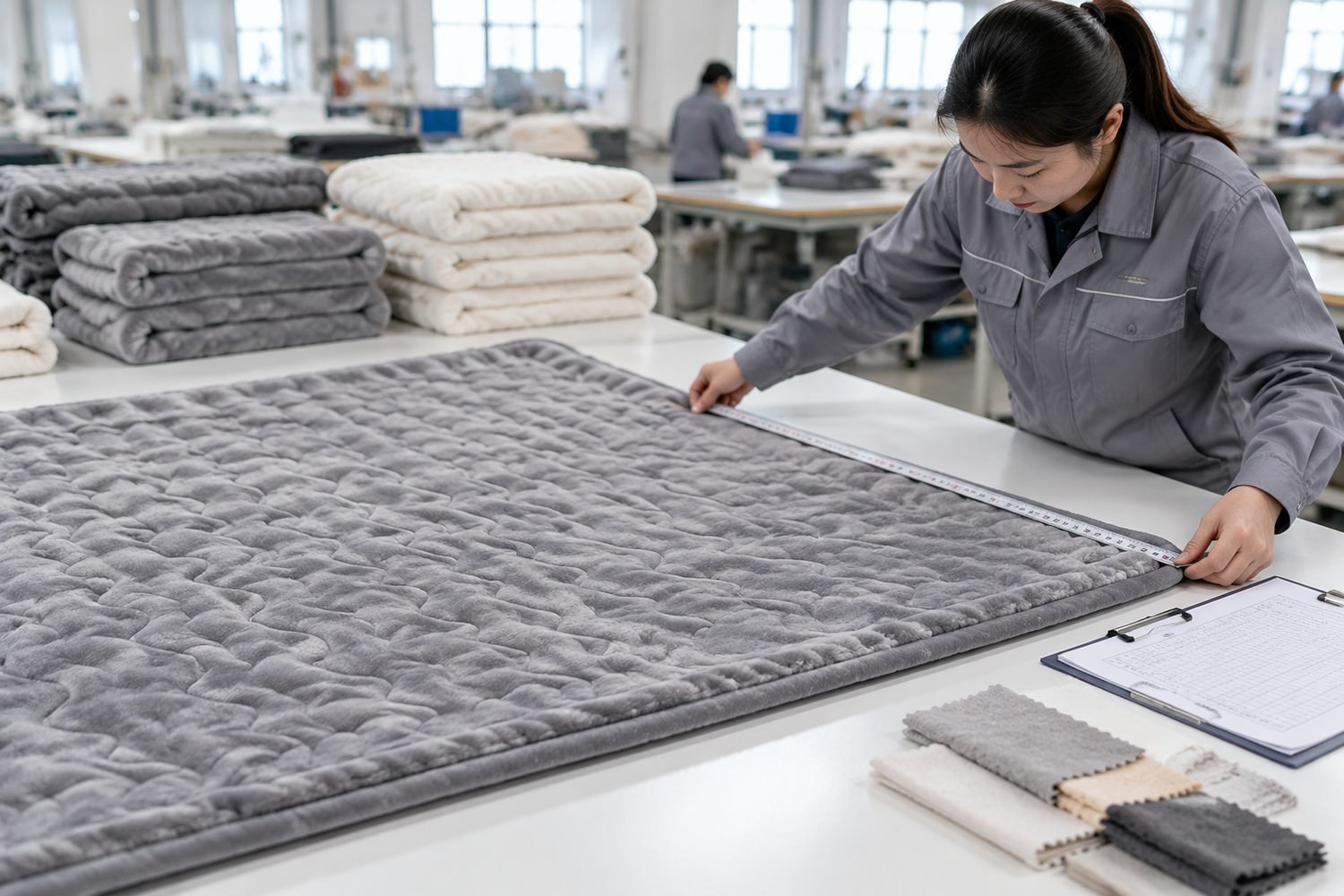
If a significant deviation appears, investigate and correct it before the production run continues. For large orders or projects involving multiple production lines or locations, agree whether each line or location requires its own first-article approval.
Batch traceability connects finished products with the materials, components, production dates and inspection results used to make them. Without traceability records, investigating a complaint can become difficult because the source of a deviation may remain unclear.
For electric blanket production, useful traceability information includes:
Buyers should agree with suppliers on record-retention periods, traceability methods and the process for investigating quality claims. For repeat orders, records also help compare the latest production batch with the previously approved configuration.
<Verbal expectations are often insufficient for complex OEM and ODM projects. A written quality agreement establishes responsibilities, approval requirements, inspection standards and procedures for handling deviations.
| Control area | What to define in writing |
|---|---|
| Product specification | Approved drawings, dimensions, materials, construction and functions |
| Golden Sample | Sample ID, revision, approval record and storage responsibility |
| Material and component changes | Advance notification, impact review and written buyer approval |
| First-article approval | Inspection scope, required evidence and production-release authority |
| Tolerances and inspection | Measurable acceptance limits, sampling method and inspection timing |
| Traceability | Required records, retention period and batch identification method |
| Nonconforming products | Containment, corrective action, rework or replacement responsibilities |
| Change control | Revision management for products, controllers, labels, packaging and processes |
Also define how rework, replacement, additional inspection and delivery delays will be handled when a product does not meet agreed requirements. The remedy should be negotiated for the specific project before a dispute occurs.
When comparing suppliers, quality-control capability should be evaluated alongside product range, communication and production planning. See our guide on how to choose an electric blanket manufacturer for a broader supplier-evaluation framework.
Use this checklist before authorizing bulk manufacturing. It can also be included in a purchase order or project quality file.
Before production starts: if a critical specification is still “to be confirmed,” assign an owner and deadline. Do not leave unresolved details for individual operators to interpret during production.
A sample that matches the buyer’s expectations is not, by itself, proof that the product meets every safety or market-access requirement. The approved configuration, applicable test evidence, product markings and destination-market requirements should be reviewed together.
Changes to the controller, heating system, rated electrical parameters or other critical components may require technical review and, depending on the product and applicable requirements, additional testing or updated documentation. Buyers should confirm the scope of existing reports and certificates rather than assuming a report automatically covers every customized version.
For a clearer explanation of market-specific certification considerations, read Electric Blanket Certifications Explained. For inspection points before dispatch, refer to the electric blanket safety testing and quality inspection guide.
For heating-product OEM and ODM projects, consistency depends on keeping product specifications, materials, components, manufacturing procedures, inspection criteria and approval records aligned as an order moves from sampling into mass production.
HEATMATE works with buyers to review project requirements, discuss customization options, confirm samples and coordinate product and quality requirements before bulk manufacturing. Buyers can explore our OEM and ODM manufacturing services or browse the electric heating product catalog to identify a suitable starting point.
For project budgeting, our guide to custom electric blanket cost and OEM pricing factors explains how size, fabric, heating system, controller, packaging and order quantity can affect quotations.
No. Sample approval defines the reference product, but consistency also depends on material control, production settings, component control, inspection and change management during mass production.
A Golden Sample is the final physical product approved as the official reference for production. It should be identified by revision and linked to its materials, components, functions, labels and inspection requirements.
The controller model and agreed functions should match the approved configuration. Any substitution should be reviewed and approved in writing before implementation, with additional testing or compliance review where required.
First-article approval checks whether the actual production process can reproduce the approved sample. It normally takes place before the full production run is released.
Useful records include material and component batch information, sample revision, first-article approval, production date and line, inspection records, applicable test results and finished-product identification.
The inspection plan should match the project risk and agreed quality requirements. At minimum, buyers should confirm the first production article, define any necessary in-process checks and agree on final inspection and acceptance criteria before shipment.
Share your target market, product type, fabric, size, controller functions, expected quantity and packaging requirements. A clear brief helps both sides confirm the right sample and define production checks before bulk manufacturing.
Contact HEATMATE to discuss your electric blanket OEM/ODM project.
HEATMATE is an OEM/ODM manufacturer specializing in electric heating products, including heated blankets, heated throws, heated underblankets, USB heated scarves, heated jackets and related products.

More manufacturing knowledge for global heating-product buyers.
Factory price is only the starting point. This guide shows importers how freight, customs duties, product testing, warehousing…
Ordering electric heating pads in bulk requires more than comparing unit prices. This guide explains heating coverage, voltage,…
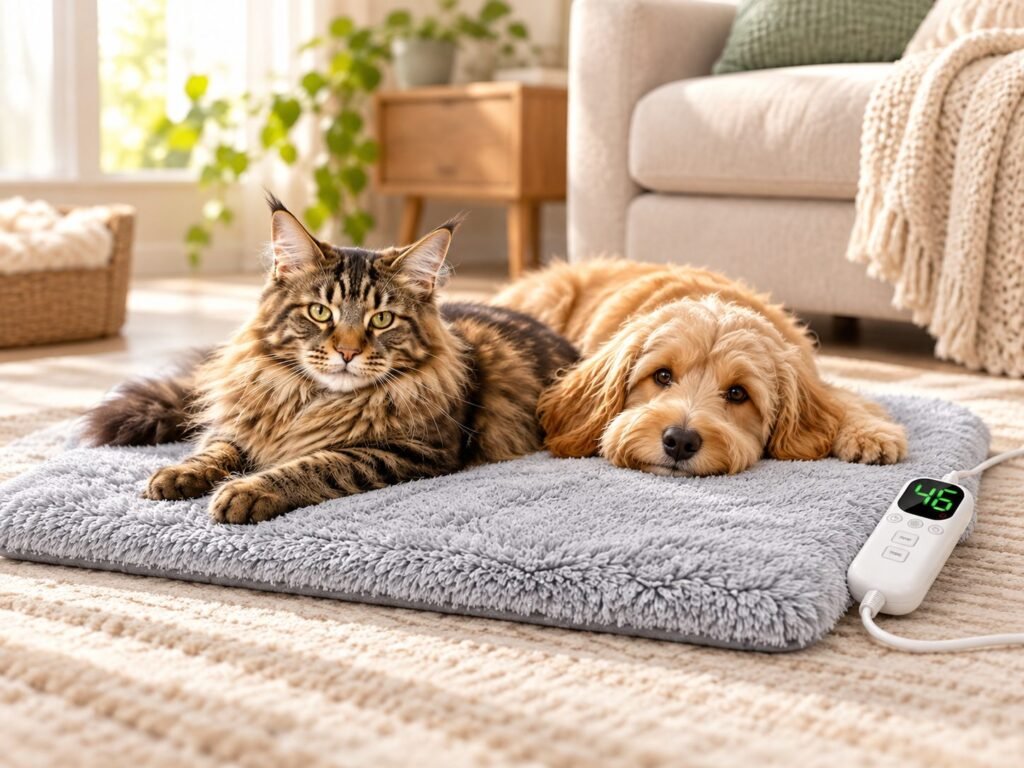
Pet heating pad sourcing involves more than comparing unit prices. This guide explains temperature control, cable protection, power…
Partner with HEATMATE for professional heating solutions.
GET FREE QUOTEIf you have any questions, please do not hesitate to contact us.