Electric Blanket Controller Problems: What OEM Buyers Should Test Before Bulk Production
Electric blanket controller problems can lead to returns, warranty claims and production risks. This OEM buyer guide explains…
November 13, 2026
Cold spots and uneven heating are not always caused by blanket size. This buyer guide explains heating coverage, wire spacing, single- and dual-zone designs, temperature-distribution testing and the specifications retailers should confirm before bulk production
CONTACT US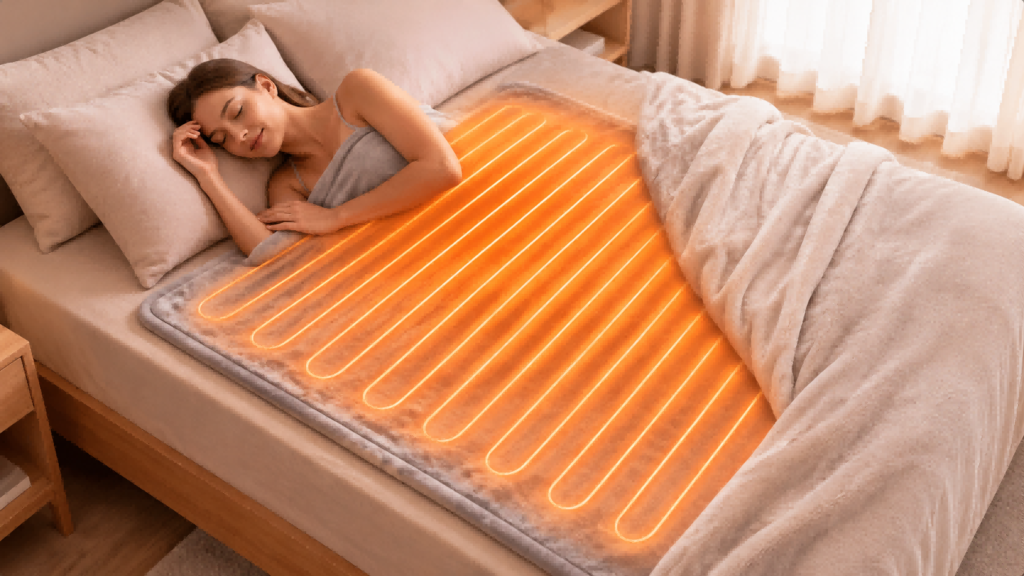
For a retail customer, uneven warmth may simply feel disappointing. For a brand owner, however, the same issue can turn into poor reviews, returns and inconsistent product performance across sizes.
That is why an electric blanket specification should distinguish between blanket dimensions, active heating area and heating-zone configuration. These are related, but they are not the same thing. Buyers comparing different constructions can also review HEATMATE’s electric blanket product range to see how size, textile structure and heating configuration vary across product types.
A cold spot is an area that feels noticeably cooler than the surrounding heated section. It does not always mean the blanket is defective. Some edges and borders may intentionally contain no heating element, while other cold areas may indicate wider wire spacing, shifted components or inconsistent heat transfer through the textile layers.
Heating wires are normally arranged in a planned path through the blanket. The exact pattern varies by design, but the basic sourcing principle is simple: larger gaps between active heating lines can create more noticeable temperature differences between one area and another.
When comparing suppliers, retail buyers should ask for more than a marketing statement such as “fast heating” or “10 heat settings.” Request an internal layout drawing or heated-area specification showing the direction, approximate spacing and boundary of the heating circuit.

Many electric blankets do not heat from edge to edge. Non-heated borders may be included for seam construction, electrical routing, comfort or design reasons.
This is not automatically a quality problem. The real issue is whether the buyer understands the actual heated area before approving the product.
Heating distribution can also change if the internal structure does not hold the heating element in the intended position. During sampling and mass production, buyers should confirm that the same wire layout, fixing method and textile construction are maintained.
This is why sample approval should be linked to the final production specification. HEATMATE’s guide to electric blanket sample approval and bulk-production consistency explains why the approved sample should remain the reference for later production checks.
A thicker or more insulating fabric can change how quickly heat is felt at the surface. Even when the electrical system is operating normally, uneven filling, quilting or material thickness can create different perceived temperatures across the same blanket.
No. Blanket size describes the outside dimensions of the finished textile product. Heated area describes the part of the blanket that actually contains active heating elements.
A larger blanket may use:

For retailers comparing products that look similar in photographs, this distinction is important. A supplier quotation that lists only “150 × 200 cm” tells you the blanket size, but it does not tell you how much of that surface is actively heated.
Overall dimensions include both heated and non-heated textile areas. Depending on the product, buyers may need to confirm single, double, queen or king sizing, sofa-throw dimensions, mattress compatibility, border width and finished-product tolerance.
Heating coverage refers to the area containing the active heating system. Useful specifications include:
For example, a blanket with a total surface area of 30,000 cm² and an active heated area of 24,000 cm² has an 80% heating-coverage ratio.
That number is useful for comparison, but it should never be used alone. An 80% coverage ratio can still produce uneven warmth if wire spacing, electrical output, fabric thickness or zone design is inconsistent.
Photographs and maximum temperature claims are not enough. A stronger supplier comparison uses measurable specifications, physical samples and repeatable test conditions.
Ask for a drawing or technical diagram showing the active heating boundary, wire direction and approximate spacing. The document does not need to disclose confidential engineering details, but it should be sufficient for the buyer to understand where heat is intended to be generated.
Request the active heated length, width and coverage percentage for each blanket size. Make sure different suppliers are using the same calculation method before comparing percentages.
A sample should be measured at several locations rather than only at the center. Useful checkpoints include:
Testing conditions should record ambient temperature, operating time, selected heat setting and measurement position. Without consistent conditions, temperature readings from different suppliers are difficult to compare.
The highest temperature on the blanket is not the same thing as even heating. Buyers should review the difference between measurement points and look for unexpected cold or hot areas within the intended heating zone.
Thermal imaging can be useful for visualizing the pattern, but it should support—not replace—measured temperature data and an agreed test method. For broader QA considerations, see HEATMATE’s electric blanket safety testing and quality inspection guide.
A development sample can perform well while later production units use different fabric, altered wire placement or modified assembly methods. The buyer should define which specifications are controlled and how production units are checked against the approved sample.
The right heating-zone configuration depends on product size, intended use, target customer and price positioning. More zones are not automatically better; they add complexity and should solve a real user need.
A single-zone system uses one heating circuit and one temperature-control logic across the intended heating area. It is commonly suitable for heated throws, standard electric blankets, heating pads and simple heated shawls.
Retail advantages: simpler product architecture, easier operation, lower development complexity and straightforward positioning for entry-level or mid-range collections.
Dual-zone products divide the heated area into two independently controlled sections. This is particularly relevant for larger bedding products used by two people who may prefer different warmth levels.

Typical applications: double electric blankets, queen-size blankets, king-size blankets and dual-control heated underblankets. For bedding-focused projects, HEATMATE’s heated blanket and underblanket product range can be used as a reference when deciding which construction should carry single- or dual-zone heating.
Buyer checks: independent operation, separate temperature settings, zone boundary, controller configuration and consistent performance on both sides.
Multi-zone systems divide the product into several heating sections. They can support targeted warmth or more differentiated control, but they also require clearer electrical design, testing and user instructions.

| Product Category | Recommended Heating Configuration | Key Buyer Considerations |
|---|---|---|
| Electric Heated Blanket | Single-zone or multi-zone | Blanket size, wire spacing, active coverage, temperature consistency |
| Heated Underblanket | Single-zone or dual-zone | Mattress fit, independent controls, heated area, zone boundary |
| USB Heated Shawl | Compact heating zone | Shoulder and back coverage, power source, placement |
| Heating Pad | Targeted heating zone | Heating position, size, temperature control and intended use |
If your project requires different sizes, heating-zone layouts, fabric or controller configurations, review HEATMATE’s heated blanket OEM & ODM capabilities before finalizing the technical brief.
A supplier should not have to guess what “even heating” means for your brand. Before sampling, write the heating requirements into the product specification.
For broader supplier due diligence, HEATMATE also provides a guide on how to choose an electric blanket manufacturer.
Some cooler areas may be outside the active heating zone by design. Unexpected cold spots inside the intended heated area may be related to wider wire spacing, shifted elements, electrical inconsistency or differences in fabric construction.
No. A larger finished size can still use a relatively small central heating circuit. Buyers should compare active heated dimensions separately from total blanket dimensions.
It is the active heated surface area divided by the blanket’s total surface area, expressed as a percentage. It helps compare designs but does not prove temperature uniformity by itself.
Dual-zone heating is most useful for larger bedding products shared by two users, where each side needs independent temperature control.
Confirm the heated-area dimensions, wire layout, zone boundary, temperature-distribution results, controller behavior, safety requirements and consistency between the approved sample and mass production.
If you are comparing suppliers or preparing a new private-label electric blanket, the fastest way to review the heating-zone concept is to start with a few measurable specifications.
Cold spots are not solved by simply adding more temperature settings or increasing the blanket size. The quality of the heating experience depends on how the active heating area is designed, how evenly the heating elements are distributed, how the textile transfers heat and how consistently the construction is reproduced in production.
For retail buyers, the most useful specification is not “large blanket” or “high heat.” It is a measurable combination of finished dimensions, active heated dimensions, wire spacing, zone configuration and temperature-distribution performance. When those items are written into the sample and production specification, supplier comparisons become much clearer and the risk of unexpected cold areas is easier to control.
HEATMATE supports OEM/ODM electric blanket development for retailers, importers and private-label brands, including heating-structure customization, fabric selection, size development, zone configuration, sample approval, quality inspection, branding and packaging.
Send us your blanket dimensions, target heated area, zone requirements, fabric type, destination market and expected quantity. HEATMATE can help review the heating layout and identify the key specifications to confirm before sampling or bulk production.
Request a Heating Layout ReviewHEATMATE is an OEM/ODM manufacturer specializing in electric heating products, including heated blankets, heated throws, heated underblankets, USB heated scarves, heated jackets and related products.

More manufacturing knowledge for global heating-product buyers.
Electric blanket controller problems can lead to returns, warranty claims and production risks. This OEM buyer guide explains…

Why do some machine washable electric blankets stop heating after cleaning? This buyer guide explains wash-test requirements, heating-wire…

Looking for a heated pillow manufacturer? Explore heated lumbar support pillow designs, USB power configurations, heating and massage…
Partner with HEATMATE for professional heating solutions.
GET FREE QUOTEIf you have any questions, please do not hesitate to contact us.