
Why Electric Blanket Samples Fail to Match Bulk Production — and How Buyers Can Prevent It
An electric blanket sample may look right, feel right and pass its initial checks—yet the bulk order can…
October 22, 2026
Factory price is only the starting point. This guide shows importers how freight, customs duties, product testing, warehousing and returns change the true landed cost of electric blankets—and what to confirm before placing a bulk order.
CONTACT US
BUYER’S SOURCING GUIDE
The factory price is only one part of the purchase. To estimate the real cost of importing electric blankets, buyers should add freight and handling, customs duties and taxes, product testing, inspection, warehousing, returns and a realistic allowance for unsold seasonal stock.
Before comparing suppliers, calculate the landed cost per saleable unit using the same destination, delivery scope, product specification and cost assumptions. A lower quotation is not necessarily the lower-cost option if important charges are excluded.
Electric blankets can offer attractive seasonal opportunities for retailers, distributors and private-label brands. But the margin shown in a factory quotation can look very different once the goods have crossed the border and reached the warehouse.
Freight surcharges, customs classification, compliance work, packaging volume, delayed delivery and customer returns can all change the economics of a bulk order. This guide explains which costs to check, how to compare common Incoterms and how to build a more useful landed-cost estimate before placing an order.
When buyers compare electric blanket suppliers, the first figures they usually see are unit price and minimum order quantity (MOQ). Those numbers matter, but they do not describe the full cost of getting a compliant, saleable product into the target market.
These costs become more sensitive around the winter selling season. A delayed shipment may miss the period when customers are actively shopping, while goods arriving too early can occupy warehouse space and tie up working capital. The cost of an order therefore depends not only on what the supplier charges, but also on when the goods arrive and how quickly they sell.
For an initial supplier comparison, start with HEATMATE’s guide to buying electric blankets in bulk. Use the same product specification and destination when requesting each quotation.
Incoterms define important responsibilities between the seller and buyer, but they do not automatically make every charge part of the quoted price. Always confirm the named place or port, the delivery scope and any exclusions in writing.
| Term | Usually covered by the seller | Buyer should still budget for | Common blind spot |
|---|---|---|---|
| EXW | Makes the goods available at the named place. | Collection, export arrangements, main freight, import clearance, duties and destination delivery. | Factory collection and export handling may be more complicated than the buyer expects. |
| FOB | Export clearance and delivery on board the nominated vessel at the named port. | Main freight, insurance if required, import clearance, duties and inland delivery. | Origin charges or destination fees may sit outside the supplier’s quoted price. |
| CIF | Sea freight and minimum required insurance to the named destination port. | Import clearance, duties, destination charges and inland delivery. | The seller pays freight and insurance to destination, but transit risk transfers when goods are loaded on board at the shipment port. |
| DDP | Arranges delivery to the named destination and handles import clearance and duties/taxes within the agreed scope. | Any expressly excluded services or obligations not covered by the contract. | Confirm who will legally act as importer and how local tax obligations will be handled. |
Important: FOB and CIF are intended for sea and inland-waterway transport. If a shipment uses air freight or a multimodal route, ask your forwarder whether another term, such as FCA or CIP, is more appropriate. Incoterms do not replace the sales contract, payment terms or a detailed breakdown of local charges.
Before accepting a quotation, ask the supplier to list what is included, what is excluded, the named delivery point and who pays each origin and destination fee. The official ICC Incoterms® 2020 guidance is a useful starting point for understanding the rules.
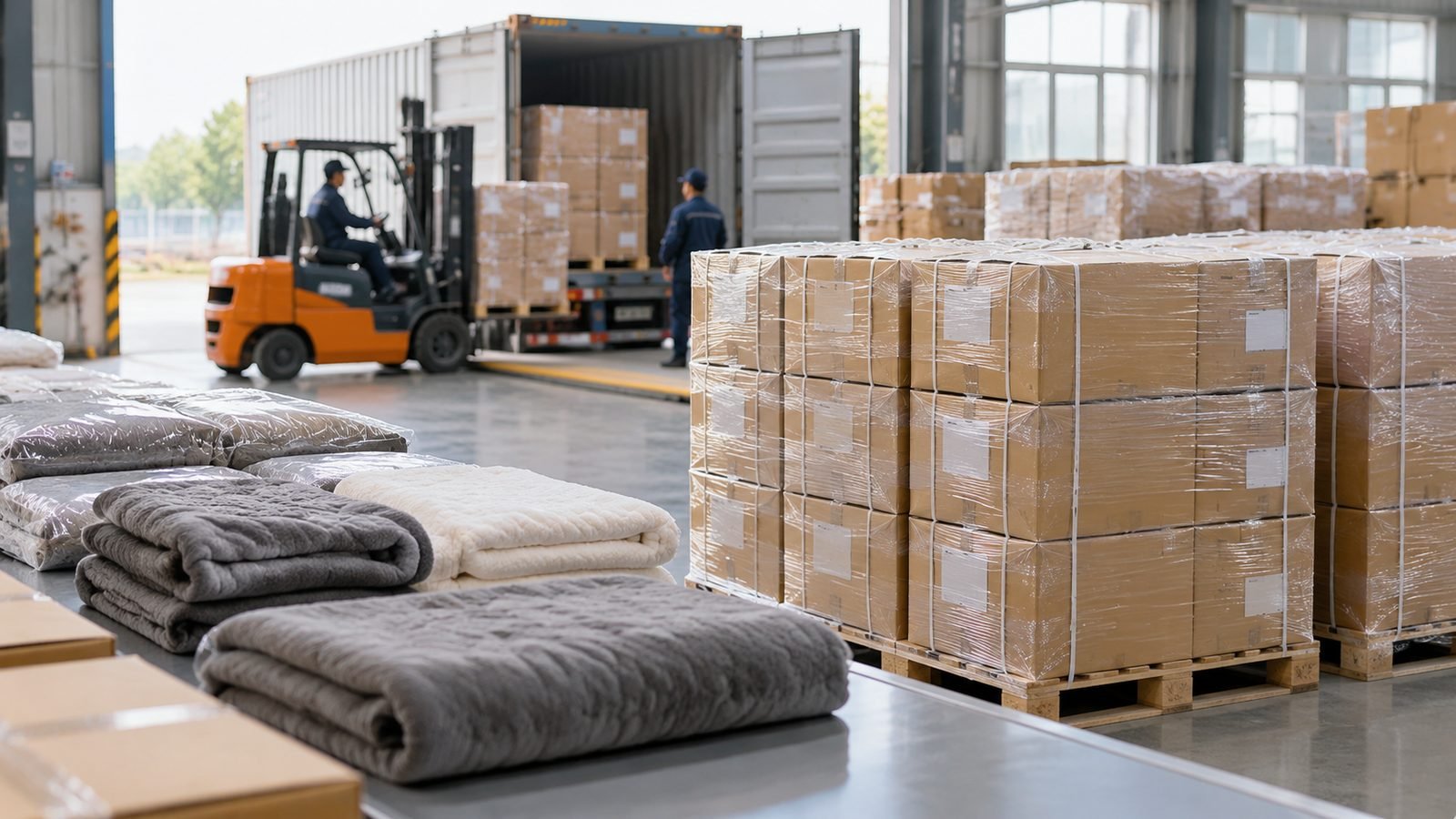
Electric blanket freight is influenced by the shipment’s origin and destination, shipping method, season, gross weight, carton dimensions and total volume. Because blankets can be bulky, packaging design and carton utilization may affect freight cost as much as the unit weight.
Request a freight estimate that identifies the likely charges, rather than relying on a single ocean-freight figure. Depending on the route and arrangement, the cost plan may need to account for:
Imagine Buyer A orders 500 units while Buyer B orders 2,000 units of the same model. Buyer B may receive a lower factory price and spread some fixed shipment costs across more products. But the result depends on carton dimensions, container utilization, the freight rate, storage capacity and real sales demand.
A larger order does not automatically produce a better return. If stock remains unsold after winter, storage, discounting and tied-up cash can outweigh the unit-price saving. Before increasing MOQ, request the carton length, width and height, units per carton, total shipment volume, gross weight, estimated transit time and the assumptions used in the freight quote.
There is no single import-duty rate that can safely be applied to every electric blanket shipment worldwide. The applicable treatment depends on the destination market, the correct tariff classification, origin and any additional measures in force at the time of entry.
For a US-bound shipment, use the current USITC Harmonized Tariff Schedule (HTS) as the official starting point and ask a qualified customs broker to confirm the classification against the actual product construction and shipment facts. The USITC maintains the schedule; US Customs and Border Protection administers import entries and classification decisions.
Before using a duty estimate in your margin model, confirm:
Do not rely only on an old tariff screenshot or an unverified supplier estimate. Rates and measures can change, and the correct classification must be based on the product—not simply on a broad marketing name. For a US shipment, the CBP rulings resources can also help buyers understand how classification questions are handled.
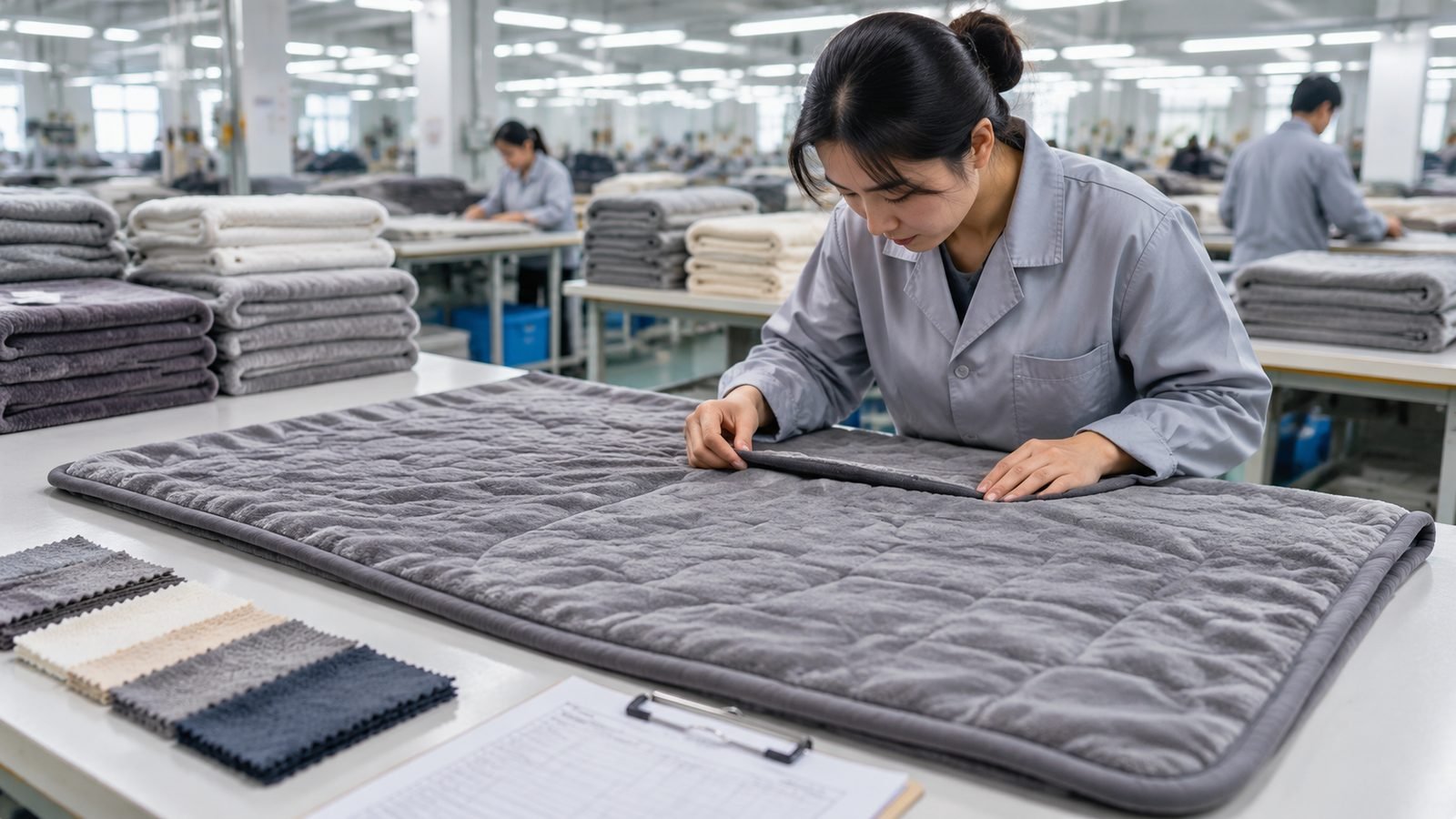
Electric blankets combine textile construction with electrical heating components and temperature-control systems. Depending on the destination market and the exact model, buyers may need to budget for electrical safety evaluation, overheating-protection checks, controller and temperature performance, materials and labels, market-specific conformity work, factory inspection or third-party testing.
The cost depends on the required standards, product construction, laboratory scope, certification route and whether existing evidence legitimately covers the exact model being purchased. A factory management certificate is not the same as product-specific compliance evidence, and one document does not automatically establish compliance in every destination market.
Before approving the sample, ask the supplier to confirm the required standards, report ownership, model coverage, testing responsibility and who pays for laboratory work. Changes to the fabric, heating wire, controller, plug, voltage or electrical design may affect the test plan or trigger additional evaluation.
For a more detailed pre-shipment review, see HEATMATE’s guide to electric blanket safety testing and quality inspection. For market-specific document planning, review electric blanket OEM customization early in the project.
Import costs continue after customs clearance. Warehouse receiving, pallet handling, storage, order fulfilment, inventory administration and return processing all affect the final margin. Timing matters too: stock arriving late may miss peak demand, while stock arriving too early may occupy valuable space for months.
Common reasons for electric blanket returns or replacement requests include:
Each return can create reverse-shipping, inspection, repackaging, customer-service, replacement or disposal costs. Some products may be resold only at a discount, while others may no longer be suitable for sale.
To control the risk, agree on the approved specification, inspection method, defect reporting window, warranty scope and responsibility for replacements or compensation before production starts. Include a return-and-defect reserve in your forecast, even if the supplier has a documented quality-control process.
The table below shows how additional charges can change the apparent unit economics of a 1,000-piece order. These figures are illustrative assumptions only, not a current freight quote or verified tariff rate.
For this simplified calculation, assume the customs value is the product value plus international freight and insurance: US$20,000 + US$3,500 + US$150 = US$23,650. The 10% duty assumption produces US$2,365 in duty. Actual customs valuation rules vary, so buyers must confirm the applicable basis for their shipment.
| Cost item | Calculation / basis | Estimated total |
|---|---|---|
| Product purchase | 1,000 × US$20 | US$20,000 |
| International freight | Assumed quotation | US$3,500 |
| Cargo insurance | Assumed quotation | US$150 |
| Customs duty | 10% × US$23,650 | US$2,365 |
| Customs and destination handling | Assumed quotation | US$1,200 |
| Testing and inspection | Allocated cost | US$800 |
| Warehousing | Allocated cost | US$600 |
| Return and defect reserve | Budget allowance | US$600 |
| Total estimated landed and allocated cost | All listed expenses | US$29,215 |
Under these assumptions, the estimated landed and allocated cost is US$29.22 per unit, or about US$9.22 above the US$20 factory price—a roughly 46.1% increase. If the wholesale selling price is US$40, the US$10.78 difference is not net profit: selling fees, marketing, payment processing, overhead and any costs omitted from this example still need to be covered.
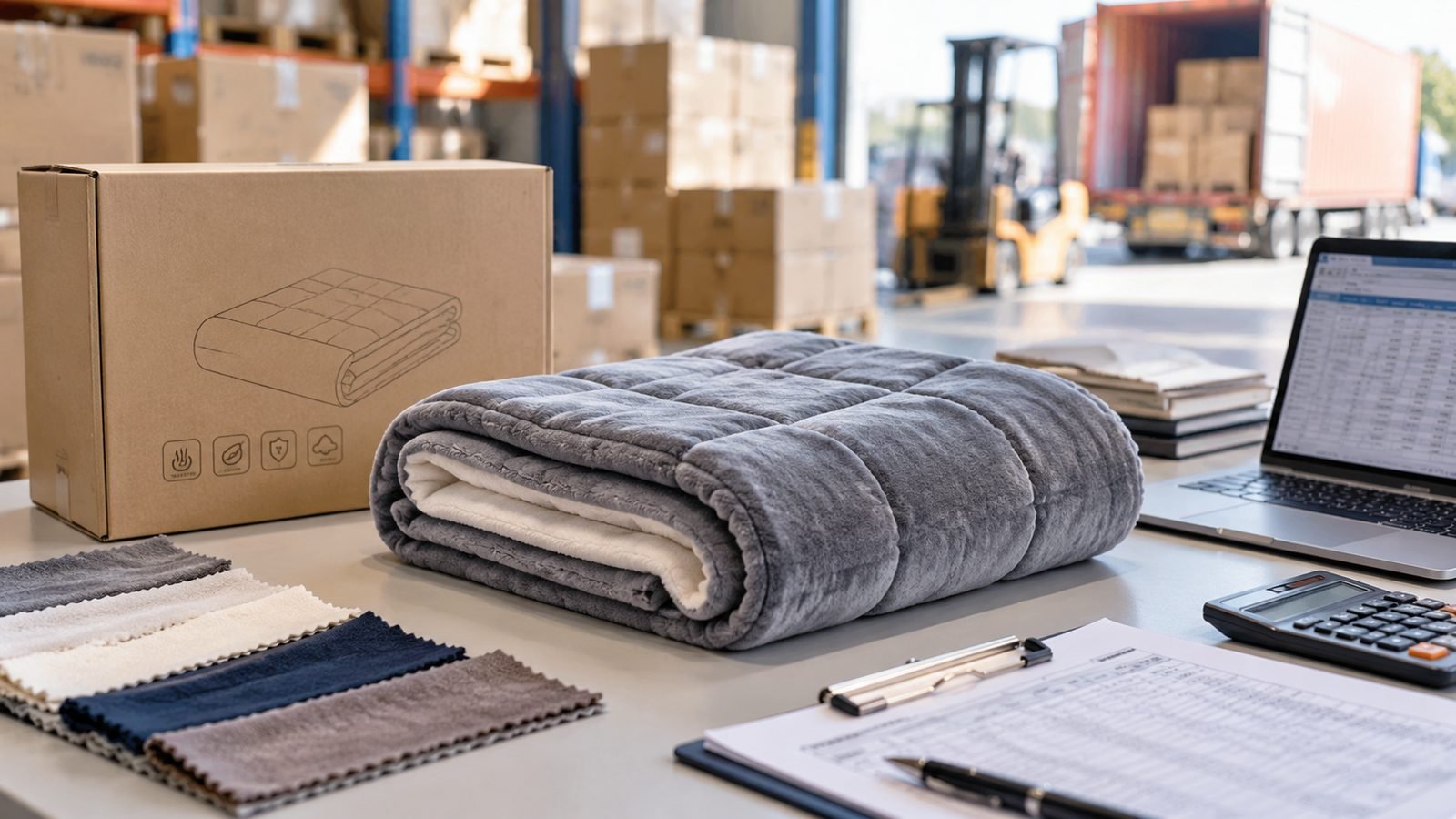
A useful working formula is:
Use the expected saleable quantity rather than assuming every ordered unit will be sold at full price. If some units are damaged, defective, used for samples or discounted, the cost per saleable unit may be higher.
A single landed-cost estimate can create false confidence. Before approving the purchase order, run the same order through three planning scenarios. The goal is not to predict the future perfectly; it is to see whether the margin still works when freight, returns or sell-through are less favorable than expected.
Use the current supplier quotation, expected freight, verified duty assumptions and your normal return rate. This is your working budget—not your guaranteed outcome.
Increase freight and handling modestly, reduce expected sell-through and allow a slightly higher return reserve. Check whether the order still meets your minimum margin target.
Model a delayed shipment, higher logistics cost and more leftover seasonal stock. If the project becomes unprofitable immediately, reconsider MOQ, packaging or launch timing before ordering.
Ask each supplier to identify included and excluded charges. Compare EXW, FOB, CIF or DDP only after adjusting for the same destination, delivery scope, product configuration and tax assumptions.
Use sales history, retailer forecasts and seasonal demand estimates to set the order quantity. Do not commit to excess inventory solely to obtain a lower factory price. Where possible, compare the cost of one larger shipment with the cash-flow and storage impact of a smaller or staged order.
Identify destination-market requirements before sample approval or mass production. Late testing, component changes and repeated inspections can add cost and delay launch timing.
Request carton dimensions, units per carton, loading estimates and packaging options. Retail packaging needs to protect the product and support the sales channel, but oversized cartons can increase freight and handling costs.
Confirm specifications, sample approval, inspection criteria, defect tolerances and the process for resolving non-conformities. For more detail, use the electric blanket manufacturer selection checklist when evaluating suppliers.
Include contingency for freight changes, port delays, returns, defects and unsold seasonal stock. Test the margin under a conservative sales scenario instead of assuming every unit sells quickly at the planned price.
Commercial and logistics
Customs and compliance
Quality and financial planning
For importers and private-label brands, dependable sourcing involves more than negotiating the lowest unit price. Product specifications, production consistency, packaging, quality inspection and shipment planning all influence the final cost.
HEATMATE supports B2B buyers with electric blankets and other heating products, alongside OEM/ODM development and product customization. Early project discussions can cover materials, sizes, heating functions, controller configurations, voltage and plug requirements, logo and packaging, sample approval, inspection requirements and export planning.
Buyers can review the electric heating blanket product range and HEATMATE’s OEM and ODM capabilities before preparing a project brief. Sharing the destination market, target quantity, preferred specification and sales channel makes it easier to identify cost variables before they affect the purchasing budget.
Include product cost, freight, insurance, origin and destination handling, customs duty and applicable taxes, brokerage, testing and inspection, warehousing, expected returns or defects, and other allocated expenses. Separate recoverable taxes where local rules allow.
No. FOB and CIF allocate costs differently, and the better option depends on the freight rate, insurance, destination charges and the buyer’s own logistics arrangements. Compare the full cost to the same destination rather than the Incoterm label alone.
Confirm the tariff classification, country of origin and destination-market rules with a qualified customs broker. For US shipments, check the current USITC HTS and relevant CBP guidance. Do not treat a hypothetical rate in a cost example as a real duty quote.
Yes. Confirm the applicable requirements and the scope of existing reports before mass production. The exact testing plan depends on the model, components and destination market, and changes to key electrical components may require additional evaluation.
A larger order may lower unit price or spread fixed logistics expenses, but it can increase storage costs, working-capital pressure and the risk of unsold seasonal inventory. Choose MOQ against expected demand and total landed cost.
Ask for a complete product specification, MOQ, carton dimensions, units per carton, Incoterm and named location, included and excluded charges, testing documents, sample and inspection arrangements, lead time, packaging scope and defect-handling terms.
READY TO BUILD A REALISTIC QUOTATION?
To make the first quotation more useful, include the information below. It helps our team discuss product configuration, sampling and sourcing requirements against the actual market you plan to sell in.
Even if every detail is not final, sending the known requirements makes it easier to identify missing cost variables early instead of discovering them after sample approval.
Send Your Project RequirementsCost disclaimer: The numerical example in this article uses illustrative assumptions only. It is not a current freight quotation, confirmed tariff rate, customs ruling or binding commercial offer. Verify duties, taxes, testing requirements and logistics charges for the actual product and destination before placing an order.
HEATMATE is an OEM/ODM manufacturer specializing in electric heating products, including heated blankets, heated throws, heated underblankets, USB heated scarves, heated jackets and related products.

More manufacturing knowledge for global heating-product buyers.
An electric blanket sample may look right, feel right and pass its initial checks—yet the bulk order can…

Ordering electric heating pads in bulk requires more than comparing unit prices. This guide explains heating coverage, voltage,…

Pet heating pad sourcing involves more than comparing unit prices. This guide explains temperature control, cable protection, power…
Partner with HEATMATE for professional heating solutions.
GET FREE QUOTEIf you have any questions, please do not hesitate to contact us.