The Hidden Costs of Importing Electric Blankets: Freight, Duties, Testing & Returns
Factory price is only the starting point. This guide shows importers how freight, customs duties, product testing, warehousing…
October 23, 2026
A practical pricing guide for importers, retailers and private-label brands comparing electric blanket quotations, customization options and the real cost drivers behind OEM projects.
CONTACT US
Custom electric blanket pricing can vary significantly because buyers are not purchasing a single standardized product. Size, fabric, heating system, controller, voltage, safety design, packaging, order quantity and destination-market requirements all shape the final quotation.
For importers, retailers and distributors, the useful question is not simply “How much does a custom electric blanket cost?” It is which specification is being priced, at what quantity, for which market, and with what level of customization. Building the quotation around those details makes supplier comparisons far more meaningful.
There is no single OEM price for custom electric blankets. Unit cost is mainly influenced by blanket size, fabric construction, heating element, controller complexity, voltage and plug configuration, safety features, certification requirements, packaging, branding and order quantity. Buyers get more useful quotations when every supplier prices the same product brief.
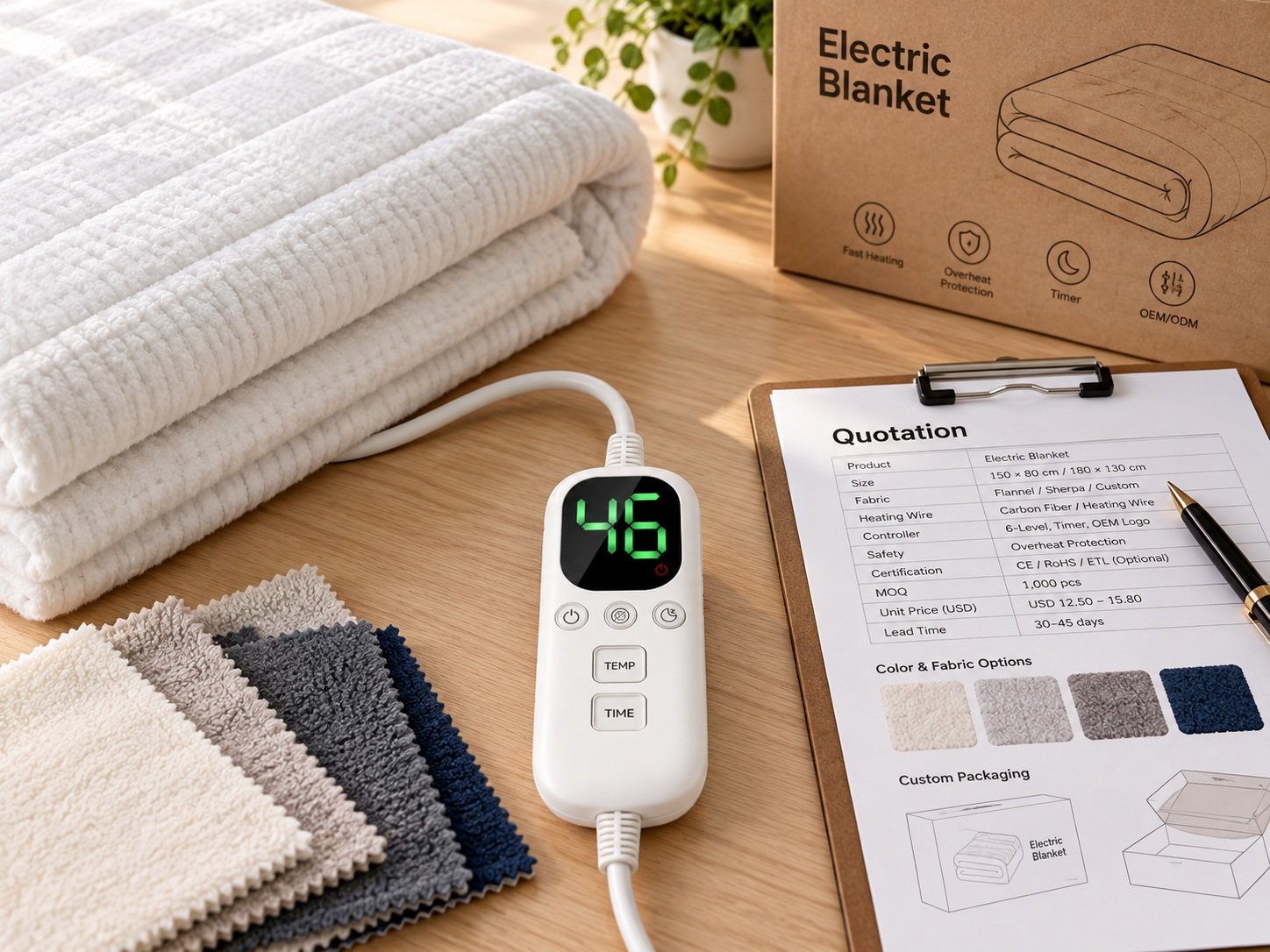
Electric blankets can look almost identical in a catalog while using different fabrics, heating layouts, controllers, electrical systems and packaging. Those differences explain why quotations for a similar-looking product can vary substantially between suppliers.
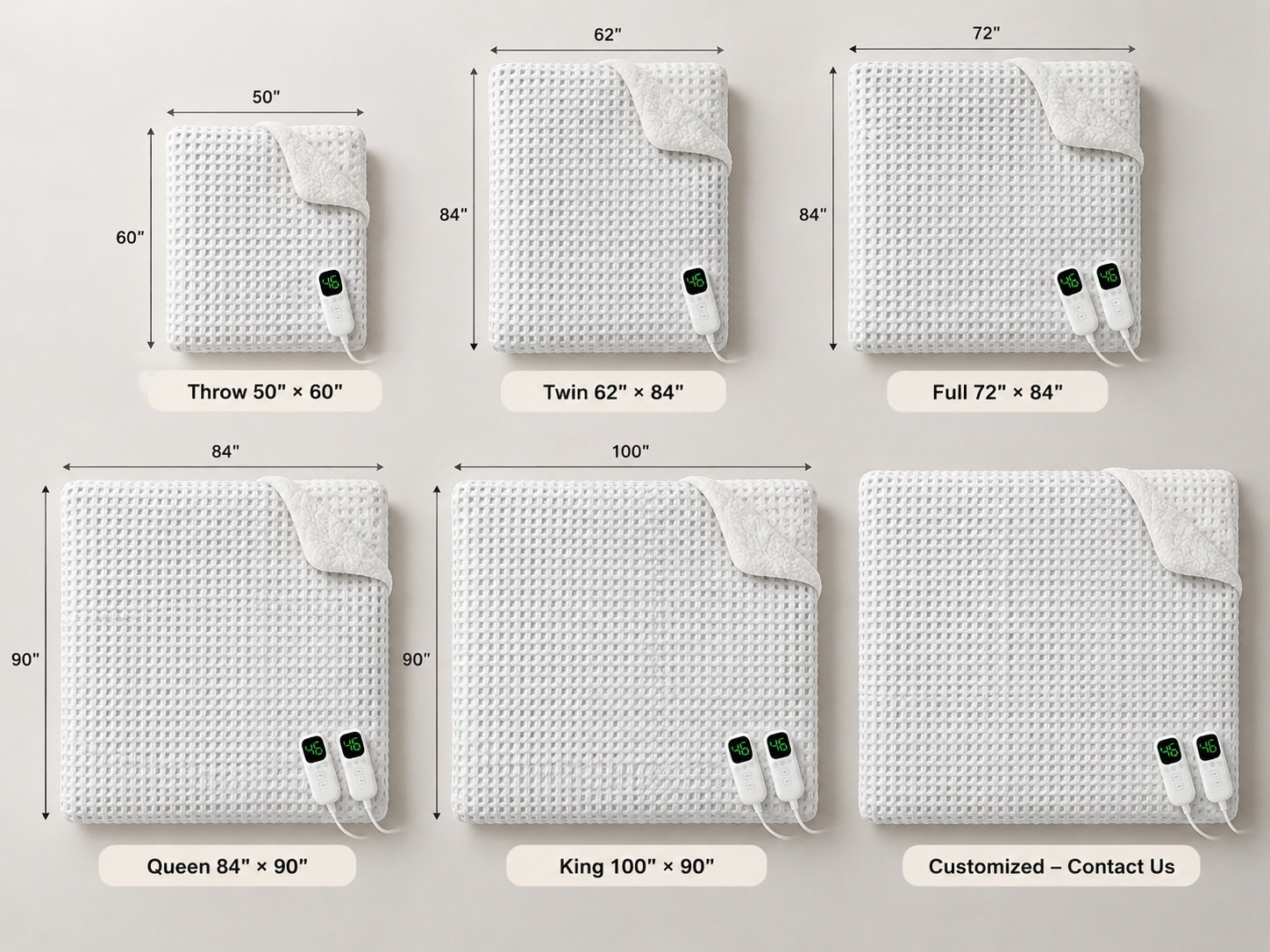
Blanket size is one of the most direct cost drivers. Larger formats require more fabric, more heating wire, longer stitching paths and more packaging volume.
Common formats often discussed in OEM projects include:
Smaller heated throws usually require less material than Queen or King models. Custom dimensions can also create extra pattern work, material planning or production setup.
Fabric influences both manufacturing cost and retail positioning. Basic fleece can support value-focused programs, while heavier sherpa, faux fur, plush or specialty constructions can move the product toward premium price points.
Common options include flannel fleece, polar fleece, sherpa, faux fur, microfiber, taffeta fleece, plush fabric and custom textile combinations. Cost also changes with GSM, thickness, softness, finishing, dyeing requirements, color quantity and fabric pairing.
For deeper material comparison, see our heated blanket fabric guide.
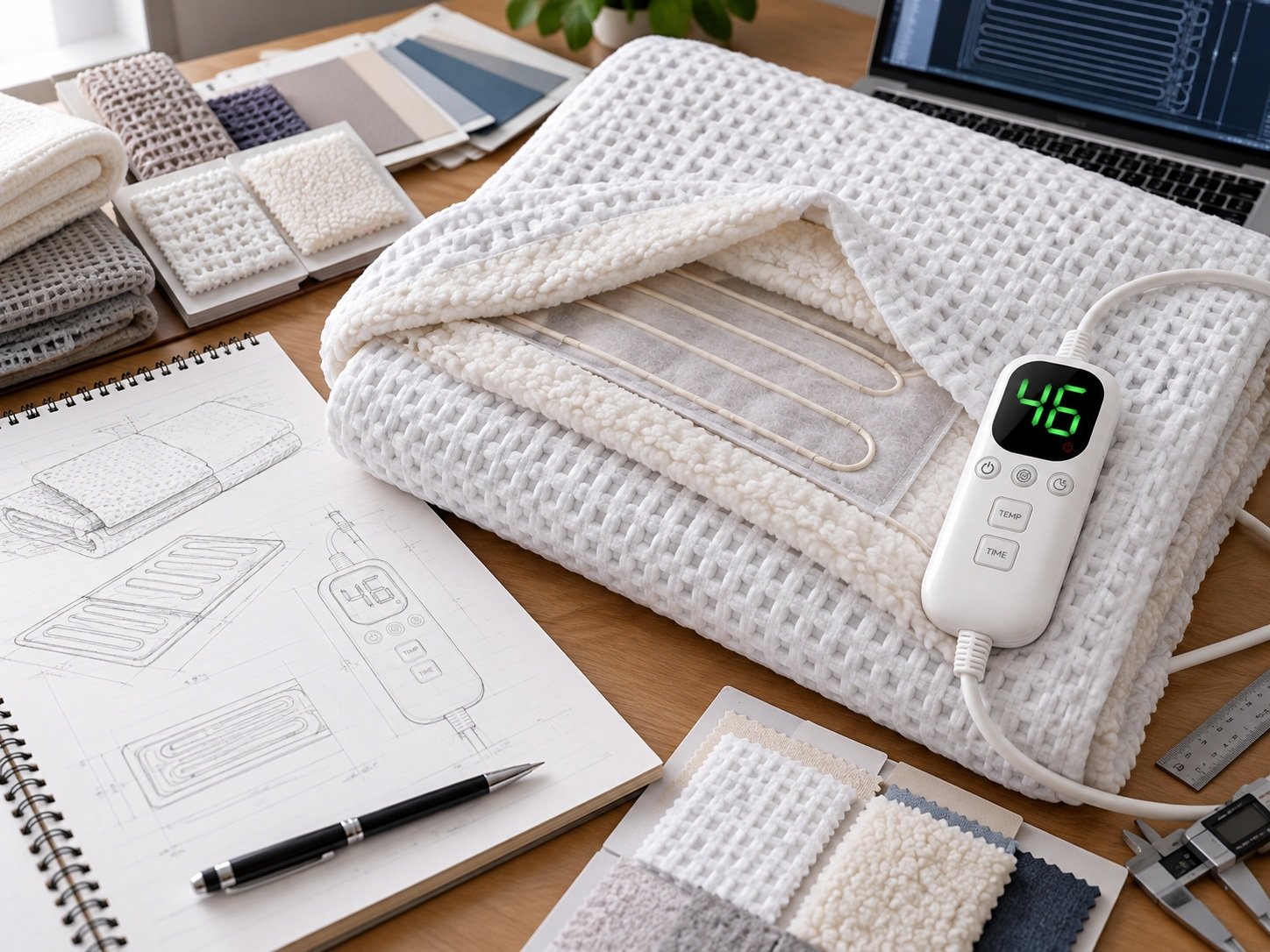
Heating-system design is another major pricing factor. Different wire constructions, heating areas and internal layouts can change material use, assembly time and testing requirements.
Depending on the project, suppliers may discuss standard heating wire, spiral constructions, layered wire systems, flexible heating structures or customized heating zones. The commercial impact depends less on the label and more on how much heated area is required and how the system is integrated into the blanket.
Usually, yes. Larger heating zones can require more heating material, more fixing points, different wiring routes and additional testing. Buyers should compare heating coverage and temperature stability alongside price rather than assuming two same-size blankets use the same internal system.
Controller configuration can create a noticeable price difference. Basic manual controls are generally simpler, while digital displays, multiple heat levels, timer functions, temperature monitoring, detachable connections or branded housings add component and development complexity.
Typical options include:
Heat settings such as 6, 8 or 12 levels can also affect controller selection, user interface design and product positioning.
A blanket intended for North America may not use the same electrical configuration as one developed for Europe, Great Britain, Japan or another market. Voltage, frequency, plug type, controller electronics, labels and instructions can all affect the final BOM and compliance path.
This is one reason buyers should always include the destination country in an RFQ rather than asking for a generic “best price.”
Safety functions are not optional details to strip out for a lower quotation. They form part of the product design and can influence component selection, assembly and test procedures.
Depending on the product architecture, buyers may need to discuss:
For a deeper review of factory testing, see our electric blanket safety testing and quality inspection guide.
Certification can affect project cost in two different ways. Existing product configurations may already have supporting test documents or certification coverage, while substantial changes to controllers, voltage, wiring or construction may require further review or testing.
Buyers should confirm whether the quotation assumes an existing compliant platform or a new configuration that needs additional certification work.
For market-specific details, review our electric blanket certifications guide.
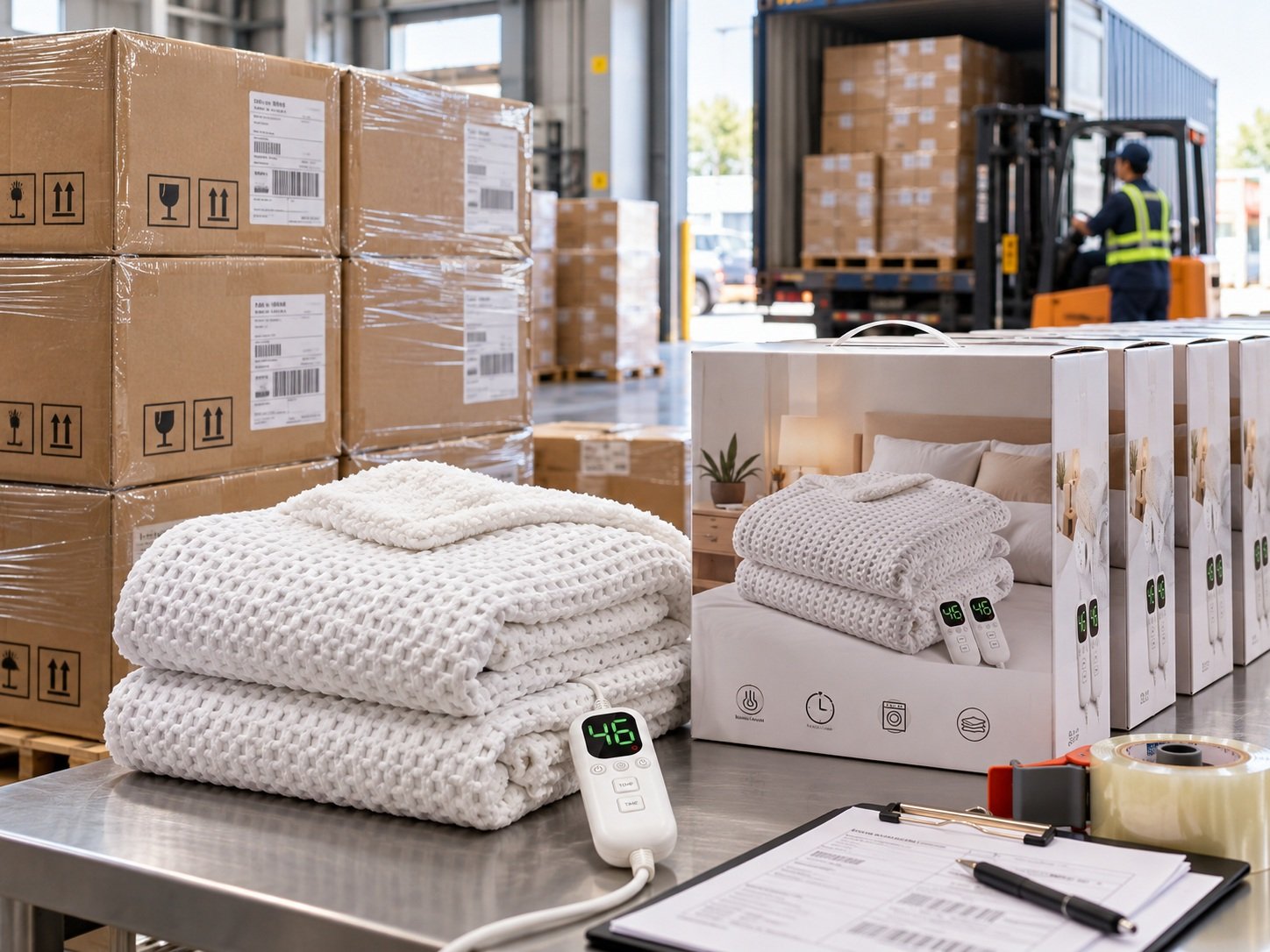
Packaging can range from a simple bag to a custom retail box or gift-ready presentation. Costs may include packaging materials, printing, inserts, barcode labels, manuals, hang tags, master cartons and additional protective packing.
Common options include:
Order quantity affects unit economics because materials, packaging, controller procurement and production setup are often purchased or prepared in batches. Smaller runs spread setup and customization costs across fewer units, while larger quantities may improve purchasing efficiency.
Often, yes. Smaller orders can carry higher per-unit costs because setup, sampling, packaging minimums and component procurement are distributed across fewer pieces. The exact relationship depends on the product configuration and which materials are already available.
For more detail on MOQ, sample cost and production timing, see our electric blanket MOQ and lead-time guide.
Not all OEM projects require the same amount of development. Adding a logo to an existing product is very different from creating a new controller housing, custom heating layout, unique size or special fabric construction.
| Customization Level | Typical Scope | Commercial Impact |
|---|---|---|
| Light customization | Logo, label, existing color, standard packaging adjustments | Usually lower development cost |
| Private label | Branding, custom packaging, selected fabric/color/controller from existing options | Moderate impact depending on MOQ and materials |
| OEM development | Custom dimensions, functions, heating configuration, controller or packaging system | Higher sampling, engineering and validation requirements |
| ODM / new concept | New product architecture or development from concept | Project-specific development and tooling may apply |
For buyers developing private-label programs, our OEM electric blanket customization guide explains the development process in more detail.
This distinction is useful when evaluating quotations. Some costs are built into every unit, while others are project-development expenses.
| Cost Type | Examples | How to Review It |
|---|---|---|
| Unit material cost | Fabric, heating wire, controller, cord, labels, packaging | Changes with specification and quantity |
| Production cost | Cutting, sewing, assembly, testing, packing | Depends on complexity and production scale |
| Sample / development cost | Prototype work, custom fabric, new packaging, engineering review | Usually project-specific rather than a permanent unit cost |
| Tooling / custom component cost | New controller housing, molds, custom hardware | May be charged separately or amortized |
| Compliance / testing cost | Additional testing or certification work for a new configuration | Depends on market and whether existing coverage can be used |
Different quotations do not always mean one supplier is simply “expensive.” They may be pricing different materials, heating coverage, controllers, safety configurations, packaging or compliance assumptions.
A lower quotation is not automatically better if it is based on a different specification.
The fastest way to get a useful quotation is to send the same product brief to every supplier. Even a simple checklist can prevent days of back-and-forth communication.
Destination market, quantity, size, fabric, controller, packaging and customization depth usually make the biggest difference. If those items are unclear, suppliers may quote against different assumptions, making the prices difficult to compare.
Cost reduction does not have to mean removing safety features or using the cheapest components. Better savings usually come from simplifying the commercial specification.
HEATMATE develops and manufactures electric heating products including heated blankets, heated throws, heated mattress pads, heating pads and related products. OEM/ODM discussions can cover product size, fabric, heating configuration, controller, labels, packaging and target-market requirements.
Rather than treating custom pricing as a single catalog number, the quotation should be tied to the actual product specification. Buyers comparing factories can also review our electric blanket manufacturer selection guide before moving into samples and bulk production.
There is no universal OEM price. Cost depends on size, fabric, heating system, controller, safety design, certification, packaging, customization and quantity. A meaningful quote needs a defined product brief.
Larger sizes, heavier or premium fabrics, more complex heating systems, advanced controllers, custom electrical configurations, retail packaging and lower order quantities can all increase cost.
Usually. Printed boxes, gift packaging, inserts, manuals, hang tags and customized master cartons add material and printing cost and can also change shipping volume.
In many cases, yes. Using an existing product platform with custom branding and packaging usually requires less engineering and tooling than creating new electrical or structural components.
You can get an initial estimate, but final pricing normally requires confirmation of size, material, controller, electrical configuration, packaging, quantity and destination market.
No. Compare the same product specification, compliance scope, packaging and commercial terms first. Otherwise, lower and higher quotations may be based on different products.
Share your target market, product size, fabric, controller requirements, packaging direction and estimated quantity. HEATMATE can review the specification and discuss a project-based OEM quotation.
Discuss Your ProjectHEATMATE is an OEM/ODM manufacturer specializing in electric heating products, including heated blankets, heated throws, heated underblankets, USB heated scarves, heated jackets and related products.
More manufacturing knowledge for global heating-product buyers.
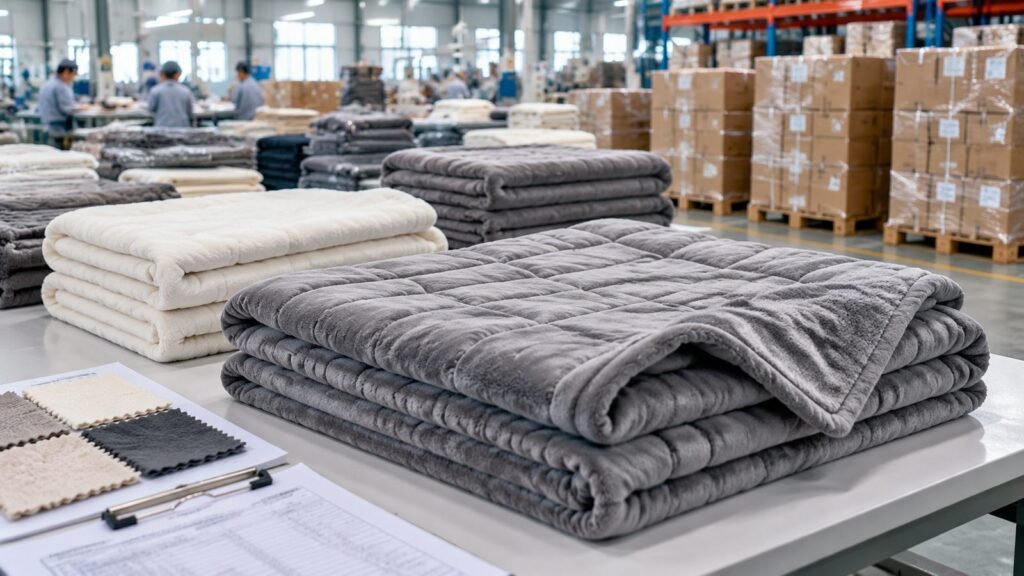
Factory price is only the starting point. This guide shows importers how freight, customs duties, product testing, warehousing…
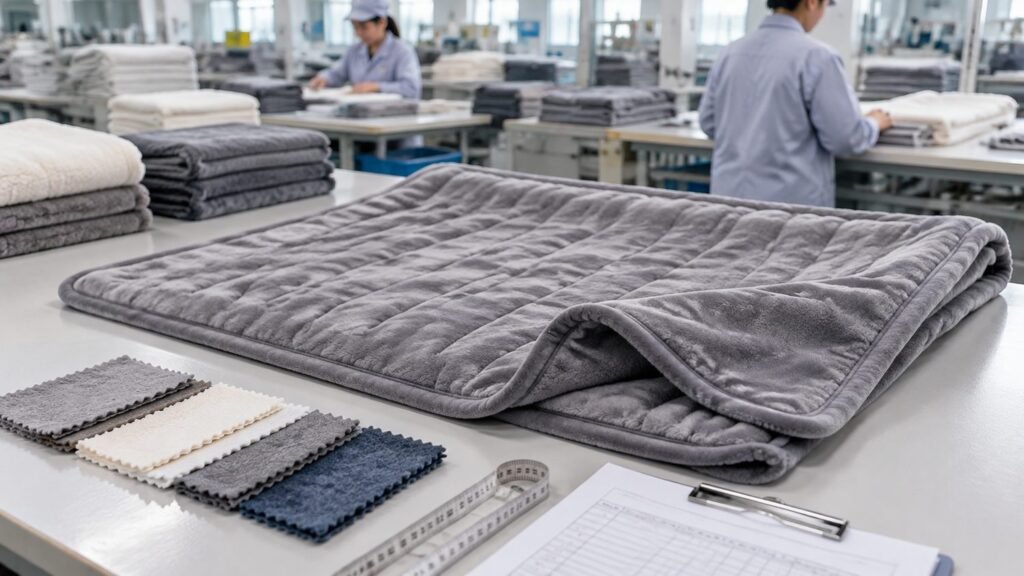
An electric blanket sample may look right, feel right and pass its initial checks—yet the bulk order can…
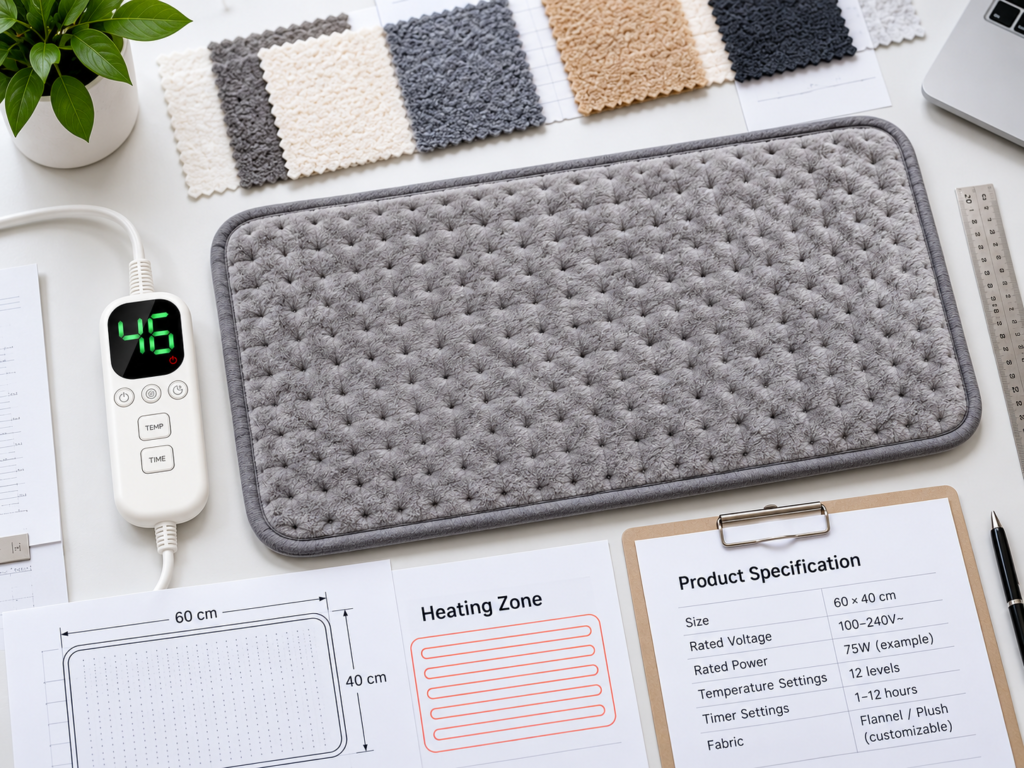
Ordering electric heating pads in bulk requires more than comparing unit prices. This guide explains heating coverage, voltage,…
Partner with HEATMATE for professional heating solutions.
GET FREE QUOTEIf you have any questions, please do not hesitate to contact us.