Electric Blanket Controller Problems: What OEM Buyers Should Test Before Bulk Production
Electric blanket controller problems can lead to returns, warranty claims and production risks. This OEM buyer guide explains…
November 13, 2026
Outdoor retail continues to create opportunities for products that combine warmth, mobility and convenience. This guide compares five heated wearable categories and explains what buyers should check before sourcing for 2026 collections.
CONTACT US
Heated shawls, wearable heated throws, heated scarves, heated jackets and portable heating pads can all support outdoor-oriented assortments—but they should not be treated as interchangeable products. Buyers need to match the power system, heating-zone design, environmental limitations, construction and compliance scope to the intended use.
Traditional electric blankets remain important for home comfort, but outdoor customers often need warmth in more mobile or space-efficient formats. The opportunity for retailers is not simply to add “heated” versions of existing products, but to build a collection around specific customer needs: outdoor seating, camping, winter commuting, recreational use and seasonal gifting.

Depending on product design and power configuration, heated wearables may suit covered outdoor seating, camping environments, winter events, commuting or leisure scenarios. But the product description should stay within the conditions the product has actually been designed and tested for.
| Product type | Best retail fit | Key sourcing questions |
|---|---|---|
| Heated Shawls & Wraps | Events, leisure, gifting, seated comfort | Heating area, fastening, power source, intended use |
| Heated Scarves | Winter accessories, commuters, gifting | Neck-area heating, battery compatibility, washing |
| Wearable Heated Throws | Camping, events, home/outdoor crossover | Coverage, mobility, cable exit, controller access |
| Heated Jackets & Apparel | Outdoor lifestyle and technical winter clothing | Heating zones, battery integration, garment construction |
| Portable Heating Pads | Outdoor seating, RV, leisure comfort | Electrical rating, moisture limits, surface compatibility |
For a first heated-wearable program, the best starting SKU depends on the retailer’s existing category, technical tolerance and target customer. A store that already sells apparel has a different sourcing path from a gift retailer or camping-focused business.
Heated shawls combine the familiar coverage of a textile wrap with an integrated heating system. Depending on construction, they may use button controls, USB input or another low-voltage power configuration.

Soft fleece, plush fabrics and lighter constructions can improve comfort, but retail buyers should distinguish between products designed for stationary comfort and products engineered for more active movement.
Heated scarves provide targeted warmth around the neck while maintaining familiar accessory styling. They can fit winter accessory sections, commuter collections and gift-oriented displays without requiring the retailer to create a completely new category.
Important sourcing points include heating coverage, fabric softness, control placement, power-bank or battery compatibility and cleaning instructions. Product pages should also state clearly whether the external power source is included.
Wearable heated throws combine blanket-like coverage with fastening or shaping that allows the textile to sit more securely around the shoulders or body.

Retailers should keep a clear distinction between “wearable for seated comfort” and products specifically designed for active movement. This distinction affects instructions, cable management, power-system choice and how the product should be marketed.
Heated apparel extends the category from textile accessories into actual clothing. Depending on supplier capability, buyers may explore heated jackets, warming vests, heated hoodies and related cold-weather garments.


Unlike heated blankets or shawls, warming apparel needs to be assessed as a garment and as an electrical product at the same time. Buyers should review:
Portable heating pads and seat cushions can complement heated wearables by serving the same consumer need—convenient warmth outside traditional bedding. Suitable applications may include selected camping setups, covered outdoor seating, recreational vehicles and cold-weather event seating.
Buyers should confirm intended-use conditions, electrical ratings, moisture limitations, surface compatibility and the environments that can legitimately be mentioned in product marketing.
Not every heated wearable needs to compete at the same price point. Retailers can create a clearer assortment by assigning each format a commercial role and then using material, heating configuration, packaging and branding to support the intended position.
| Product | Entry | Mid | Premium | Typical Commercial Role |
|---|---|---|---|---|
| Heated Shawl | ● | ● | — | Gift, office comfort and winter-event retail |
| Heated Scarf | ● | ● | — | Accessory, commuter and impulse-gift ranges |
| Wearable Heated Throw | ● | ● | ● | Outdoor leisure, gifting and home/outdoor crossover |
| Heated Jacket | — | ● | ● | Technical apparel and premium outdoor collections |
| Portable Heating Pad | ● | ● | — | Seating, RV, event and recreational comfort |
This matrix is a merchandising framework rather than a universal pricing rule. Final positioning depends on material quality, heating architecture, power source, packaging, certification scope, target margin and the retailer’s brand strategy.
Instead of sourcing isolated products, buyers can create a clearer assortment by organizing SKUs around customer need and use case. That makes merchandising, photography, packaging and price architecture easier to coordinate.
UL, ETL, CE, UKCA and RoHS references should be reviewed according to their actual scope and applicability, not treated as interchangeable approvals. Buyers should confirm what evidence applies to the exact SKU and destination market.
For broader due diligence, see HEATMATE’s electric blanket certification guide and safety testing and quality inspection guide.
Buyers comparing suppliers can also use HEATMATE’s manufacturer selection checklist. For margin planning, review the electric blanket import cost guide to account for freight, duties, testing, warehousing and returns rather than comparing factory price alone.
Not every customization is compatible with every heating system. Changes to heating components, controllers, power ratings or protective functions may require additional engineering review and testing. Technical requirements should therefore be finalized early enough to understand their impact on sampling, lead time and total sourcing cost.
Private-label buyers can review HEATMATE’s OEM/ODM capabilities before preparing a project brief.
HEATMATE focuses on heating products and supports business buyers evaluating heated throws, heated shawls, heated scarves, heating pads, heated mattress pads and other warming solutions.
A productive sourcing discussion should begin with the intended customer, use scenario, target market, power architecture, compliance needs, target retail positioning and expected order quantity. Clear answers help narrow the product choice and reduce unnecessary sampling.
Yes. Heated shawls, wearable heated throws, heated scarves and selected warming accessories can complement winter apparel and outdoor-comfort ranges. Suitability depends on product design, power configuration, environmental limits and clearly defined intended use.
Heated shawls and wearable heated throws offer broad positioning across leisure, gifting and suitable outdoor seating scenarios. Heated scarves can support winter accessories, while heated jackets require a more apparel-focused technical review.
Yes. Depending on the product and MOQ, private-label options may include colors, labels, logos, packaging and selected construction details. Electrical changes require separate technical review.
Request representative samples, complete specifications, relevant compliance documents, packaging details, lead times, written quality requirements and clear confirmation of any customized electrical or heating-system changes.
Yes. Testing and evaluation should reflect the product construction, power source, intended use and destination market. Buyers should verify protective functions, labeling and operating instructions before commercial approval.
Share your target market, intended use scenarios, preferred product formats, expected quantity and packaging direction. HEATMATE can discuss suitable product options, customization scope and the technical details to confirm before sampling.
Discuss Your ProjectHEATMATE is an OEM/ODM manufacturer specializing in electric heating products, including heated blankets, heated throws, heated underblankets, USB heated scarves, heated jackets and related products.
More manufacturing knowledge for global heating-product buyers.
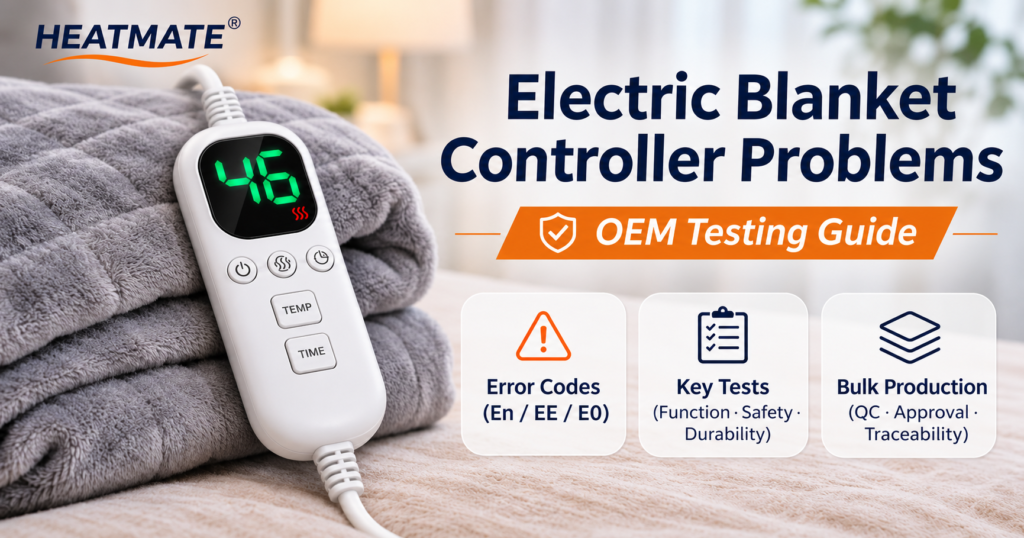
Electric blanket controller problems can lead to returns, warranty claims and production risks. This OEM buyer guide explains…
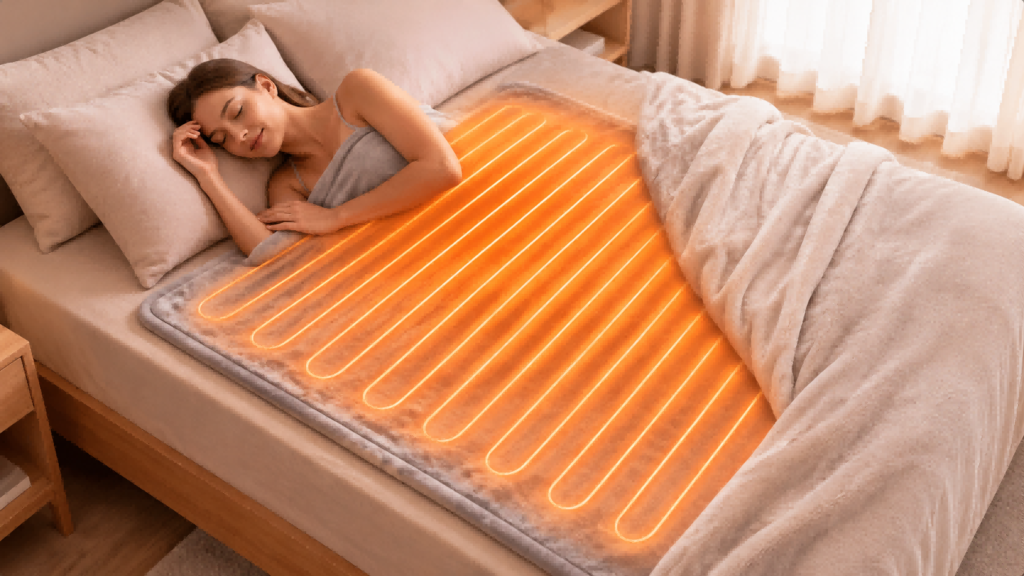
Cold spots and uneven heating are not always caused by blanket size. This buyer guide explains heating coverage,…

Why do some machine washable electric blankets stop heating after cleaning? This buyer guide explains wash-test requirements, heating-wire…
Partner with HEATMATE for professional heating solutions.
GET FREE QUOTEIf you have any questions, please do not hesitate to contact us.