What Buyers Should Check Before Ordering Electric Heating Pads in Bulk
Ordering electric heating pads in bulk requires more than comparing unit prices. This guide explains heating coverage, voltage,…
October 21, 2026
A practical guide for importers, retailers and private-label brands that need to understand what each mark actually covers, which documents to verify, and how certification can change when an electric blanket is customized.
CONTACT US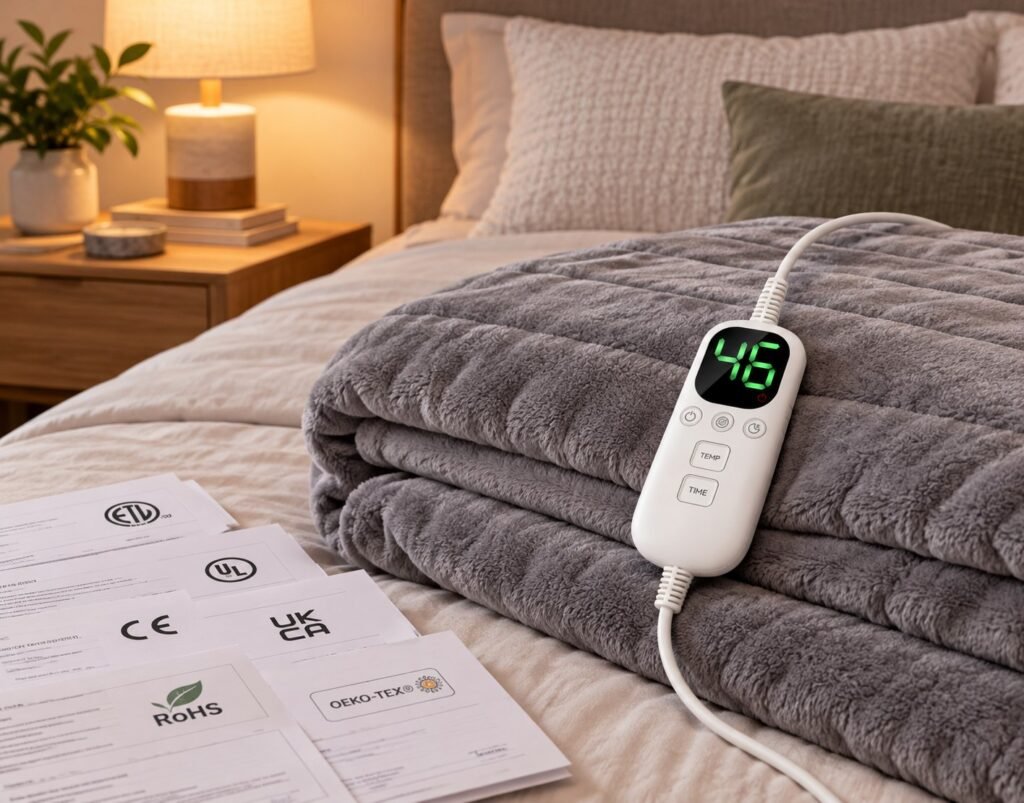
Certification is one of the first topics buyers raise when sourcing electric blankets, and for good reason. These products combine textiles, heating elements, wiring, controllers and mains or low-voltage power systems. Safety, electrical performance, material requirements and market access therefore need to be reviewed together before mass production begins.
The sourcing question often starts with, “Do you have ETL, UL or CE?” but that is only the beginning of a proper compliance review. Buyers need to know what the mark covers, which model it applies to, whether the controller and electrical configuration are included, and whether planned OEM changes affect the existing compliance basis. Those checks are especially important for importers, distributors and private-label programs, where one configuration may need to serve a specific market, retailer or certification route.
ETL and UL are third-party product safety certification marks used in North America. CE is an EU conformity marking rather than a safety approval issued by the EU. UKCA is the UK conformity mark, although Great Britain currently continues to recognize CE marking for electrical equipment. RoHS addresses restricted substances in electrical and electronic equipment, while OEKO-TEX® STANDARD 100 focuses on textiles tested for harmful substances. None of these should be treated as interchangeable.
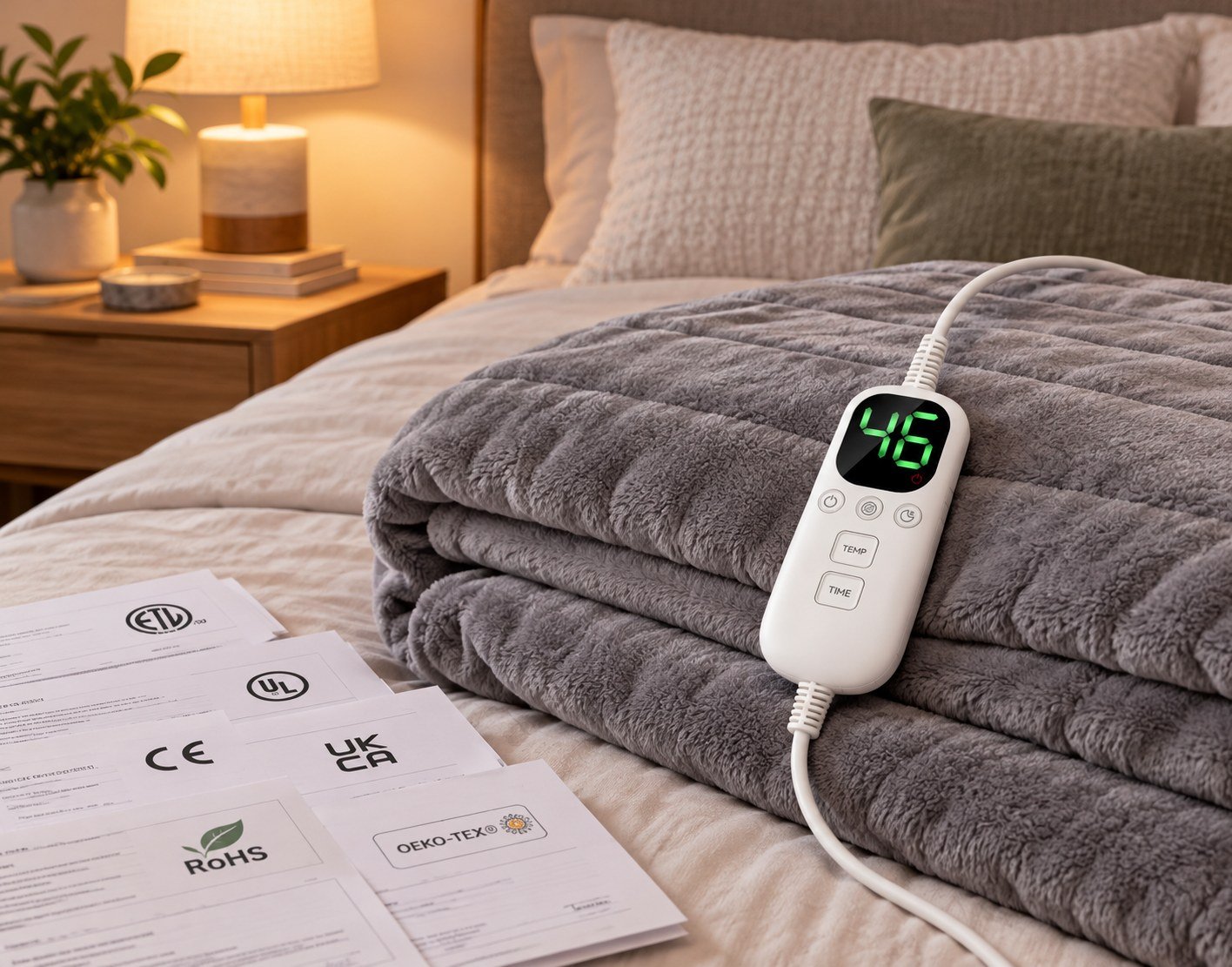
Electric blankets contain multiple risk-sensitive components: heating wires, insulated conductors, connectors, control electronics and textile layers. Weak component control or insufficient testing can contribute to overheating, electrical faults, short circuits, inconsistent temperature control or material-related issues. Certification belongs alongside product safety and market compliance rather than being treated as a packaging formality.
For B2B buyers, certification and supporting documentation can affect more than customs clearance. Retailer onboarding, marketplace approval, insurance requirements, private-label risk reviews and internal supplier qualification may all depend on the market and sales channel.
| Mark / Requirement | What It Primarily Addresses | Typical Market | What Buyers Should Verify |
|---|---|---|---|
| ETL Listed | Third-party product safety certification to applicable standards | United States / Canada | Manufacturer, model number, applicable standard and directory listing |
| UL | Third-party product safety certification / safety standards | United States / Canada | Exact certification mark, product scope and model listing |
| CE | Manufacturer declaration of conformity with applicable EU legislation | EU / EEA | EU Declaration of Conformity, technical documentation and applicable directives/standards |
| UKCA | UK conformity marking framework | Great Britain | Which marking route is being used and which UK regulations apply |
| RoHS | Restriction of hazardous substances in EEE | EU and other RoHS-aligned markets | Relevant component/material evidence and declaration scope |
| OEKO-TEX® STANDARD 100 | Textiles tested for harmful substances | Global / buyer-specific | Certificate validity, product class and whether the actual fabric/components are covered |
The ETL Listed Mark is issued by Intertek. Intertek states that products carrying the mark have been independently tested and certified to applicable safety standards, and that ETL is recognized across the United States and Canada. ETL listings can also be checked through Intertek’s public directory.
For electric blanket sourcing, buyers should not stop at a photo of the ETL logo. Ask for the model number, certification or listing information, electrical rating, controller reference and the standard used for evaluation. Where the product is being customized, confirm whether the proposed changes remain within the certified construction.
Both ETL and UL are associated with recognized third-party safety certification in North America. Intertek states that its ETL Listed Mark is based on the same applicable safety standards used by other recognized certification bodies. Buyers should compare the actual product listing and scope rather than assume one logo is inherently “safer” than another.
Reference: Intertek ETL Listed Mark and ETL Listed Mark Directory.
UL is one of the best-known safety marks in North America. UL Solutions explains that products bearing a UL safety Mark have been certified to meet relevant safety requirements, with follow-up checks used to support continued conformity.
For electric blankets, buyers may encounter UL requirements relating to finished products, components or the standards used by another NRTL. That distinction matters. A controller component carrying a recognized mark does not automatically mean the finished blanket is certified as a complete product.
Reference: UL Solutions — Understanding the UL safety Mark.
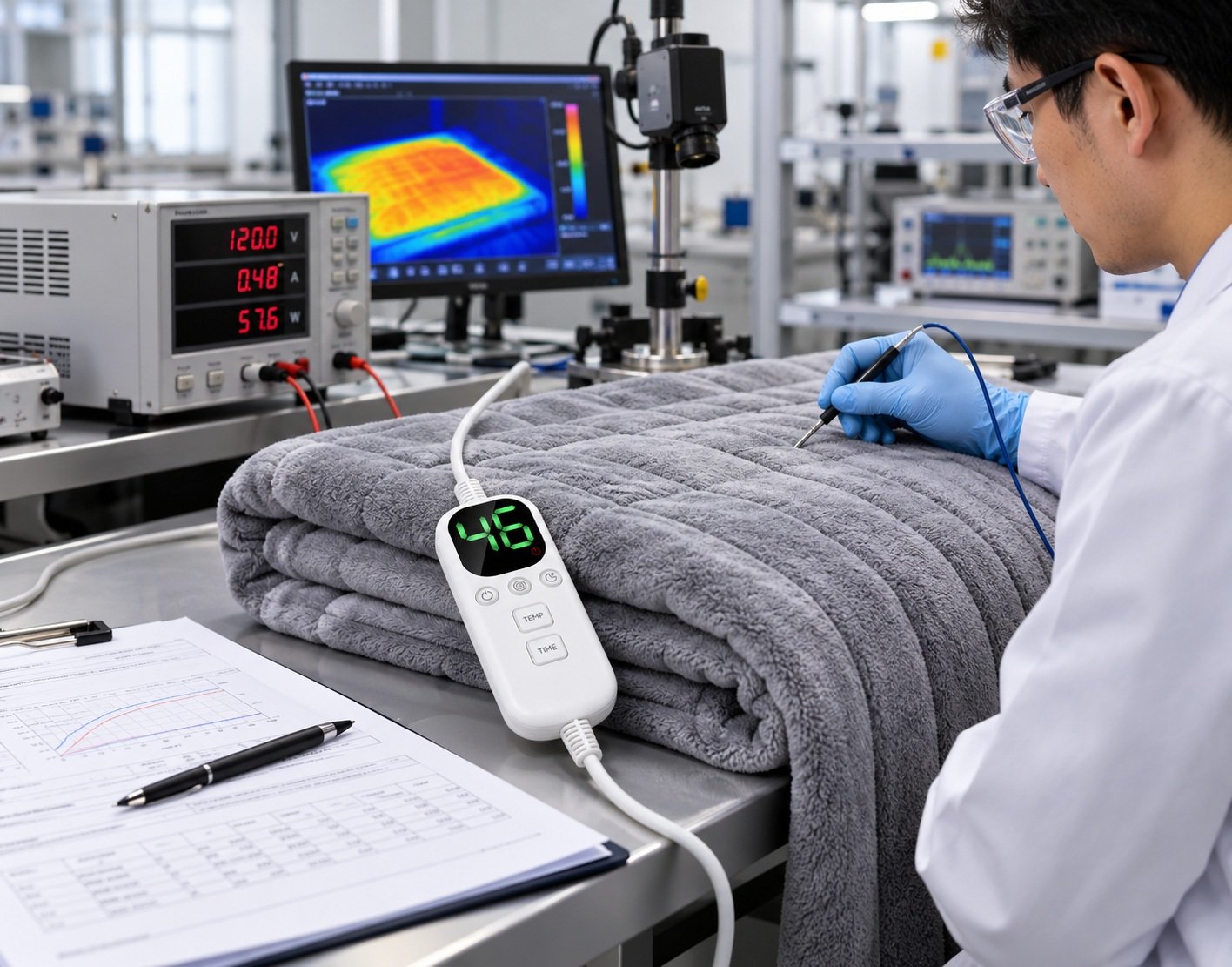
CE is frequently described as a “certification,” but that wording can mislead buyers. The European Commission states that CE marking indicates that the manufacturer declares conformity with applicable EU requirements; it does not mean the product has been approved as safe by the EU or another authority.
For an electric blanket, the applicable framework depends on product design and electrical characteristics. Relevant EU requirements can include electrical safety, electromagnetic compatibility and RoHS. Manufacturers may need technical documentation and an EU Declaration of Conformity, with the specific legal route depending on the product.
Not in the same sense as ETL or UL. CE marking is a conformity marking. Under applicable EU legislation, the manufacturer assumes responsibility for compliance, prepares the required technical documentation and declaration, and affixes the CE mark when conformity has been demonstrated.
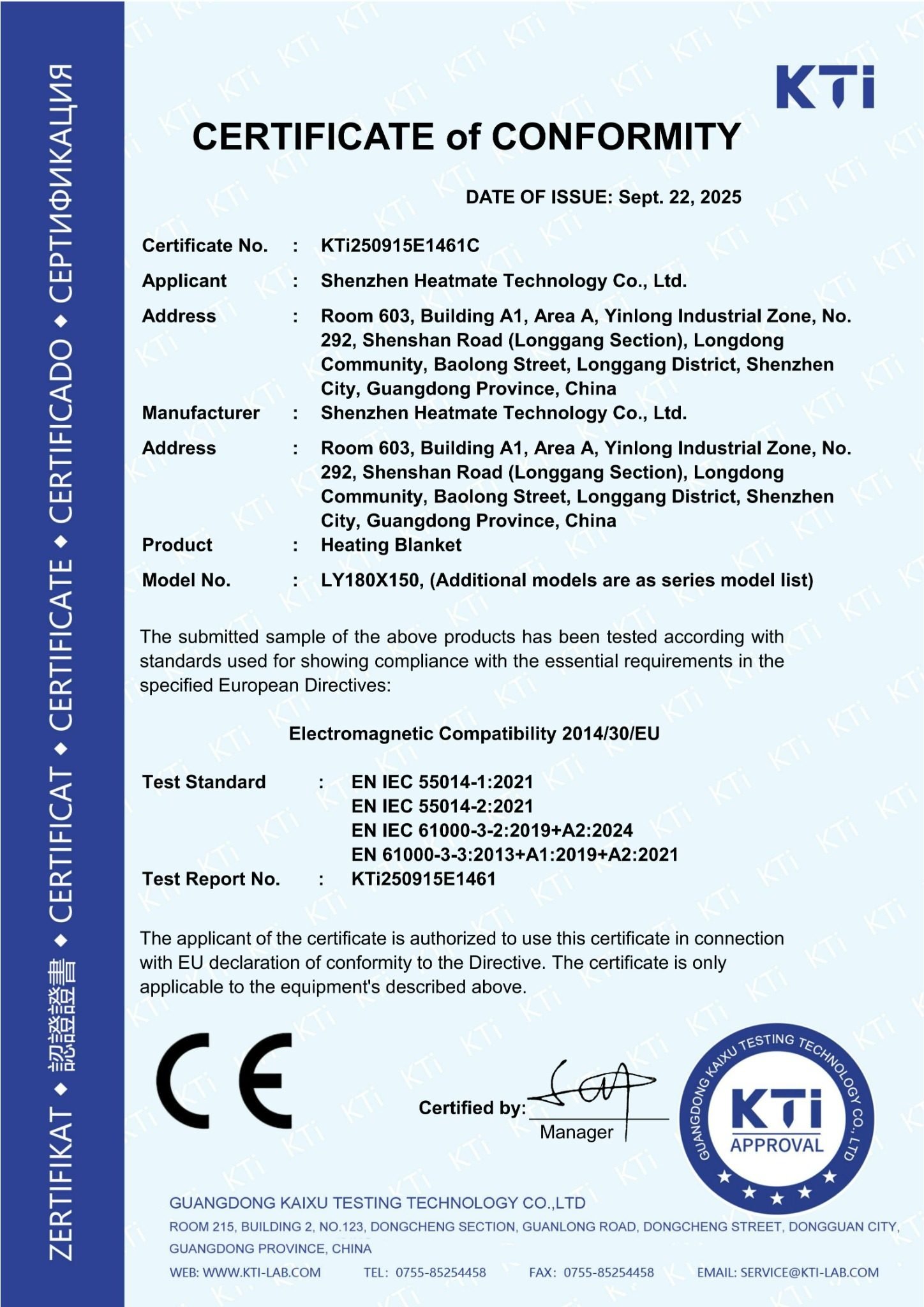
References: European Commission — CE marking, Low Voltage Directive and EMC Directive.
UK market requirements have changed in recent years, so buyers need a more precise view of how UKCA and CE are currently used. For electrical equipment in Great Britain, government guidance states that businesses can currently use UKCA or CE marking. Legislation that took effect in October 2024 continued recognition of CE marking for this sector.
That means buyers should not simply ask, “Do you have UKCA?” A better question is: Which conformity route are you using for Great Britain, and which UK electrical-safety and EMC requirements apply to this product?
Not necessarily. Current UK government guidance allows electrical equipment to be placed on the Great Britain market using UKCA or CE marking, subject to the applicable regulations and conformity route.
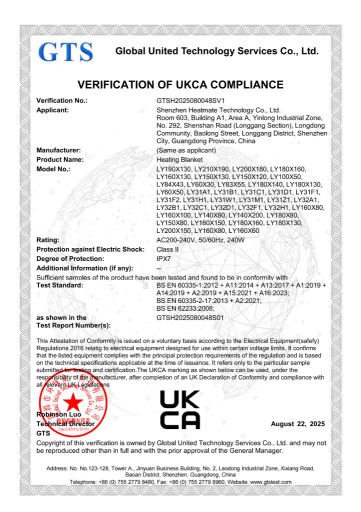
Reference: GOV.UK — Product markings for electrical equipment.
RoHS is not an electrical performance certification. It restricts certain hazardous substances in electrical and electronic equipment. For electric blankets, relevant parts can include controllers, wiring, circuit boards, connectors and other electrical components.
The European Commission notes that the RoHS Directive currently restricts ten substances, including lead, cadmium, mercury and certain flame retardants and phthalates. Buyers should therefore view RoHS as part of material and component compliance rather than as a substitute for product safety evaluation.
No. RoHS addresses restricted substances. CE marking may involve multiple applicable EU requirements, while electrical safety and EMC are separate compliance areas. A RoHS report alone does not demonstrate complete electric blanket safety or EU conformity.
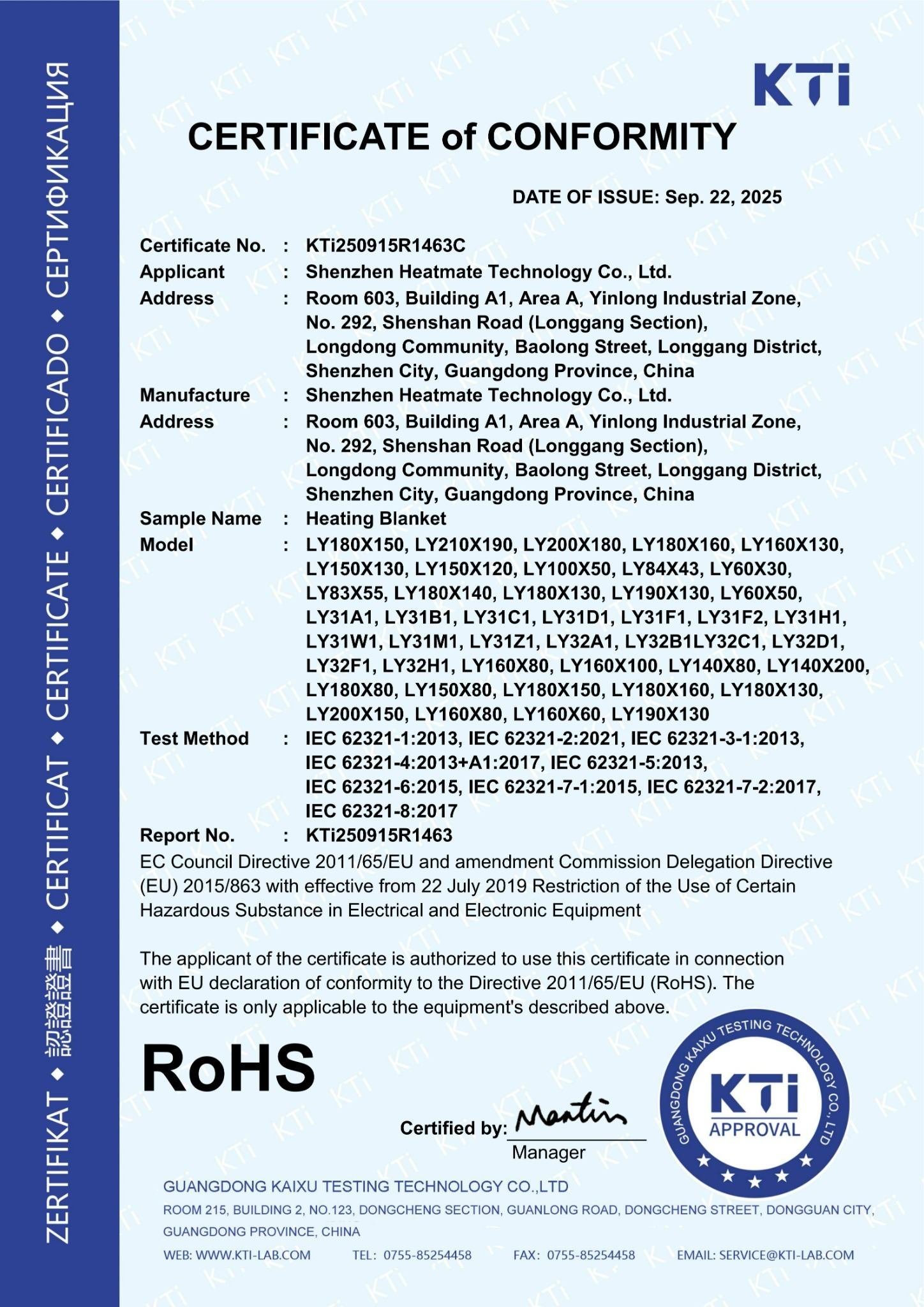
Reference: European Commission — RoHS Directive.
Electric blankets are also textile products, so fabric and skin-contact materials matter alongside electrical components. OEKO-TEX® STANDARD 100 is a label for textiles tested for harmful substances. OEKO-TEX states that certified articles are tested against a broad list of substances, with stricter requirements for products involving more intensive skin contact.
For buyers, the important question is whether the actual fabric, trims and relevant textile components used in the production model are covered. A supplier’s general fabric certificate is less useful if it does not match the material selected for your order.
Buyers comparing fabric options can also review our heated blanket fabric guide to understand how common materials differ in comfort, warmth and product positioning.
Usually not as a universal electrical-market requirement. It is a voluntary textile certification, but brands and retailers may request it as part of material-safety or supplier-qualification programs.
Reference: OEKO-TEX® STANDARD 100.
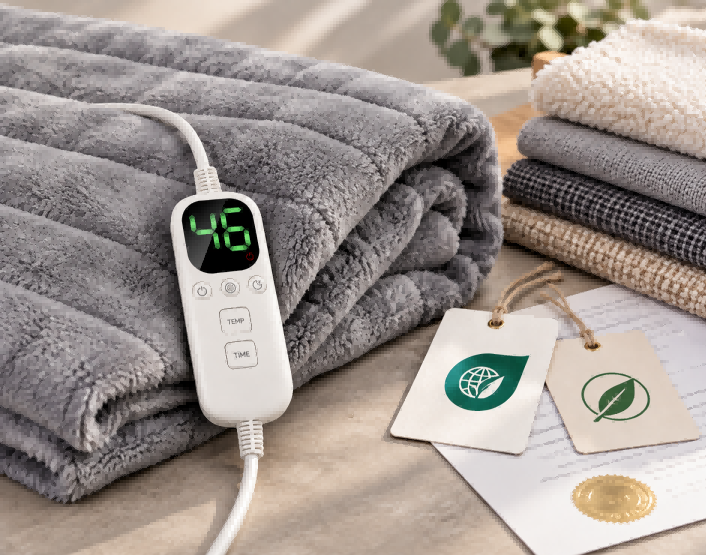
Certification marks and technical safety standards are related, but they are not the same thing. Marks such as ETL or UL show that a product has been evaluated through a recognized certification route, while the underlying standard defines the technical safety requirements the product is tested against.
For electrically heated bedding, buyers may encounter standards such as UL 964 in North America and IEC 60335-2-17 internationally. These standards address safety requirements for electrically heated blankets, throws, mattress pads and similar flexible heating appliances, including control units supplied with the product.
References: UL 964 — Electrically Heated Bedding and IEC 60335-2-17:2022.
One of the most common sourcing mistakes is treating every logo on a supplier page as evidence of the same thing. Electrical safety, market conformity, substance restrictions and textile testing cover different parts of the compliance picture and should be reviewed separately.
| Buyer Question | Best Evidence to Review |
|---|---|
| Has the product been independently safety certified for North America? | ETL or UL product listing, model reference and applicable safety standard |
| Can the product be placed on the EU market? | Applicable conformity assessment, technical file, EU Declaration of Conformity and CE marking |
| What marking route is used in Great Britain? | UKCA or recognized CE route, with applicable UK electrical and EMC requirements |
| Are restricted substances controlled? | RoHS declarations/test evidence covering relevant electrical and electronic parts |
| Have textile materials been tested for harmful substances? | Valid OEKO-TEX® STANDARD 100 certificate covering the relevant article/material |
Verification is where many sourcing programs become more robust. A screenshot of a certificate or a logo on packaging is only a starting point. Before approving bulk production, buyers should connect the documentation back to the exact product being purchased.
Yes. This is one of the most commercially important questions for private-label buyers. Changes to heating systems, controllers, materials, voltage, plugs and construction can affect existing compliance coverage.
Not every cosmetic change triggers the same level of review. Logo printing or outer-carton artwork may have little effect on electrical certification, while a different controller, connector, heating-wire layout, voltage or insulation system can materially change the evaluated construction.
For a broader development workflow, see our OEM electric blanket customization guide and electric blanket safety testing and quality inspection guide.
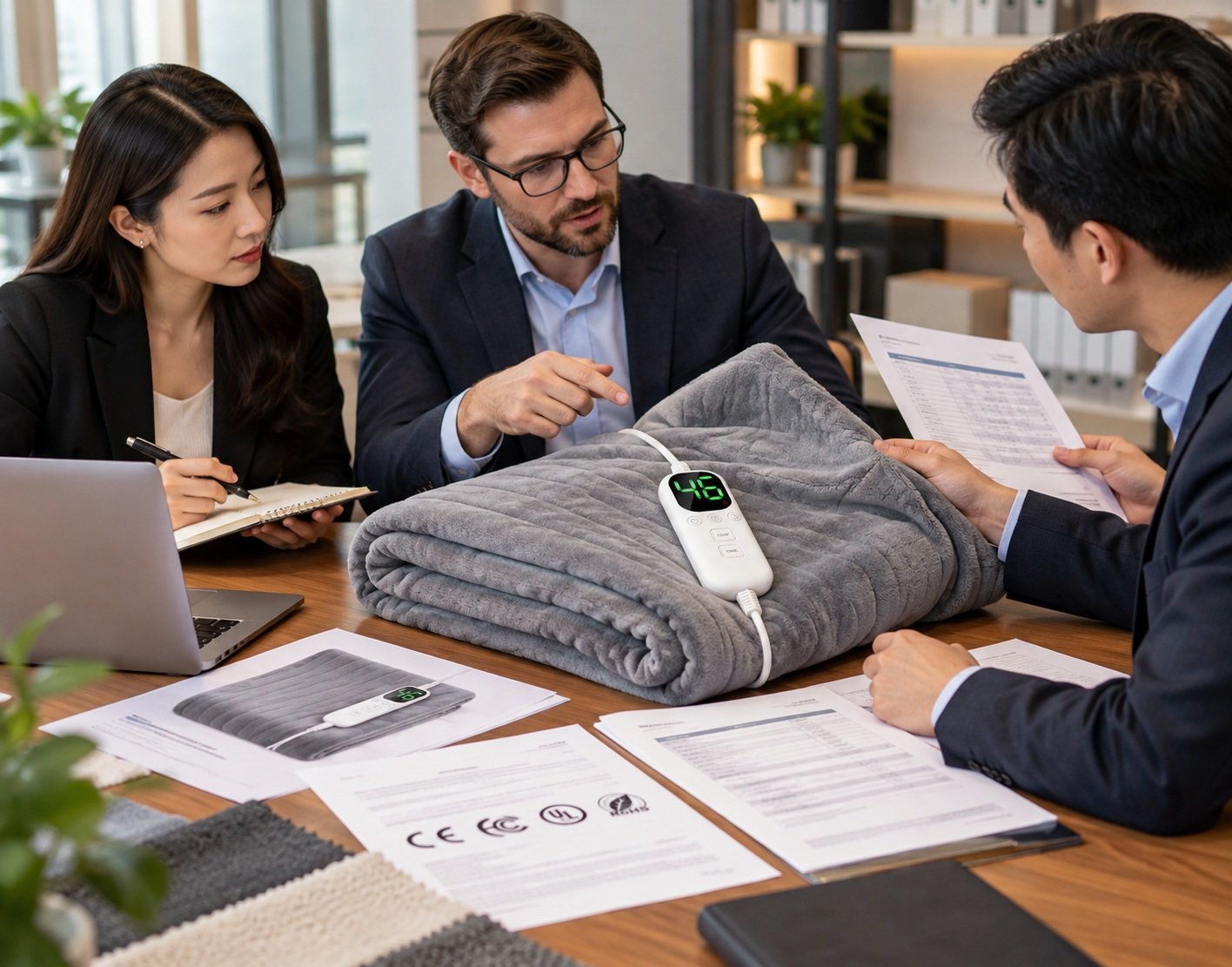
Important: compliance requirements depend on the final product, voltage, controller, intended use, destination and current regulations. Buyers should confirm legal requirements with qualified compliance professionals or relevant authorities before market entry.
For RFQ and sample review, buyers should move beyond asking whether a supplier “has certification” and confirm exactly how the documentation applies to the product being quoted.
HEATMATE develops and manufactures electric heating products including heated blankets, heated throws, heated mattress pads, heated scarves, heating pads and related products. Support for OEM/ODM projects can cover product specifications, fabric, sizing, functions, controller options, labels, packaging, sampling and production coordination.
Compliance planning should always be tied to the exact product and target market. Product safety marks, CE/UKCA conformity routes, RoHS requirements and textile certifications serve different purposes, while factory-management systems or social audits such as ISO or BSCI should be evaluated separately from finished-product certification.
For buyers still comparing suppliers, our electric blanket manufacturer selection guide explains how to evaluate factory capability, testing, MOQ, samples, lead time and quality-claim procedures.
For a current product reference, buyers can also review our electric heated blanket specification page before discussing samples or customization.
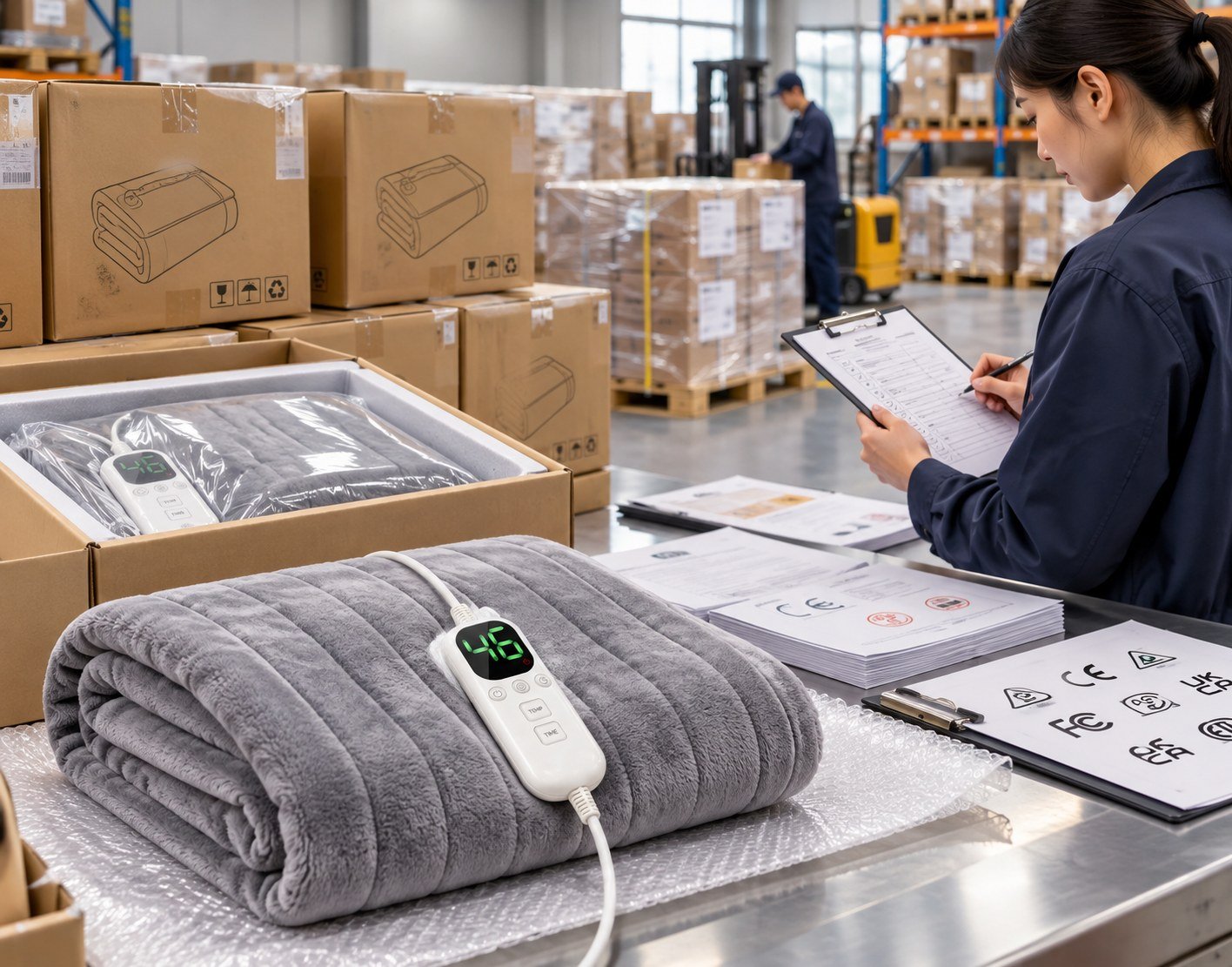
Requirements depend on the product and sales channel, but buyers commonly look for recognized third-party safety certification such as ETL or UL. Retailers and authorities may also have their own acceptance requirements, so the exact model and listing should be verified.
They are different certification marks and organizations, but both are used for third-party product safety certification in North America. The key sourcing check is whether the finished product is listed to the applicable safety standard and whether the listing matches the exact model.
No. The European Commission explicitly notes that CE marking does not mean a product has been approved as safe by the EU. It indicates the manufacturer’s declaration that the product conforms with applicable EU requirements.
Current UK guidance allows CE or UKCA marking for electrical equipment placed on the Great Britain market, subject to the applicable regulations and conformity route.
No. RoHS covers restricted substances in electrical and electronic equipment. Other applicable EU requirements, such as electrical safety and EMC, still need to be addressed.
Yes. Controller design, voltage, wiring, heating systems and other electrical changes can affect the evaluated construction or conformity documentation. Buyers should confirm the impact before approving mass production.
Share your target market, product specification and customization plan with HEATMATE. We can help structure sample development, product configuration and compliance discussions before bulk production begins.
Discuss Your ProjectHEATMATE is an OEM/ODM manufacturer specializing in electric heating products, including heated blankets, heated throws, heated underblankets, USB heated scarves, heated jackets and related products.
More manufacturing knowledge for global heating-product buyers.
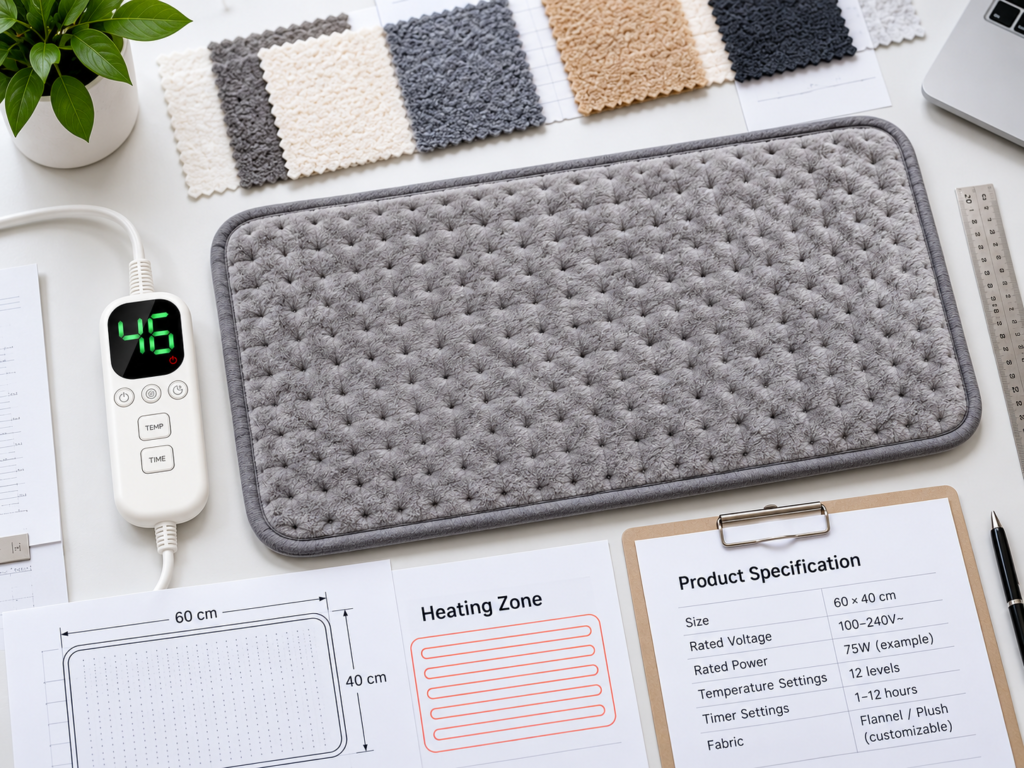
Ordering electric heating pads in bulk requires more than comparing unit prices. This guide explains heating coverage, voltage,…
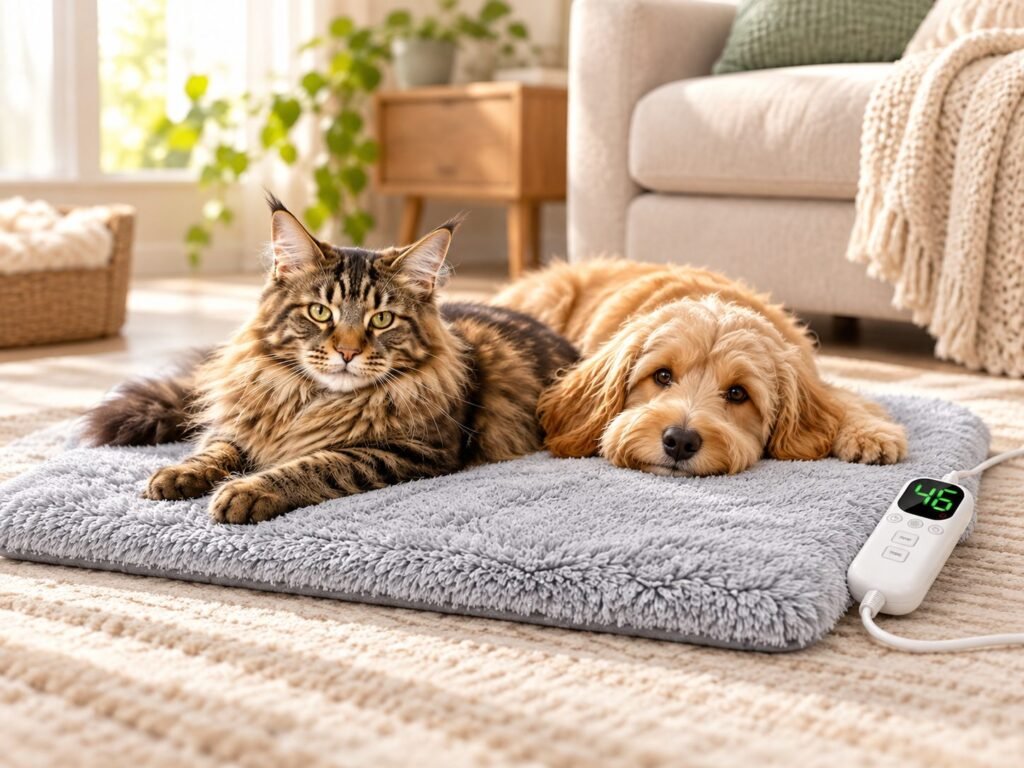
Pet heating pad sourcing involves more than comparing unit prices. This guide explains temperature control, cable protection, power…

Electric heated blankets and USB heated blankets serve different use cases. This buyer guide compares power systems, size,…
Partner with HEATMATE for professional heating solutions.
GET FREE QUOTEIf you have any questions, please do not hesitate to contact us.