Pet Heating Pad Wholesale: Safety Features and OEM Sourcing Checklist
Pet heating pad sourcing involves more than comparing unit prices. This guide explains temperature control, cable protection, power…
October 15, 2026
Ordering electric heating pads in bulk requires more than comparing unit prices. This guide explains heating coverage, voltage, temperature control, safety, certification, sample testing, OEM requirements and RFQ preparation for wholesale buyers.
CONTACT US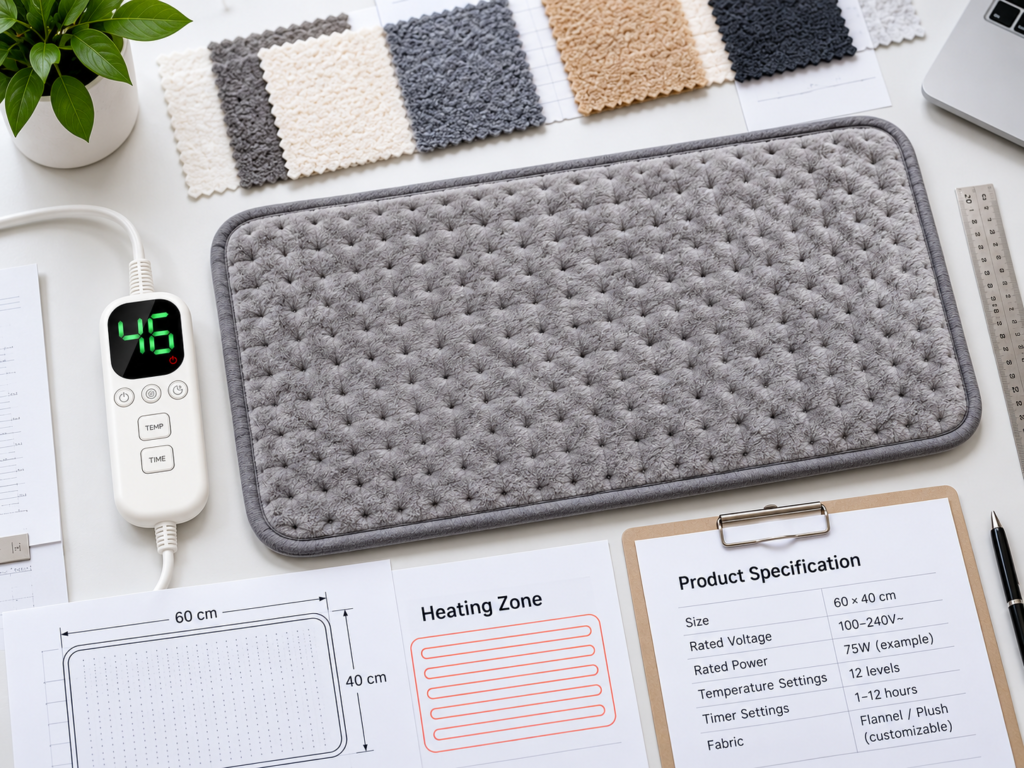
Bulk sourcing electric heating pads requires more than comparing unit price and product size. Buyers need to align heating coverage, electrical configuration, temperature control, safety protection, market documentation, sample performance and intended application before a wholesale order is approved.
Before ordering electric heating pads in bulk, define the application first, then verify heating coverage, dimensions, voltage and wattage, controller functions, protective features, target-market documentation, sample performance, cleaning instructions and OEM requirements. The most useful quotation is based on one clearly defined specification—not on a generic catalog model.
Heating coverage directly affects user experience and product positioning. Two heating pads with similar outer dimensions can still feel very different if the active heating zone, element spacing or internal construction is not the same.
Before ordering, buyers should confirm:
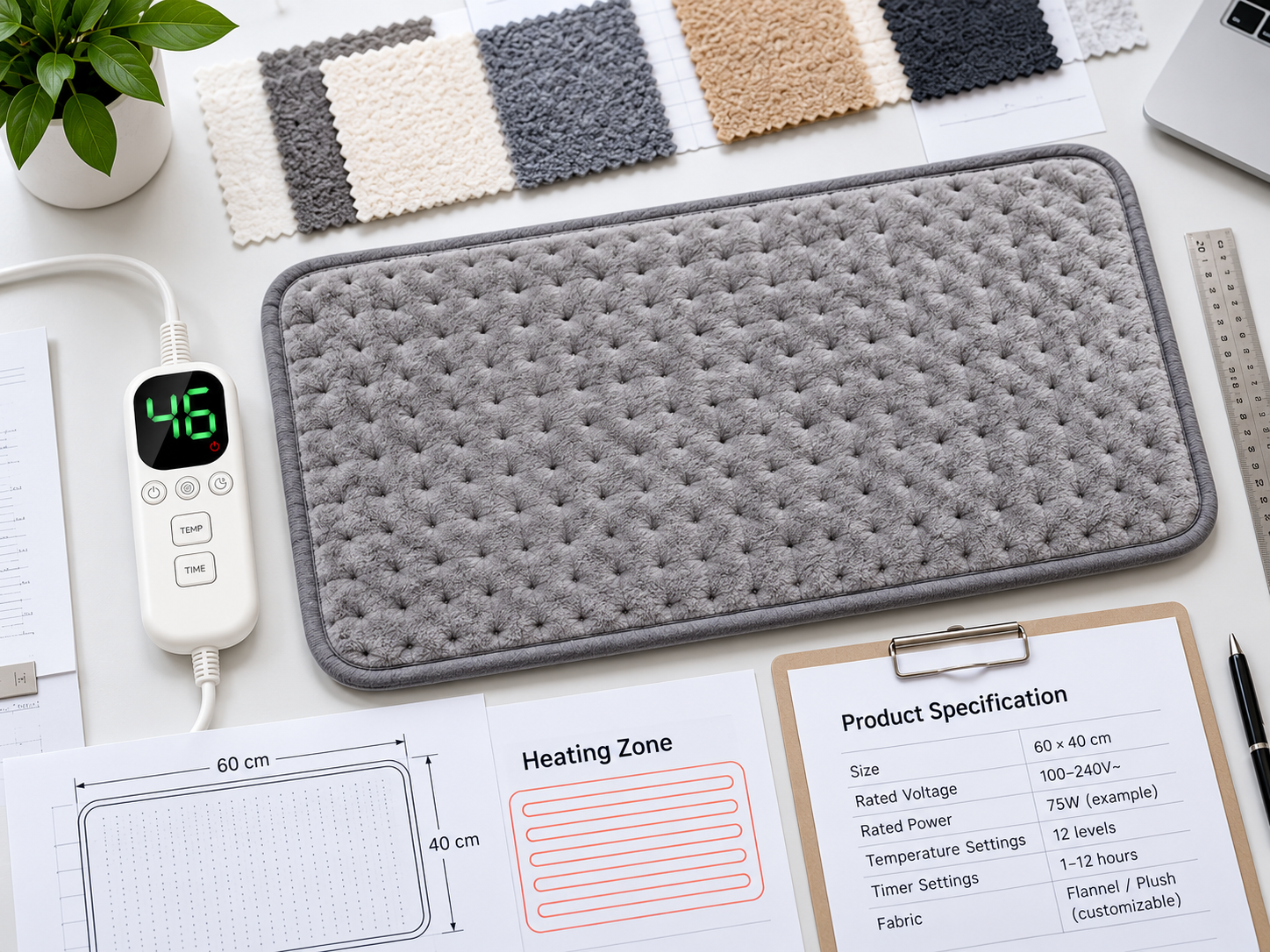
Small heating pads may suit localized household comfort, while larger formats can be developed for back, shoulder, abdominal or broader relaxation applications depending on product design and approved use. The important point is to match size and heating coverage to the actual use case rather than relying on a category name alone.
Power specifications influence heating performance, energy consumption and compatibility with destination-market electrical systems. Buyers should review the complete electrical configuration rather than focusing on voltage alone.
| Specification | What buyers should verify | Why it matters |
|---|---|---|
| Rated voltage | Designed input voltage for the approved SKU | Market compatibility |
| Wattage / current | Rated power and current draw | Heating performance and component selection |
| Power architecture | AC, DC, external adapter or other approved configuration | Defines the complete system |
| Connector / plug | Connector type, regional plug and cable design | Usability and destination-market fit |
| Heat-up behavior | Warm-up time and temperature stability under defined conditions | Performance consistency |
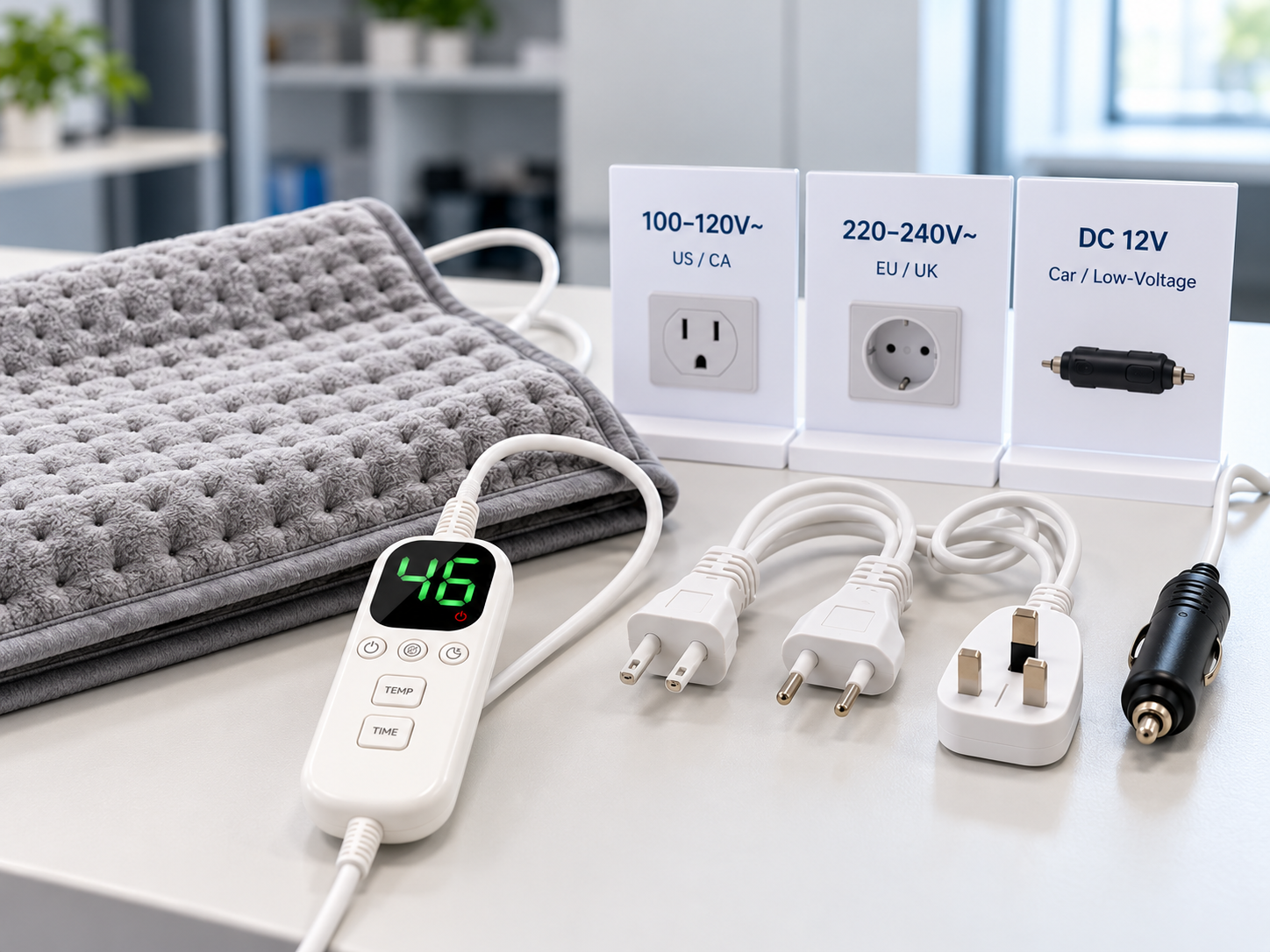
Temperature control affects comfort, usability and retail positioning. Entry-level models may use simple controls, while premium products can include more heat levels, digital displays or timer functions.
Safety performance should remain central to every bulk purchasing decision. Protection functions vary by model, so buyers should confirm the actual design and test scope rather than assuming every heating pad uses the same safeguards.
For washable products, confirm whether electrical components must be disconnected before cleaning and whether the complete construction has been validated for the stated washing method. HEATMATE’s safety testing and quality inspection guide provides a useful framework for reviewing heating-product QC before shipment.
Certification and conformity requirements depend on product category, electrical design, intended use and destination market. Buyers should request documents that cover the exact model—not just a certificate from a related product family.
| Market / framework | What buyers should verify |
|---|---|
| ETL / UL-related routes | Whether the exact applicable product is covered by the relevant safety certification or evaluation pathway for North America. |
| CE | Applicable EU conformity requirements, technical documentation and the manufacturer’s declaration route. |
| UKCA / CE in Great Britain | Current marking route and applicable product regulations for the exact equipment. |
| RoHS | Whether restricted-substance requirements apply to the electrical/electronic product and supplied components. |
Also check model numbers, manufacturer details, certificate validity and whether customized versions remain within the documented scope. HEATMATE’s certification guide explains why certification marks should not be treated as interchangeable.
Sample evaluation is where a commercial product brief becomes a measurable production reference. A sample that looks acceptable is not enough if electrical performance, heating consistency or labeling has not been verified.
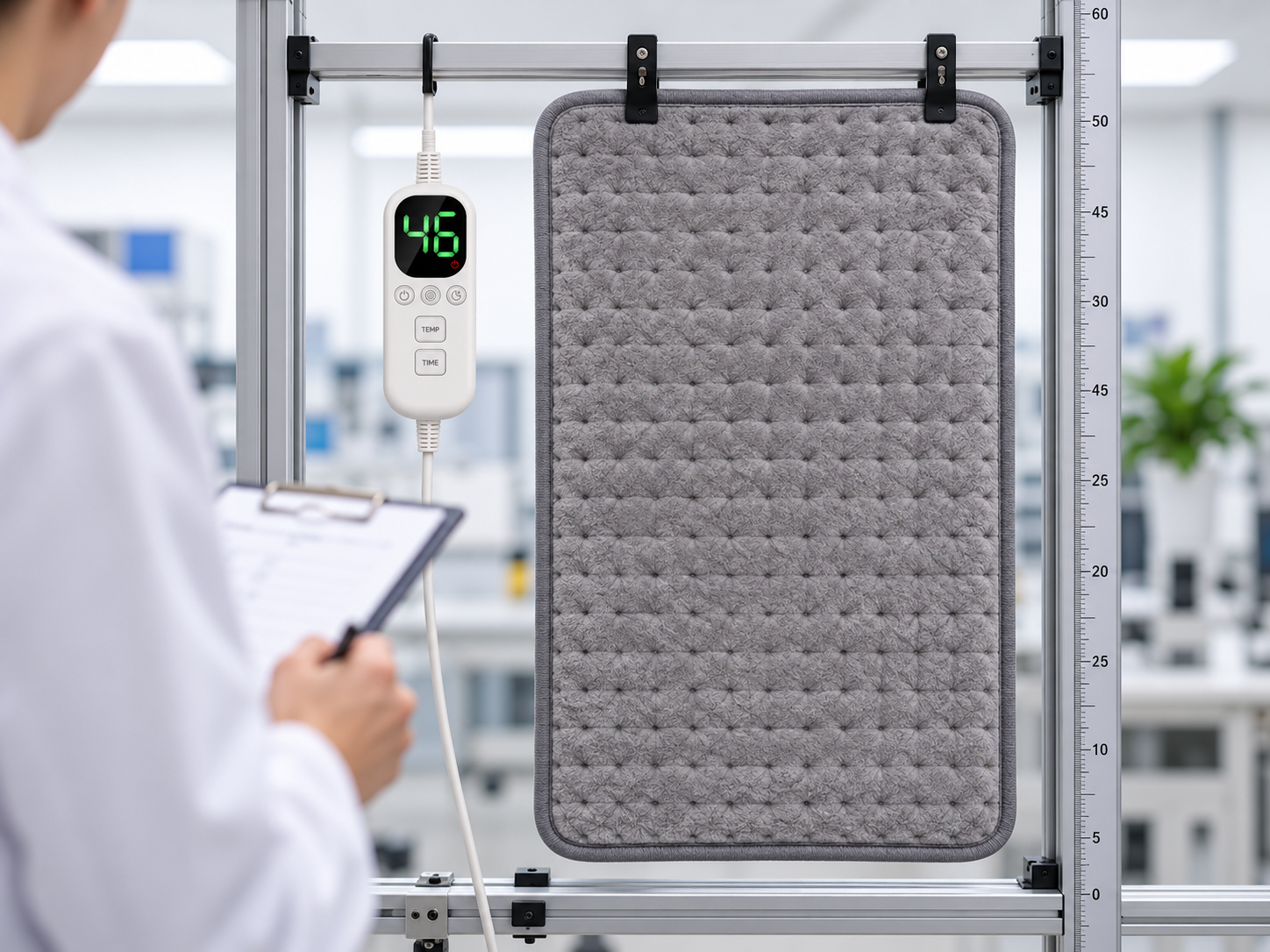
Not every electric heating pad serves the same purpose. Product positioning, temperature limits, safety requirements, labeling and regulatory status should match the intended application.
| Product category | Typical application | Key purchasing checks |
|---|---|---|
| Household comfort heating pad | General warmth and relaxation | Size, comfort, temperature settings, timer |
| Back / shoulder heating pad | Localized household warmth | Coverage, fit, heat distribution, secure positioning |
| Abdominal comfort heating pad | Localized everyday comfort | Shape, temperature control, instructions |
| Pet heating pad | Animal comfort in suitable environments | Temperature limits, cable protection, cleaning, supervision requirements |
| Low-voltage heating pad | Portable or specialized low-voltage applications | Voltage compatibility, adapter specification, electrical protection |
| Medical-use heating device | Specific therapeutic or clinical indications | Regulatory classification, authorized claims, required approvals and clinical/safety documentation |
Pet heating pads also need separate evaluation because animal contact, chewing risk, temperature sensitivity and supervision conditions differ from human household use. HEATMATE’s pet heating pad wholesale guide covers these issues in more detail.
For private-label and wholesale projects, product performance is only part of the sourcing decision. Commercial terms, documentation and change control should be agreed before the purchase order is finalized.
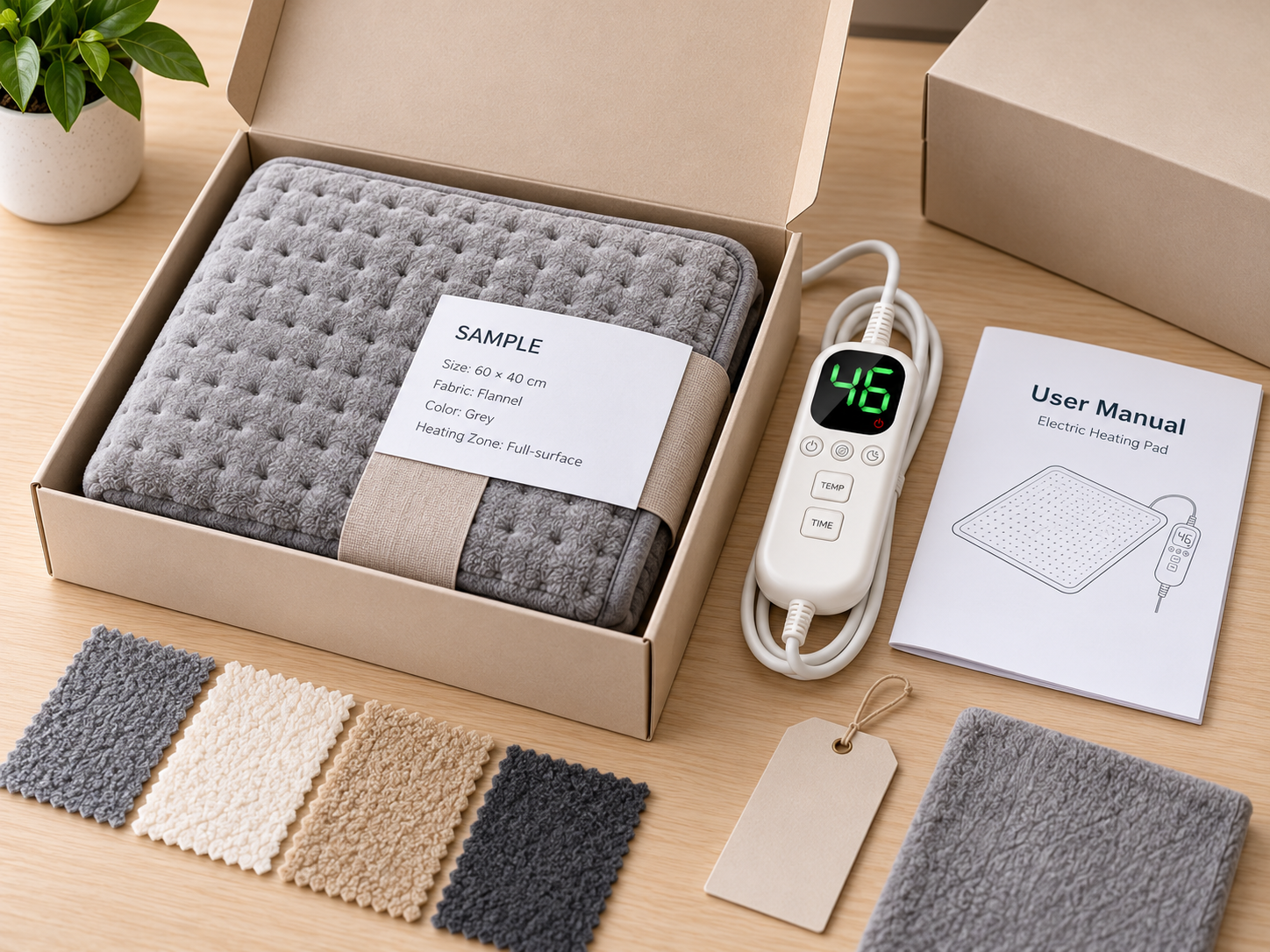
HEATMATE supports OEM/ODM heating-product development and can help buyers align product specifications, customization requirements and intended retail markets. The company’s product catalog includes heating pads alongside electric blankets and other heating categories, while its OEM workflow covers concept development, prototype sampling, safety testing, mass production and delivery. View the heating product catalog or review OEM & ODM capabilities.
A clear RFQ makes supplier quotations easier to compare and reduces unnecessary sample revisions. Instead of asking only for a “heating pad price,” send the same specification brief to every supplier.
Use this structure when requesting a quotation for electric heating pads in bulk.
| RFQ item | What to specify | Example |
|---|---|---|
| Application | Intended use and sales channel | Household comfort / retail |
| Product dimensions | Length × width and tolerance | 60 × 40 cm |
| Heating coverage | Full-surface or targeted area | Full-surface |
| Voltage | Destination-market input | 120V |
| Rated power | Required wattage or approved range | Confirm with supplier |
| Controller | Heat levels, timer, display and shutoff logic | Multi-level control + timer |
| Target market | Country / region | United States |
| Quantity | Trial and expected bulk quantity | 1,000 pcs |
| Fabric | Material, color and surface preference | Flannel / plush |
| Branding | Logo, care label, manual and packaging | Private label |
| Packaging | Retail box, vacuum packing or custom format | Retail color box |
| Documentation | Required testing / conformity documents | Confirm for target market |
| Inspection | Sample approval and final QC expectations | Approved sample + pre-shipment inspection |
Start with intended use, product dimensions, heating coverage and the complete electrical specification. These points determine whether supplier quotations are actually comparable.
No. Wattage should be reviewed together with product size, heating area, voltage, current, heating-element design and temperature-control logic.
Different market versions may be possible, but the complete electrical configuration—including controller, cable, plug or adapter—must be designed and evaluated for the intended voltage and destination market.
Check whether the document covers the exact model, manufacturer, electrical configuration and target market. Customized versions should also be reviewed to confirm they remain within the applicable scope.
Sampling allows buyers to check dimensions, heating distribution, temperature control, electrical construction, materials, cleaning instructions, packaging and labeling before mass production begins.
Not automatically. Household comfort products and medical-use devices can fall under different regulatory requirements. Therapeutic claims should only be used when the required regulatory pathway and supporting evidence are in place.
For a more useful quotation, send HEATMATE the core requirements below. The team can review whether the specification is production-ready and identify items that should be confirmed before sampling.
HEATMATE is an OEM/ODM manufacturer specializing in electric heating products, including heated blankets, heated throws, heated underblankets, USB heated scarves, heated jackets and related products.

More manufacturing knowledge for global heating-product buyers.
Pet heating pad sourcing involves more than comparing unit prices. This guide explains temperature control, cable protection, power…

Electric heated blankets and USB heated blankets serve different use cases. This buyer guide compares power systems, size,…

USB heated shawl sourcing involves more than fabric and appearance. This guide explains power requirements, heating-zone design, connectors,…
Partner with HEATMATE for professional heating solutions.
GET FREE QUOTEIf you have any questions, please do not hesitate to contact us.