What Buyers Should Check Before Ordering Electric Heating Pads in Bulk
Ordering electric heating pads in bulk requires more than comparing unit prices. This guide explains heating coverage, voltage,…
October 21, 2026
Pet heating pad sourcing involves more than comparing unit prices. This guide explains temperature control, cable protection, power systems, materials, cleaning, OEM customization, sample approval and quality inspection for wholesale buyers.
CONTACT US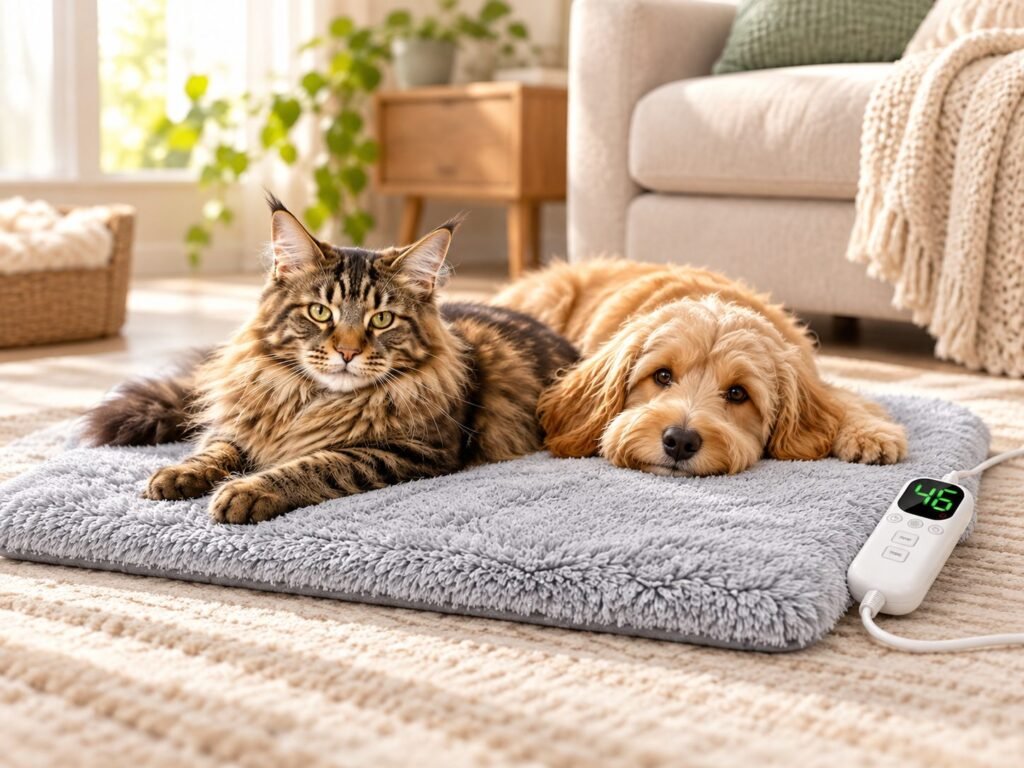
For retailers, distributors and private-label pet brands, sourcing a pet heating pad is not simply a price comparison. Temperature control, cable protection, electrical design, surface materials, cleaning method, product size and sample verification all affect whether a product is suitable for its intended use.
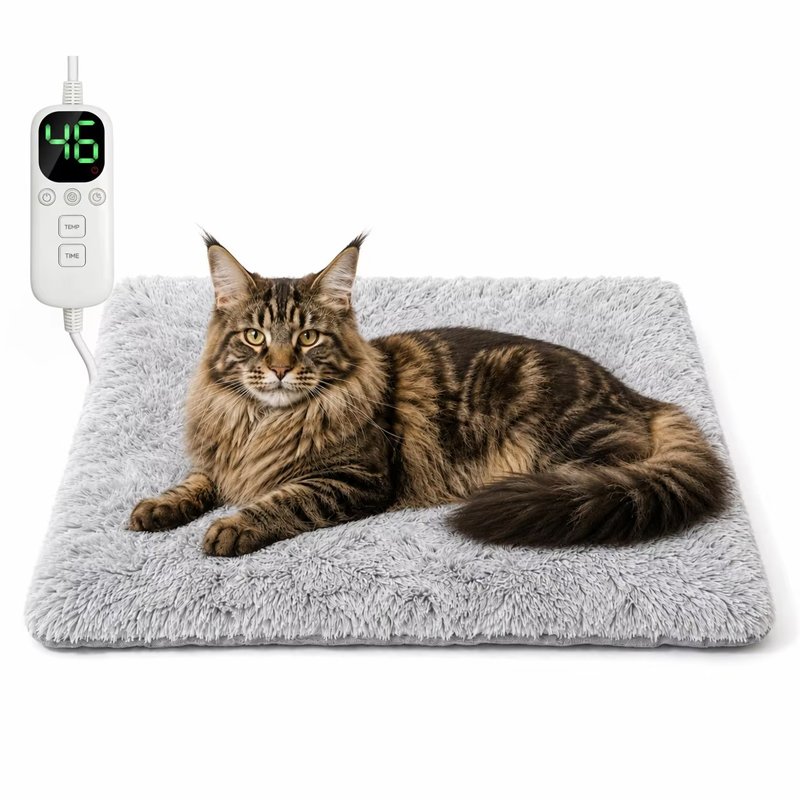
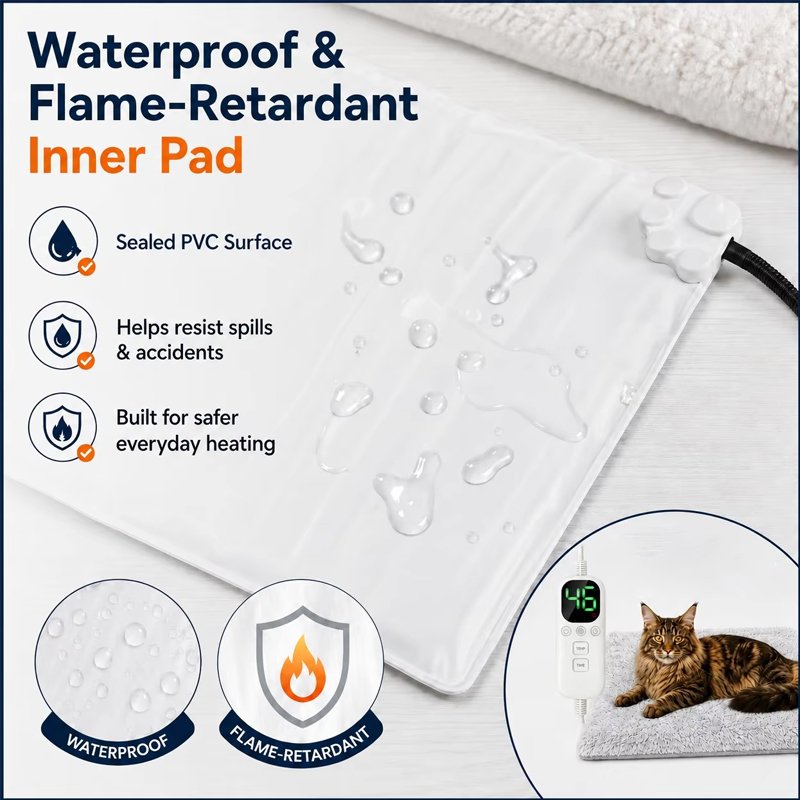
A reliable pet heating pad wholesale specification should define temperature behavior, heating consistency, cable and connector protection, power configuration, surface material, cleaning method, dimensions, intended use and destination-market requirements. “Chew-resistant,” “water-resistant” and “washable” should be treated as testable product claims—not marketing shortcuts.
Veterinary guidance also highlights the potential for burns and cord chewing when heat pads are used around pets, particularly where an animal may sleep deeply or have difficulty moving away from heat. For products sold into pet channels, instructions and risk controls should therefore be explicit rather than implied. Buyers can review this veterinary safety guidance as background when defining product-use instructions.
Pets can respond differently to external heat depending on size, age, coat type, environment, mobility and how the product is used. For this reason, temperature should be treated as an engineering and testing question rather than a single marketing number.
When sourcing pet heating pads, buyers should evaluate:
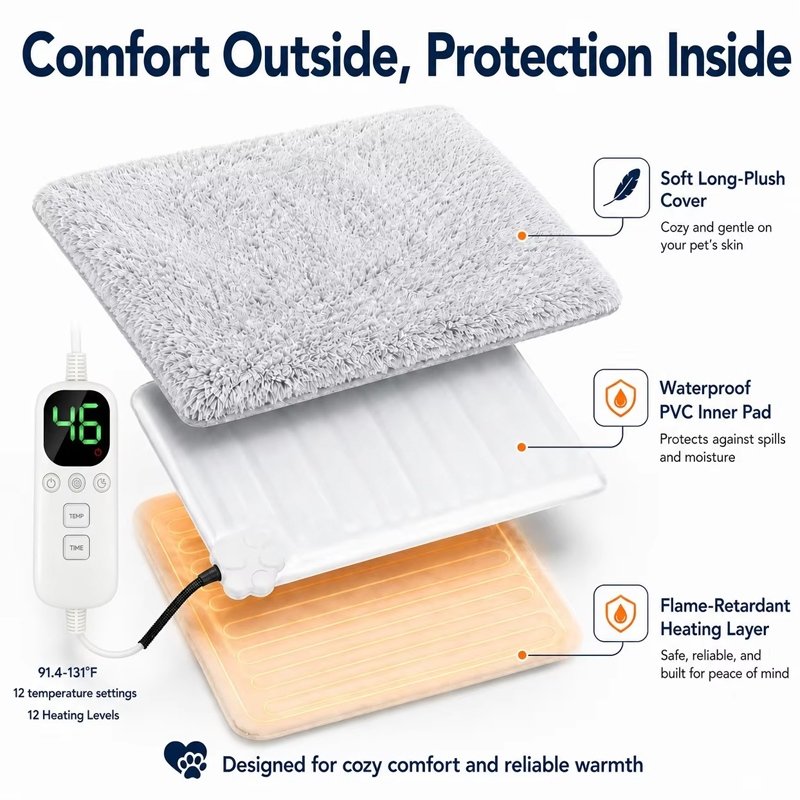
Pets may scratch, pull or bite accessible cables. Cable damage can expose conductors, weaken insulation or damage the connection between the heating pad and its power system. A wholesale inspection plan should therefore treat the cable assembly as part of the product—not as an accessory.
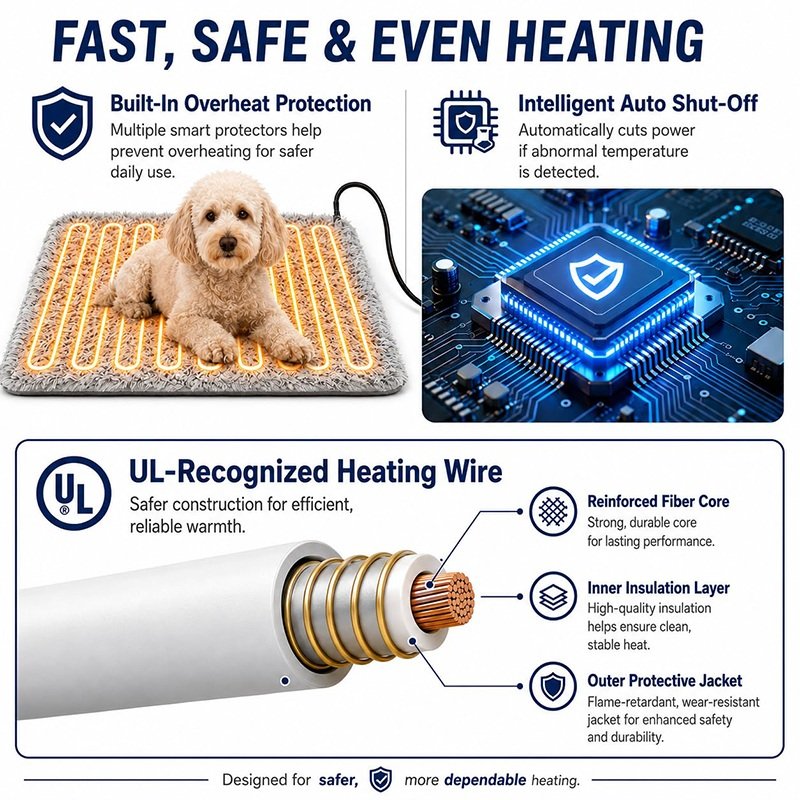
Power supply configuration affects compatibility, operating performance and market access. Before approving a model, buyers should confirm whether the product uses direct AC power, an external adapter or another low-voltage architecture.
| Specification | What the buyer should confirm | Why it matters |
|---|---|---|
| Voltage & frequency | Rated input and intended market | Compatibility and electrical design |
| Power & current | Rated values for the approved model | Heating performance and component selection |
| Control functions | Temperature settings, timer or shutoff functions where available | User experience and operating logic |
| Connector & cable | Connector type, cable length, strain relief and placement | Usability and durability |
| Protection | Applicable abnormal-operation safeguards | Risk control |
| Documentation | Test reports / conformity or certification documents for the exact SKU and market | Market access and buyer due diligence |
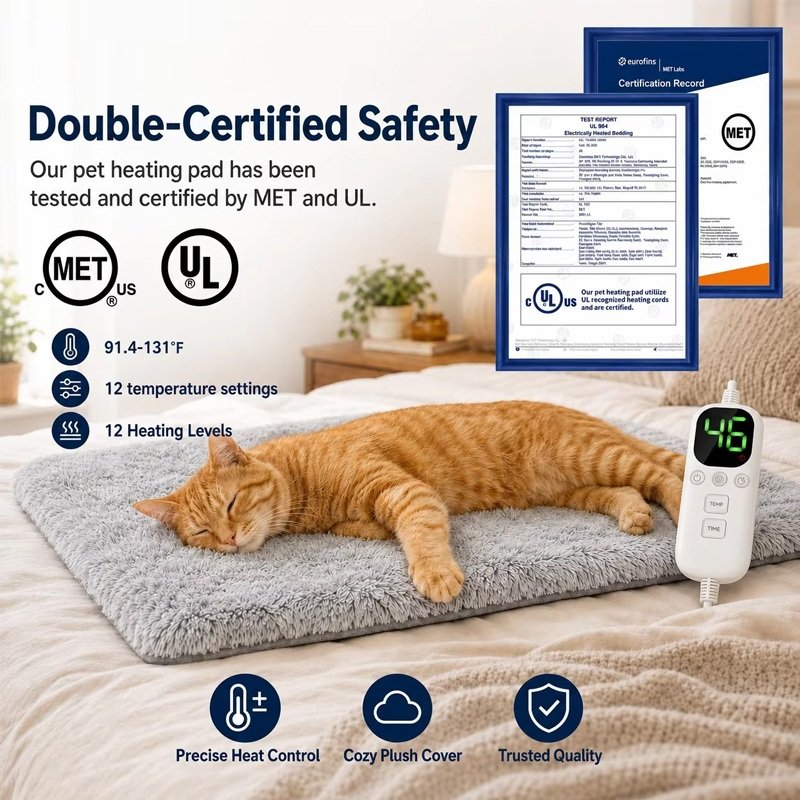
For OEM projects, electrical changes should be controlled carefully after sample approval. A change to the cable, connector, controller, adapter, heating element or power rating can affect performance and may require additional evaluation.
Pet heating pads need to balance comfort, durability, heat transfer and maintenance. The correct material depends on the animal-use scenario, target price point, sales channel and cleaning expectations.
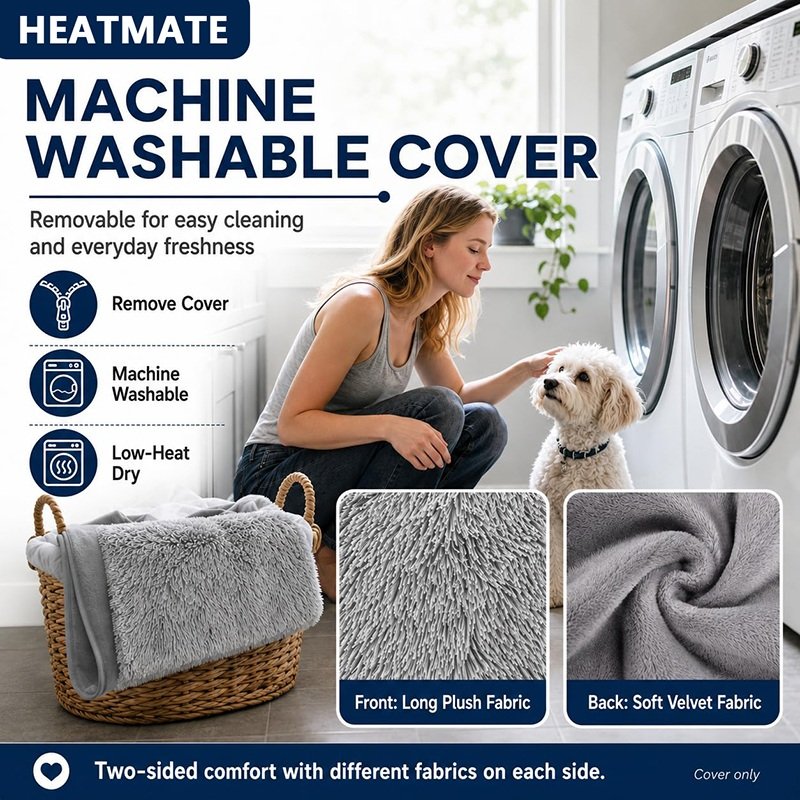
OEM specifications should define fabric composition, texture, color, thickness, cover construction and cleaning method. Claims such as “waterproof,” “water-resistant” or “machine-washable” should match the tested product rather than being added at the listing stage.
Pet heating pads are sold in different sizes and constructions for cats, small dogs, larger dogs, pet beds, crates and other resting areas. The key is not to publish a generic “small / medium / large” label without defining the actual dimensions and intended placement.
| Specification | What buyers should define |
|---|---|
| Dimensions | Length, width, thickness and tolerance. |
| Pet / placement | Intended animal size and where the pad will be positioned. |
| Heating coverage | Usable heated area and expected distribution. |
| Electrical | Rated voltage, wattage, current and power architecture. |
| Cable | Length, exit position, strain relief and connector position. |
| Surface | Cover material, edge construction and care method. |
| Packaging | Retail dimensions, shipping dimensions and product weight. |
| Labels / manual | Languages, warnings, care information and market-specific content. |
For marketplace sellers, clear dimensions and pet-use guidance can reduce confusion at the point of purchase. For retail programs, multiple sizes may help cover different pet beds and customer segments, but each size should still have an approved specification.
Private-label differentiation should go beyond adding a logo. HEATMATE can support OEM/ODM discussions covering product structure, materials, heating configuration, branding and packaging according to project requirements and technical feasibility.
Customization scope can depend on product complexity, target-market requirements, minimum order quantity and the approved sample. Buyers planning a broader heating-product project can review HEATMATE’s OEM & ODM capabilities and heating product catalog.
A pet heating pad sample should be treated as a functional approval stage. Appearance alone is not enough for an electrically heated product used around animals.
For broader QC planning, HEATMATE’s heating product safety testing and quality inspection guide provides additional inspection logic that can also inform pet heating product programs.
Before confirming a purchase order, use a consistent sourcing checklist so every supplier is quoting and producing against the same product brief.
| Purchasing item | What buyers should confirm |
|---|---|
| Temperature | Defined operating behavior, measurement method and temperature regulation. |
| Electrical safety | Applicable protection features and supporting test documentation. |
| Cable design | Insulation, strain relief, routing and chew-risk mitigation. |
| Power supply | Voltage, wattage/current, connector or plug type and market compatibility. |
| Materials | Fabric composition, durability, surface treatment and cleaning method. |
| Specifications | Dimensions, heating coverage, cable length and control functions. |
| OEM services | Branding, color, labels, instructions and packaging. |
| Sample approval | Functional testing, documented specification and retained reference sample. |
| Quality control | Incoming inspection, in-process checks, final inspection and agreed acceptance criteria. |
| Commercial terms | MOQ, sample lead time, production lead time, payment terms and shipment requirements. |
HEATMATE supports heating-product development for wholesale buyers, distributors and private-label brands. For pet heating pad projects, discussions can cover product dimensions, surface materials, heating configuration, cable and power specifications, labels, packaging and sample approval.
The practical goal is to convert the buyer’s use case into a written specification that can be sampled, evaluated and used as the production reference. HEATMATE’s broader OEM/ODM workflow also includes product planning, sample development, quality inspection and packaging support for custom heating products.
Buyers comparing factory capability can also review HEATMATE’s manufacturer selection guide and certification guide for additional supplier due-diligence questions.
Start with intended use, temperature behavior, heating consistency, cable protection, power architecture and cleaning requirements. These points define the product more meaningfully than price alone.
No. Chew-resistant construction can reduce exposure to damage, but buyers should avoid treating it as an absolute guarantee. Instructions should tell users to inspect cables and stop using damaged products.
Not necessarily. Some designs use a removable washable cover while the electrical pad itself follows different care instructions. Buyers should confirm exactly which part can be washed.
Potential OEM options can include dimensions, shape, cover construction, fabric, color, branding, labels and packaging, subject to technical feasibility, MOQ and sample approval.
Buyers should check workmanship, dimensions, thermal performance, heat distribution, cable and connector construction, applicable protection functions, care instructions, labels and market documentation.
Include target use, dimensions, material, heating coverage, electrical specification, cable requirements, target market, quantity, branding, packaging, required documentation and inspection expectations.
Send HEATMATE your target market, product size, material preference, power requirements, estimated quantity, branding needs and expected use scenario. The team can review the project requirements and discuss sampling and OEM/ODM development.
Discuss Your Pet Heating Pad ProjectHEATMATE is an OEM/ODM manufacturer specializing in electric heating products, including heated blankets, heated throws, heated underblankets, USB heated scarves, heated jackets and related products.

More manufacturing knowledge for global heating-product buyers.
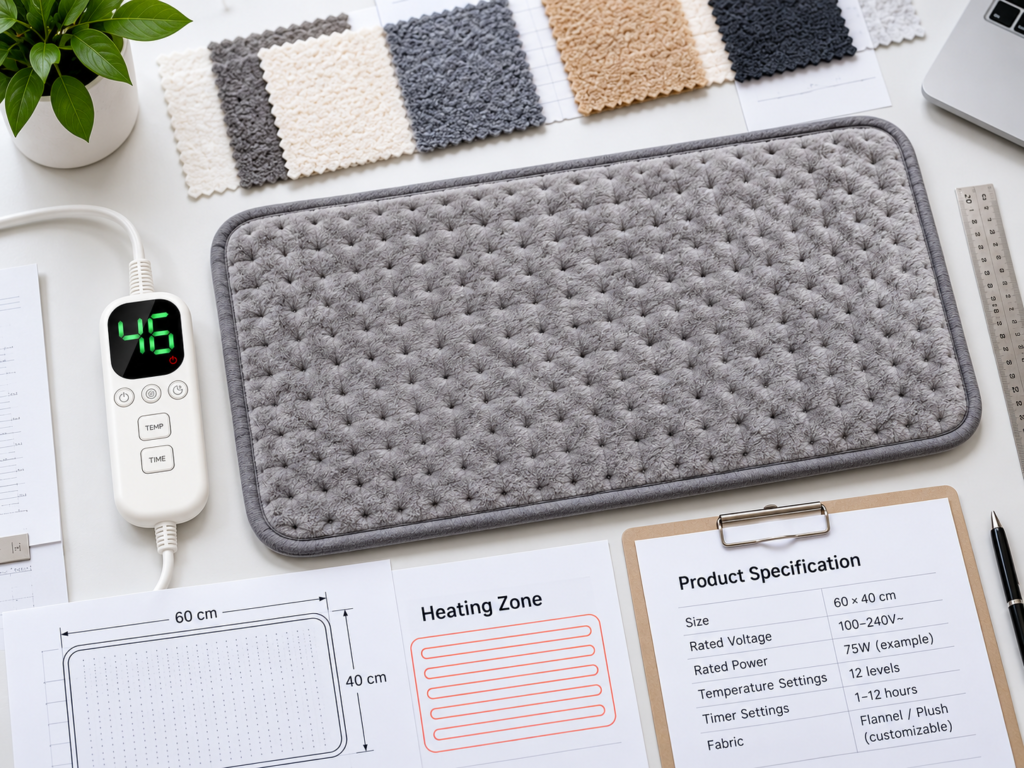
Ordering electric heating pads in bulk requires more than comparing unit prices. This guide explains heating coverage, voltage,…

Electric heated blankets and USB heated blankets serve different use cases. This buyer guide compares power systems, size,…

USB heated shawl sourcing involves more than fabric and appearance. This guide explains power requirements, heating-zone design, connectors,…
Partner with HEATMATE for professional heating solutions.
GET FREE QUOTEIf you have any questions, please do not hesitate to contact us.