What Buyers Should Check Before Ordering Electric Heating Pads in Bulk
Ordering electric heating pads in bulk requires more than comparing unit prices. This guide explains heating coverage, voltage,…
October 21, 2026
Electric heated blankets and USB heated blankets serve different use cases. This buyer guide compares power systems, size, heating coverage, product structure, market requirements, retail channels and OEM sourcing considerations.
CONTACT US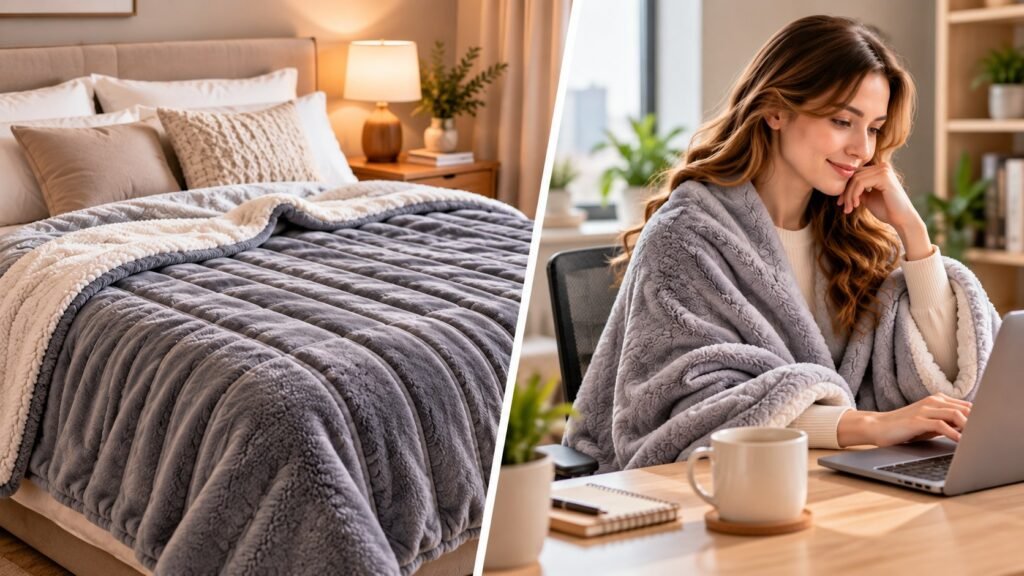
For importers, wholesalers, retailers and private-label brands, the difference between a household electric heated blanket and a USB heated blanket is not simply “AC power versus USB.” The two formats can serve different usage scenarios, size expectations, heating architectures, retail channels and market requirements.
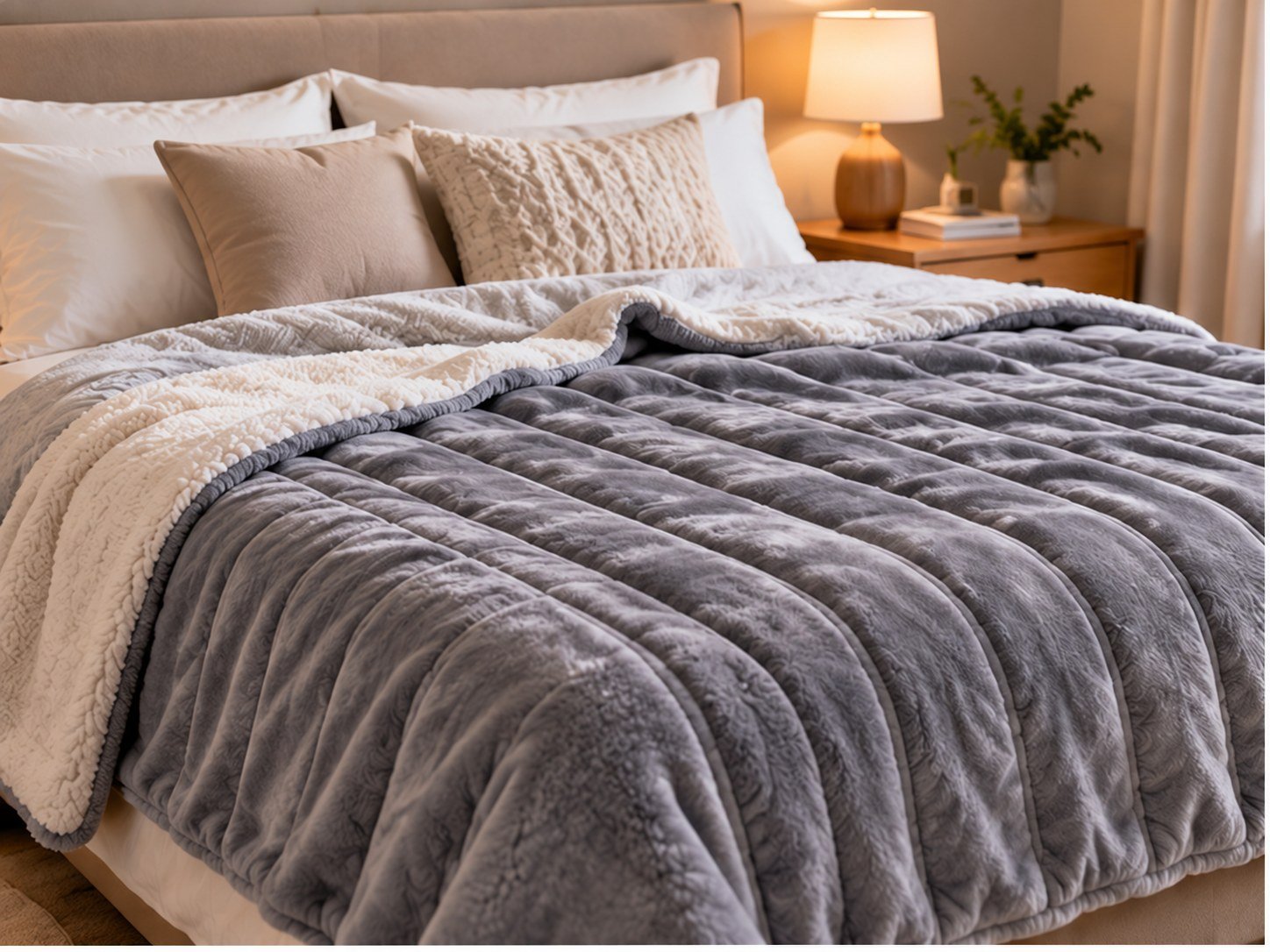

Choose the product format around the intended use—not the connector alone. Electric heated blankets are generally better suited to larger home-comfort formats where broad coverage and household power are priorities. USB heated blankets are often better suited to portable or personal-warming applications. Buyers should compare size, heating coverage, rated power, controller design, textile structure, market compliance, packaging and sales channel before deciding which format fits the project.
This is a buying framework rather than a universal rule. Large USB-powered products and lightweight household electric blankets can both be developed, but the electrical architecture and heating layout still need to match the intended use.
Traditional electric heated blankets are commonly developed for home use, including bedrooms, sofas, living rooms and relaxation spaces. Larger formats and household power systems can support extended warming during cold seasons.
USB heated blankets usually place more emphasis on flexibility and portability. Depending on product design and the approved power source, they can suit office work, travel, selected outdoor activities, commuting and personal warming.
| Comparison | Electric Heated Blanket | USB Heated Blanket |
|---|---|---|
| Main usage | Bedroom, sofa, home comfort | Office, travel, personal or portable warming |
| Power source | Household AC power system | Specified USB power source |
| Portability | Depends on size and construction | Often easier to carry in compact formats |
| Typical buyers | Home-textile retailers, department stores, bedding brands | Lifestyle brands, outdoor retailers, e-commerce sellers |
| Key selling point | Coverage, comfort and controlled heating | Portability, convenience and flexible use |
Blanket dimensions affect comfort, product positioning, heating coverage, carton size, freight efficiency and customer expectations.
| Product format | Common size consideration | Typical application |
|---|---|---|
| Heated Throw | Compact to medium coverage | Sofa, reading, relaxation |
| Twin Heated Blanket | Single-bed coverage | Individual sleeping use |
| Queen / King Heated Blanket | Larger bed coverage | Household bedding |
| USB Lap Blanket | Compact personal coverage | Office, desk, travel |
| USB Heated Shawl | Body-focused coverage | Shoulders, back, lap |
These are product-format examples, not universal size standards. Exact dimensions should be confirmed for the destination market and intended use. For conventional blanket formats, see HEATMATE’s heated blanket buying guide.
For OEM projects, the heating area should be reviewed together with overall dimensions. Increasing blanket size without redesigning the heating layout can create large unheated areas or inconsistent perceived warmth.
Heating architecture is one of the most important differences between these product categories. Buyers should compare heating coverage, temperature-control logic, rated power, cable structure and the intended power source as one system.
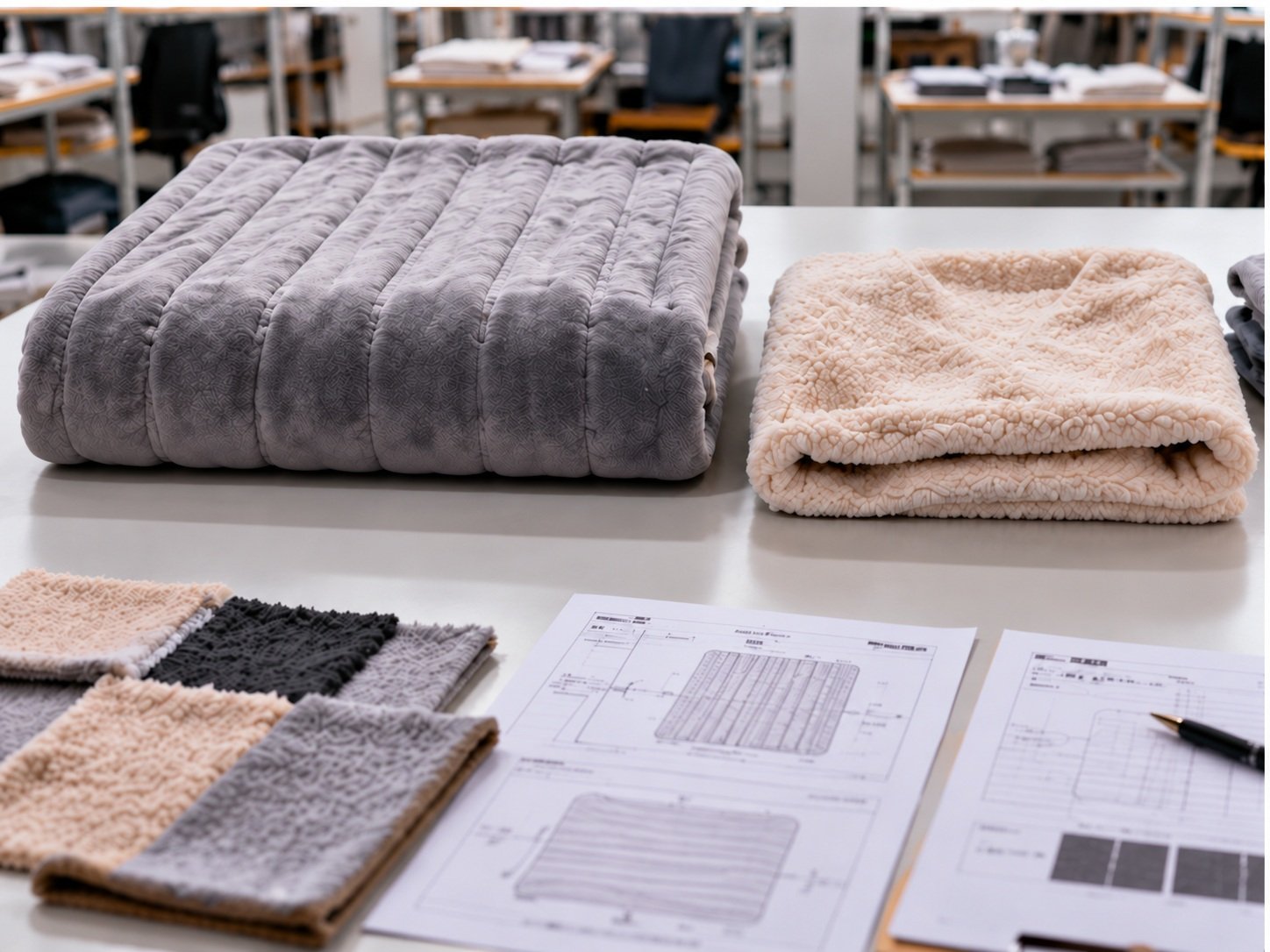
Household electric blankets commonly use insulated resistance heating wires integrated into the textile structure. Their heating layouts can cover broader areas, while controllers manage temperature settings and operating functions according to product design.
USB heated blankets may use flexible resistance heating elements or other purpose-designed heating components. Performance depends on rated voltage, current, wattage, heating-zone size and the output capability of the specified power source.
For both categories, performance should be assessed against the actual product configuration. Buyers should not compare warmth by voltage or connector type alone. HEATMATE’s safety testing and quality inspection guide explains the broader pre-shipment verification logic.
Product structure influences comfort, flexibility, maintenance, assembly complexity and long-term durability. Traditional household electric blankets may combine textile layers, heating wires, fixing structures, connectors and detachable controllers. USB-powered formats may use lighter textile structures, compact controllers and reinforced cable exits. Wearable versions can also include sleeves, snaps, pockets or shoulder coverage.
| Structural feature | Electric Heated Blanket | USB Heated Blanket |
|---|---|---|
| Fabric priorities | Softness, warmth, durability | Softness, flexibility, portability |
| Heating layout | Often broader coverage | Often targeted warming |
| Connection design | Household connector and controller | USB cable, connector, optional compact controller |
| Construction priorities | Stable heating layout and coverage | Flexible construction and cable management |
| Packaging focus | Retail-ready household presentation | Compact packaging and portability |
These distinctions are not absolute. Final specifications should follow the product architecture rather than the category label.
Product terminology varies by country and sales platform. In some markets, “electric blanket” is strongly associated with bedding products, while “heated throw” may describe sofa and living-room formats. USB products may appear under heated throws, lap blankets, wearable blankets, heated shawls or personal-warming accessories.
For electrical equipment placed on the Great Britain market, current UK guidance allows businesses to use either UKCA or CE marking in this sector, subject to the applicable regulations and conformity route. The European Commission also notes that CE marking is a conformity mark rather than an EU “safety approval.” Buyers should verify requirements for the exact SKU and market. UK product-marking guidance · European Commission CE guidance
For more detail, see HEATMATE’s electric blanket certification guide.
The correct product format also depends on how it will be sold. A technically workable product can still be commercially mismatched if its size, packaging, use case or power architecture does not fit the channel.
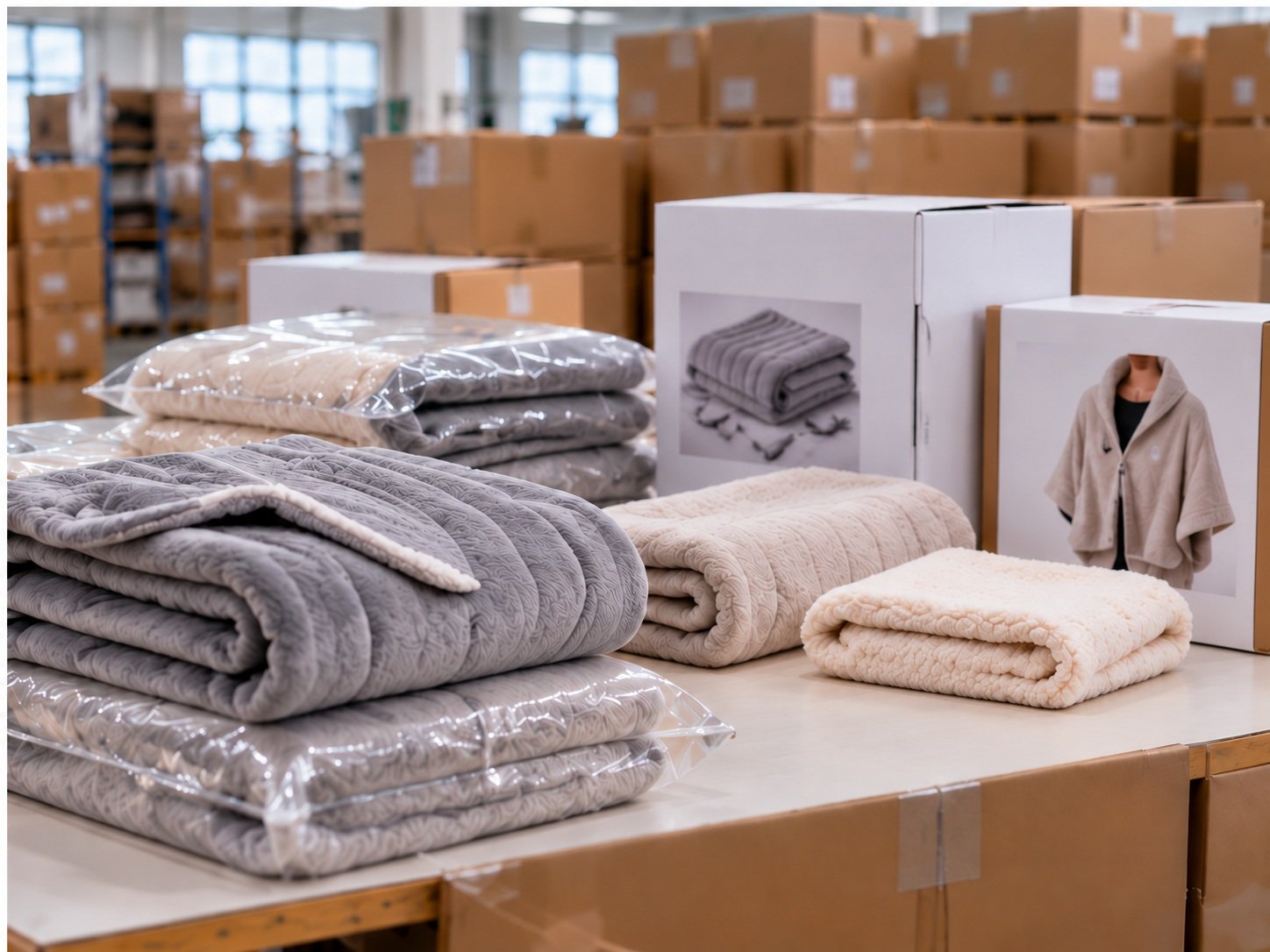
Before requesting a bulk quotation, buyers should define the product architecture in enough detail for suppliers to quote the same configuration.
HEATMATE supports OEM/ODM heating-product development and can help align product structure, textile selection, electrical specifications and customization with target markets. Review the OEM & ODM capability page and the guide on how to choose an electric blanket manufacturer.
Safety should not be judged by power-source category alone. Both types need an appropriate electrical design, protection strategy, approved components and testing that matches the actual product configuration and target market.
Often, but not automatically. Portability depends on blanket size, weight, cable design and whether the user must carry a compatible power bank or another external power source.
Larger USB-powered formats may be technically possible, but heating area, power requirement and intended use must be redesigned accordingly. Buyers should not assume a compact USB architecture can simply be scaled up.
That depends on target customer and channel. Home-textile brands may prefer conventional electric blankets or throws, while lifestyle and portable-warming brands may find USB formats easier to position.
Not necessarily. Requirements depend on electrical architecture, model, intended market and applicable regulations. Documentation should be checked for the exact SKU being sourced.
Provide product format, dimensions, fabric, heating coverage, electrical specification, controller or connector requirements, target market, quantity, branding, packaging and required documentation.
Share your target use case, size, power system, sales channel, destination market and estimated quantity. HEATMATE can help review whether a conventional electric heated blanket, USB heated blanket or wearable format is the better starting point for your OEM/ODM project.
Discuss Your Heating Product ProjectHEATMATE is an OEM/ODM manufacturer specializing in electric heating products, including heated blankets, heated throws, heated underblankets, USB heated scarves, heated jackets and related products.
More manufacturing knowledge for global heating-product buyers.
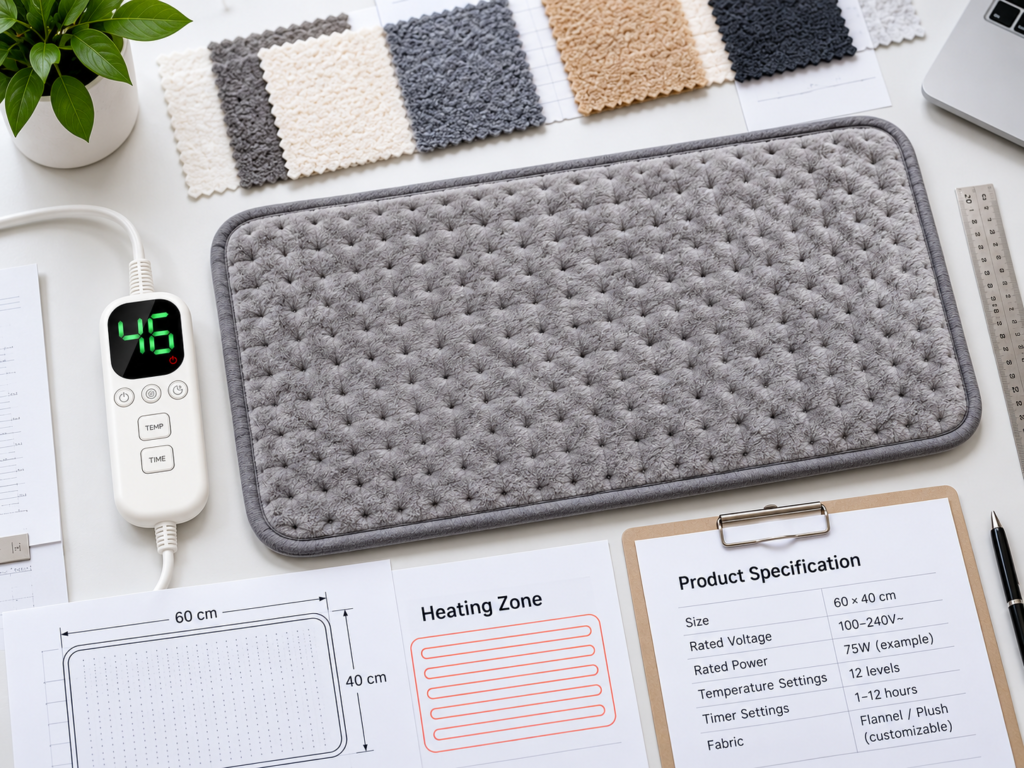
Ordering electric heating pads in bulk requires more than comparing unit prices. This guide explains heating coverage, voltage,…
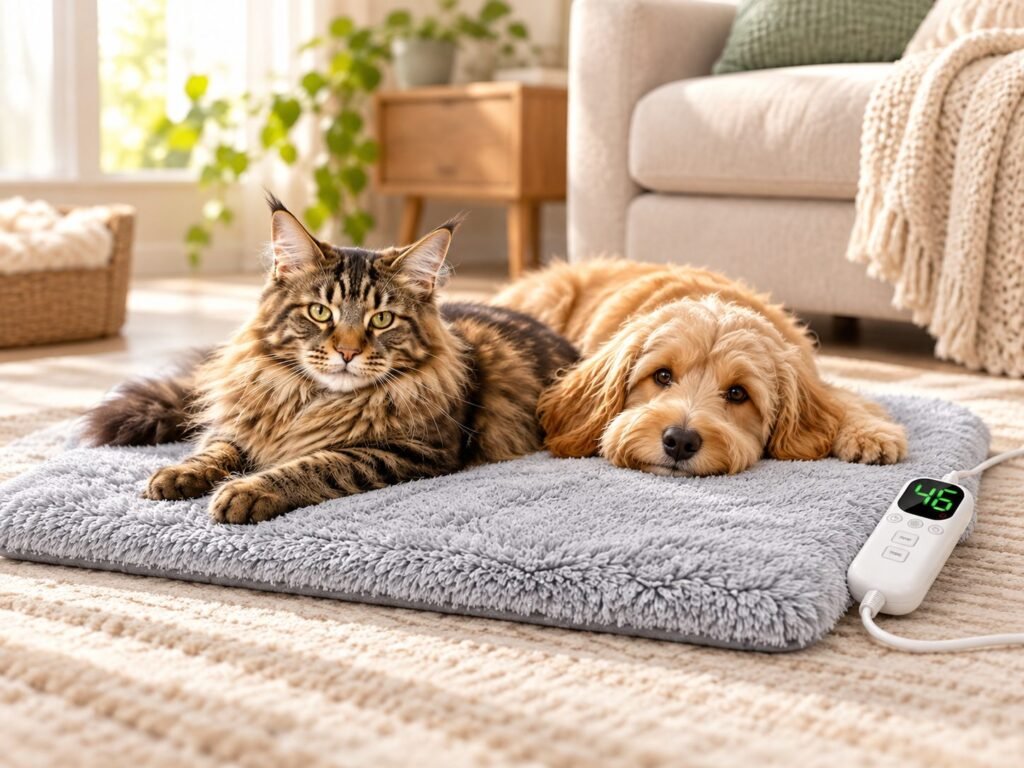
Pet heating pad sourcing involves more than comparing unit prices. This guide explains temperature control, cable protection, power…

USB heated shawl sourcing involves more than fabric and appearance. This guide explains power requirements, heating-zone design, connectors,…
Partner with HEATMATE for professional heating solutions.
GET FREE QUOTEIf you have any questions, please do not hesitate to contact us.