What Buyers Should Check Before Ordering Electric Heating Pads in Bulk
Ordering electric heating pads in bulk requires more than comparing unit prices. This guide explains heating coverage, voltage,…
October 21, 2026
USB heated shawl sourcing involves more than fabric and appearance. This guide explains power requirements, heating-zone design, connectors, materials, OEM options, sampling and quality inspection for wholesale buyers.
CONTACT US
USB heated shawls are a practical personal-warming format for home, office, travel and selected outdoor-use scenarios. For wholesalers, importers, retailers and private-label brands, however, sourcing decisions involve far more than choosing a soft fabric and adding a logo.
When sourcing USB heated shawls in wholesale quantities, confirm the power input, current and wattage requirements, heating-zone layout, connector and controller structure, fabric, washability, OEM scope and inspection criteria before comparing quotations. A USB connector alone does not guarantee compatibility: the actual electrical specification and heating system must be validated together.
For buyers comparing USB heated shawl wholesale options, the first step is to define the electrical and product specification before comparing quotations. Power compatibility, heating-zone layout, connector design, material choice and quality inspection should be treated as linked decisions rather than isolated features. The most useful RFQ is therefore not “How much is a USB heated shawl?” but “How much is this defined configuration, for this market, at this quantity?”
Many sourcing problems appear after sampling because an early specification was left open. These five mistakes are especially worth checking before a purchase order is finalized.
USB heated shawls commonly use low-voltage power input, and the draft correctly identifies power compatibility as one of the first specifications to confirm. A buyer should not choose a power source simply because the connector physically fits. The product’s voltage, current demand and rated wattage must match the intended supply.
| RFQ item | What to define | Why it matters |
|---|---|---|
| Input specification | Required voltage and current | Prevents power-source mismatch |
| Power source | Adapter, power bank, computer port or another approved source | Defines real use conditions |
| Connector | Connector type, cable length and exit position | Affects usability and durability |
| Controller | Heat settings, indicator design and operating logic | Affects function and retail positioning |
| Target market | Destination country and sales channel | Helps align documentation and labeling |
The number of heating zones is easy to market, but zone count alone does not define product quality. Heating placement, textile thickness, insulation, wire routing and actual temperature distribution matter more than simply listing “one zone,” “two zones” or “multi-zone.”
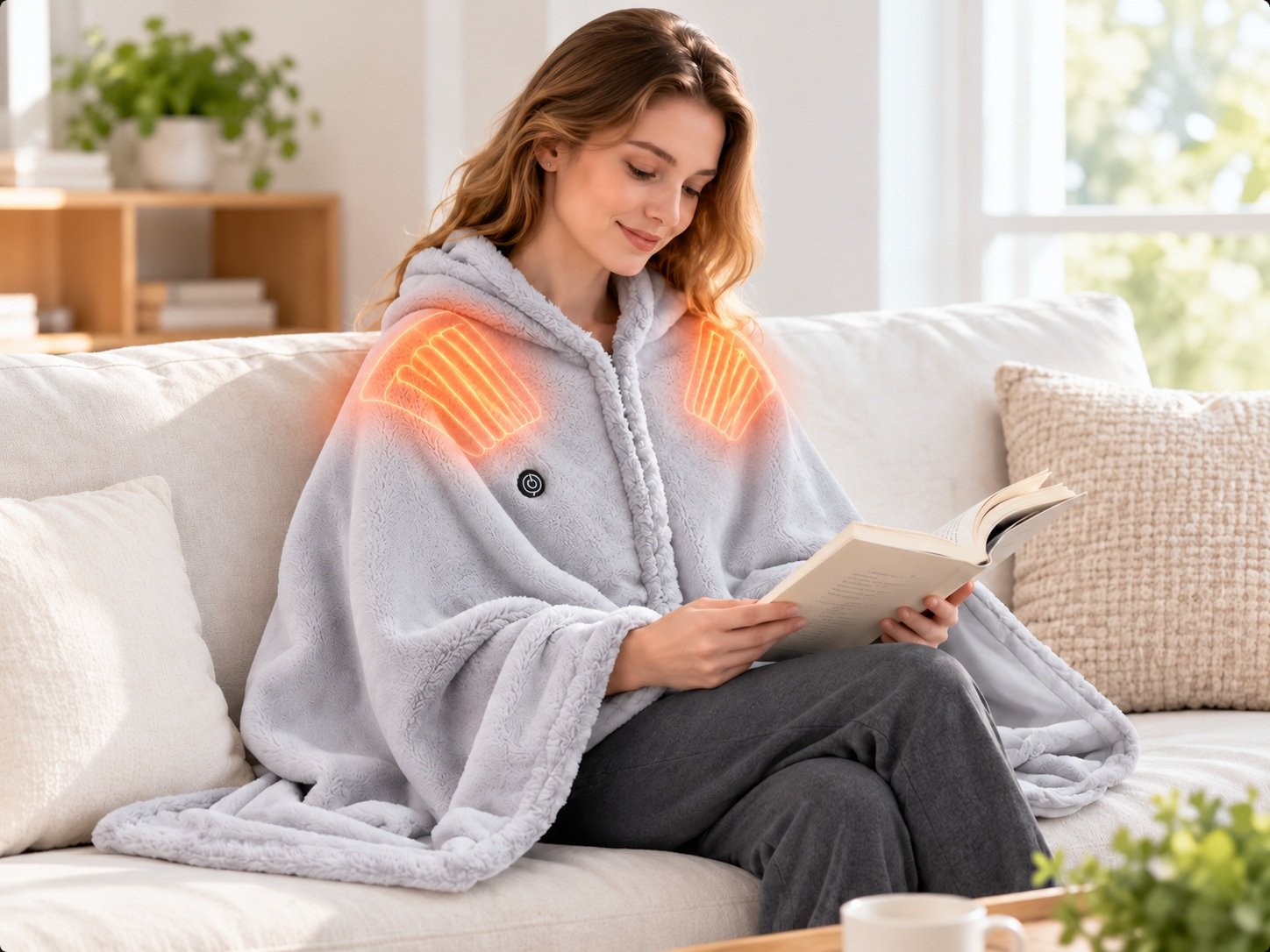
Common development directions include a single main heating area, dual-zone placement or expanded coverage across selected sections. The appropriate layout depends on the product format and where warmth is expected when the shawl is worn.
Pre-production testing should identify unusually hot areas, inconsistent warming or wire displacement. This is also why a more complex heating layout should not automatically be presented as “better” unless the design has been validated.
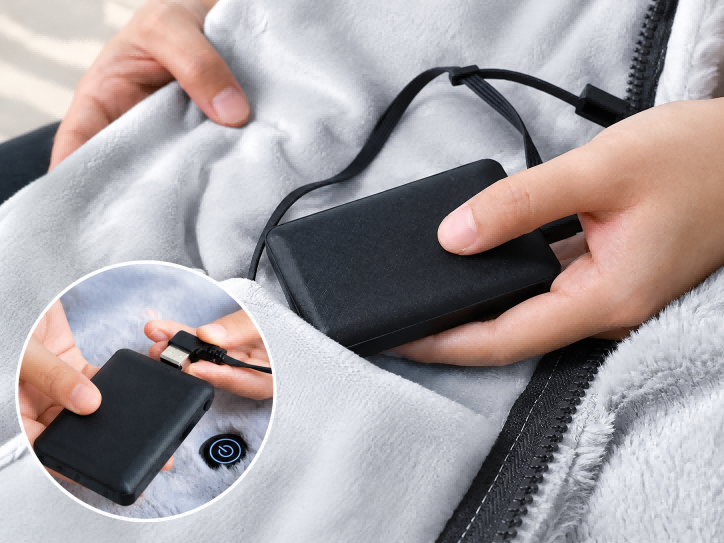
USB heated shawls combine textiles with electrical components, so connection details directly affect daily usability. Buyers should review connector placement, cable routing and controller positioning on the actual sample—not only on a specification sheet.
Fabric selection affects softness, weight, appearance, heat retention, washability and the overall retail position of the product. The source draft proposes several common directions that can be evaluated during OEM development.
| Material option | Key characteristics | Typical positioning |
|---|---|---|
| Polar fleece | Lightweight, soft and practical | Everyday warmth and value-focused collections |
| Flannel fleece | Soft surface and comfortable hand feel | Home and office products |
| Sherpa fleece | Plush texture and cozy appearance | Premium comfort collections |
| Faux fur | Decorative texture and luxury appearance | Gift-oriented or premium retail |
| Lightweight knitted fabric | Flexible construction and varied styling | Fashion-focused wearable designs |
Fabric weight, pile height, colorfastness, shrinkage and compatibility with the heating structure should be assessed during sampling. Buyers who need a deeper comparison can also review HEATMATE’s heated blanket fabric guide.
Private-label development is more useful when customization is defined as a complete product brief rather than a logo-only exercise. HEATMATE can discuss the following project variables, subject to technical feasibility, material availability, tooling requirements and order quantity.
For projects involving wider structural changes, buyers can review HEATMATE’s OEM & ODM capabilities before preparing an RFQ.
Sampling is the stage where commercial expectations become measurable product specifications. A good sample process does more than confirm appearance; it establishes the reference that mass production should follow.
Buyers should also clarify sample cost, sample lead time, customization charges and whether an approved reference sample can be retained for production comparison.
Before shipment, acceptance criteria should be measurable enough for the factory, buyer or third-party inspector to use consistently.
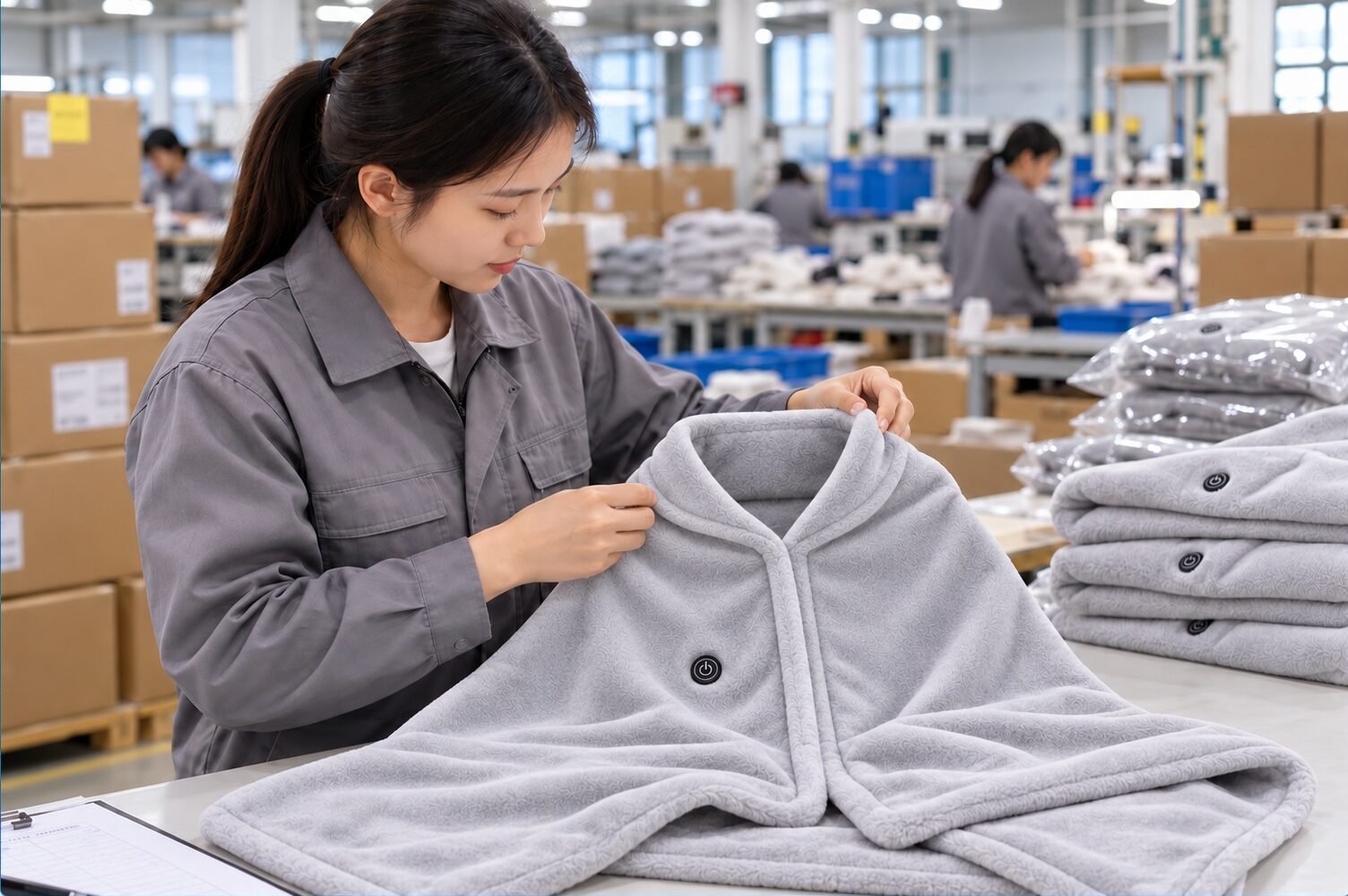
Electrical safety verification should follow the actual product configuration and destination-market requirements. Documentation should match the model being supplied rather than a visually similar product. For a broader methodology, see HEATMATE’s electric blanket safety testing and quality inspection guide and certification guide.
A concise RFQ can save several rounds of back-and-forth. At minimum, include:
Where the specification is still open, send reference images and clearly identify which details are fixed and which can be adjusted by the factory.
HEATMATE provides heating-product manufacturing and OEM/ODM support for international business customers. For USB heated shawl projects, development can cover fabric selection, power specifications, heating-zone design, controller and cable configuration, branding, retail packaging and production confirmation.
Rather than treating customization as a logo-only service, the project can be developed around an approved specification and sample. This gives buyers a clearer reference for materials, electrical components, dimensions, labels, packaging and final inspection before bulk production.
HEATMATE also supports staged product development and quality control, including sample evaluation, production-process checks and final inspection requirements defined against the approved product specification.
Buyers can review the broader HEATMATE heating product catalog, which includes USB heated shawl products, or visit the OEM & ODM capability page for customization and development options.
When comparing suppliers, HEATMATE’s guide on how to choose an electric blanket manufacturer can also help with factory capability, sample review and compliance-document checks.
No. 5V is a common USB input specification, but buyers should confirm the exact rated voltage, current and wattage of the product being sourced. Do not assume compatibility based only on the connector.
Not necessarily. The power bank must provide an output that matches the product’s electrical requirements. The combination should be validated on an approved sample.
There is no universal “best” number. The suitable layout depends on shawl size, wearing position, fabric and intended coverage. Consistent temperature distribution is more important than zone count alone.
Washability depends on the specific electrical and textile construction. Buyers should confirm whether electrical parts must be detached and which care instructions have been validated for the actual model.
Possible options can include size, fabric, color, heating layout, power configuration, controller, labels, logo and packaging, subject to technical feasibility and order requirements.
Confirm the approved sample, product specifications, materials, electrical components, labels, packaging, inspection criteria and destination-market documentation before production begins.
Share your target quantity, preferred fabric, power requirement, heating-zone expectations, branding, packaging and destination market. HEATMATE can review the specification and discuss suitable OEM/ODM options.
Request a Wholesale & OEM QuoteHEATMATE is an OEM/ODM manufacturer specializing in electric heating products, including heated blankets, heated throws, heated underblankets, USB heated scarves, heated jackets and related products.
More manufacturing knowledge for global heating-product buyers.
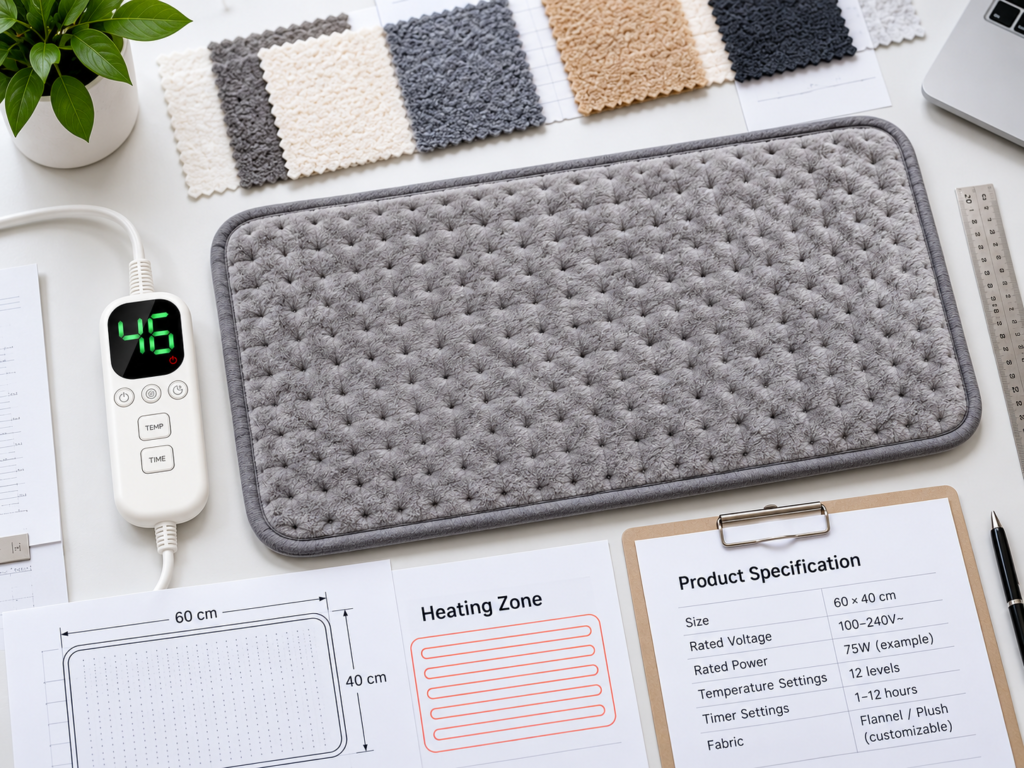
Ordering electric heating pads in bulk requires more than comparing unit prices. This guide explains heating coverage, voltage,…
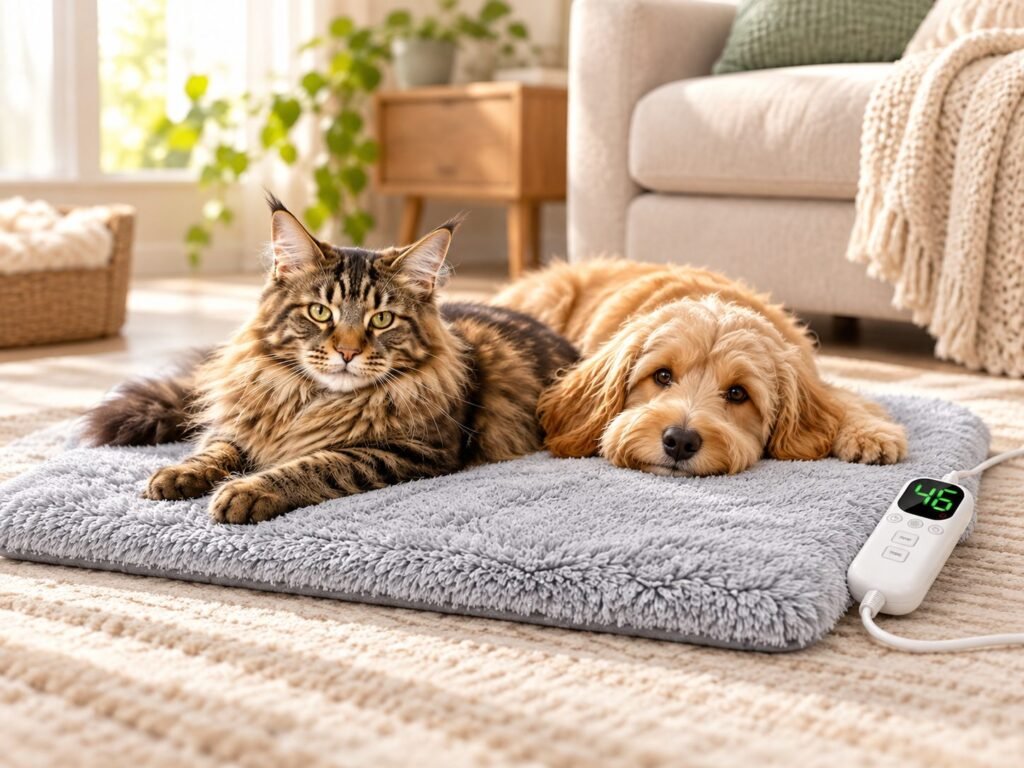
Pet heating pad sourcing involves more than comparing unit prices. This guide explains temperature control, cable protection, power…
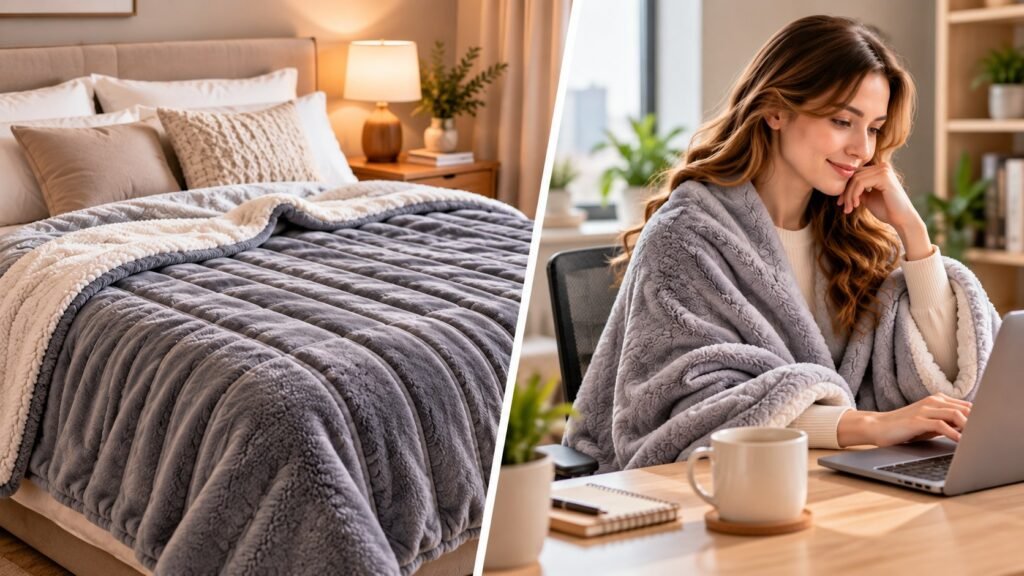
Electric heated blankets and USB heated blankets serve different use cases. This buyer guide compares power systems, size,…
Partner with HEATMATE for professional heating solutions.
GET FREE QUOTEIf you have any questions, please do not hesitate to contact us.